

The Council of Ministers this month approved a draft decree-law establishing specialist economic judicial divisions, to rule on money and business disputes on a shorter timetable than the ordinary courts. It takes effect on 1 October 2027.
It reads as a procedural item, and it touches anyone holding a commercial licence, in a partnership, or in a dispute with a bank.
Three tiers and three thresholds
The new system has three tiers: an economic court of first instance with three judges, an appeal division with three judges, and an economic division in the Court of Cassation.
What matters to a shop owner or a small company are the monetary thresholds that make a ruling final:
- First-instance rulings are final in claims not exceeding 10,000 dinars.
- Appeal rulings are final in claims not exceeding 30,000 dinars.
- Administrative contracts fall within the jurisdiction if they exceed 100,000 dinars.
Which means small disputes end at first instance rather than circulating between courts for years.
A settlement window before the fight
The law imposes a settlement stage of fifteen days, extendable to three months, before a case is heard. The deadline for cassation appeal is thirty days, shortened to fifteen in urgent matters and ten for orders.
The jurisdiction covers banks and financial companies, shareholder disputes, direct investment, competition protection, trademarks, patents, and public-private partnerships.
The minister of justice, Nasser Al-Sumait, described the step as “a qualitative shift in the system of economic justice in Kuwait, through the creation of a specialist judiciary”. An electronic litigation platform accompanies the system, along with units dedicated to safeguarding foreign investors’ rights.
The background: the watch list
This decision does not stand on its own. On 13 February 2026 the Financial Action Task Force placed Kuwait under increased monitoring — the list known as the grey list.
Since then the file has been open at the highest level. On 20 August the Prime Minister chaired a meeting devoted to the task force’s observations and requirements, attended by the minister of justice, the minister of commerce and industry Osama Al-Boudi, the minister of electricity Dr Sabeeh Al-Mukhaizeem, and the governor of the Central Bank of Kuwait, Basel Ahmad Al-Haroun.
The rule governing the file is simple: an international body sets a standard, and the state rewrites its laws to match it. The commercial courts are part of that path rather than an event separate from it.
What changes in practice
Until October 2027 nothing changes in your procedures. After it, a commercial dispute goes to a judge specialising in commerce rather than to a general civil division, and you have a timetable you know in advance.
The full text of the decree remains unpublished, and it is what will settle details such as the enforcement of foreign judgments.
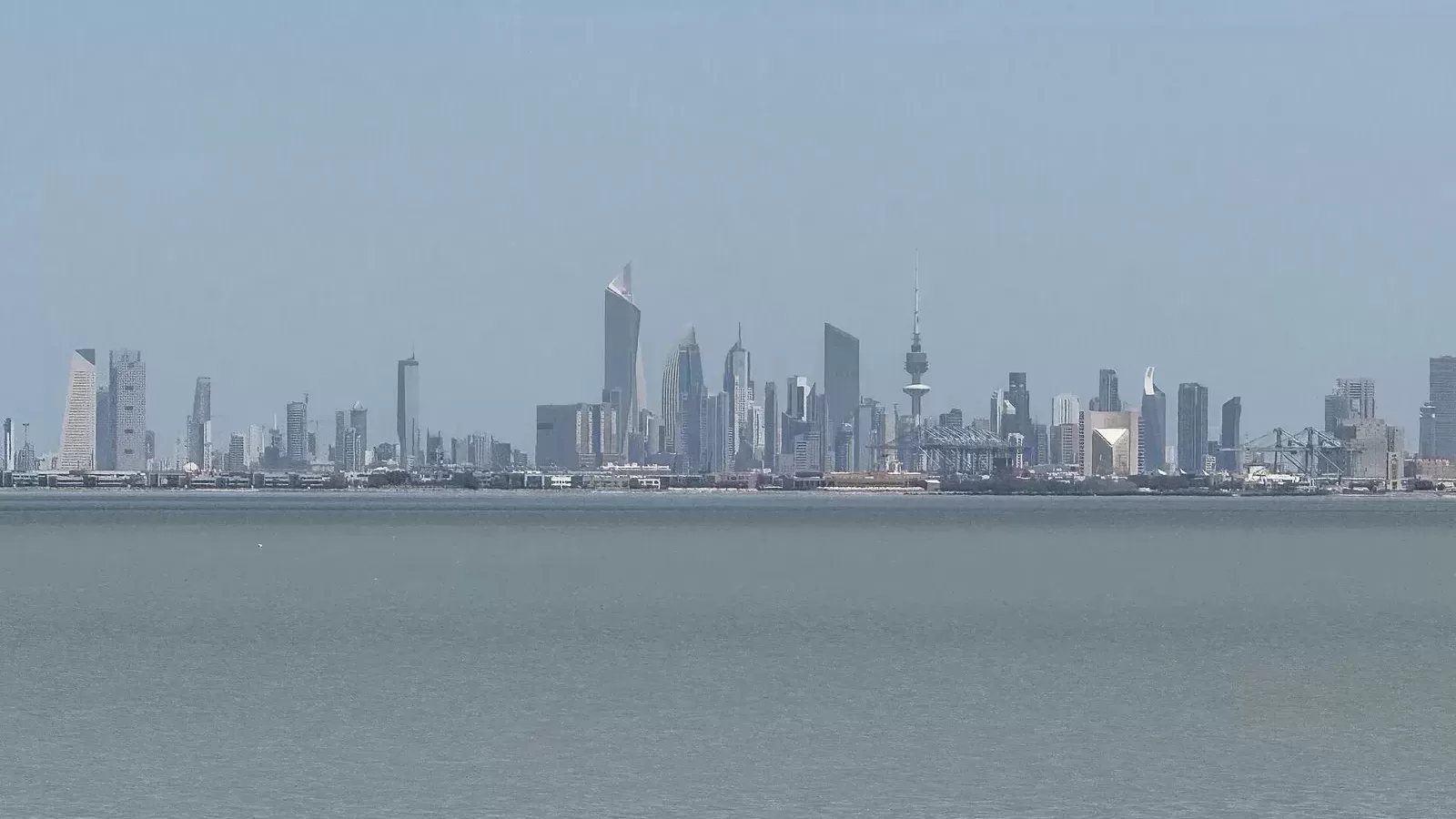
Photo: Kuwait City from the Sulaibikhat shore — by KuwaitiG via Wikimedia Commons, CC BY-SA 4.0
Further reading: the Financial Action Task Force, Kuwait file · the Central Bank of Kuwait
Kuwait One, once a week.
The most useful stories we published this week, in your inbox.
No spam. Unsubscribe anytime.