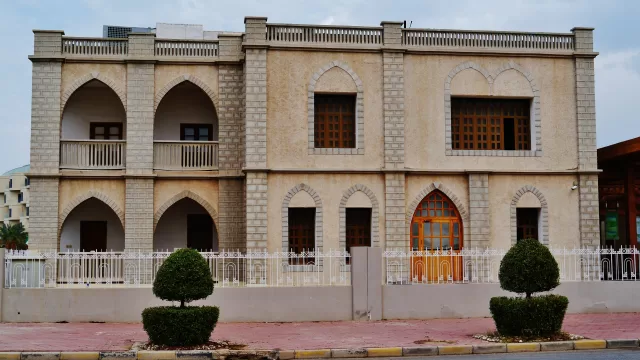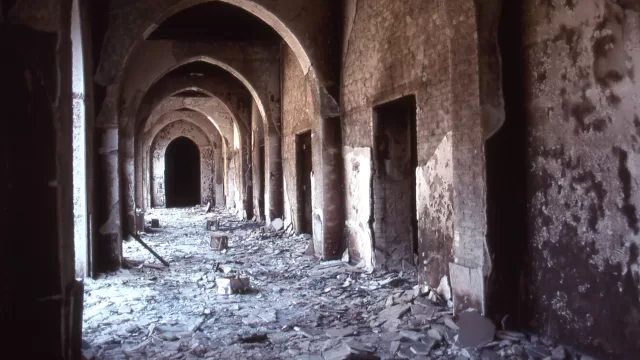
Kuwait had teachers long before it had schools. Until the Mubarakiya School opened in 1911, a boy learned to read in a kuttab — a room in the teacher’s own house, or a house rented for the purpose. No desks, no year groups. The pupils sat on the floor; the mullah sometimes sat facing them on a wooden chest.
The price list
The standing fee was called the khamisiya, because it fell due every Thursday. It came to one or two bezas in the currency of the day — small change, paid weekly rather than termly.
The real payment came at the khatma, the completion of the Quran. That was worth between 20 and 100 rupees, scaled to what the pupil’s family could bear. Wealthier families added a full set of clothes for the teacher: cloak, headdress, cord, robe and waist wrap. On top of that came a gift around Eid al-Fitr, given according to means, and the obligatory alms of six ratls of wheat, dates or rice.
Boys from poor families went round the neighbourhood collecting the money, and people gave, on the understanding that this was how a child got taught.
What a pupil carried
A wooden box held his kit. The central item was a board painted with a sticky clay, on which the letters were written in ink. Once the lesson was memorised, the board was washed and written on again — a slate before slates.
The teachers
Teaching ran in families. Two names recur: the Adsani and the Boodai. Individual mullahs are remembered by their quarter — Mohammad Al-Fares in Qana’at, Hamada in Freej Saud, Rashid Al-Suqaabi and his son Saad in Marzouq.
Girls were taught separately by a woman known as the mutawwa’a, and the best-known are named too: Fatima Al-Mesbah in the eastern quarter, Loulwa Al-Bannay in Salhiya, Mariam Al-Yacoub in the western quarter, and Hessa Al-Hunaif.
Why the merchants wanted it
This was not education for its own sake. The pearling economy needed clerks who could read, write and keep accounts for dive captains and pearl merchants. The kuttab supplied them, which is why nearly every quarter had one.
That appetite is what produced the state schools that followed: Mubarakiya in 1911, Ahmadiya in 1921.
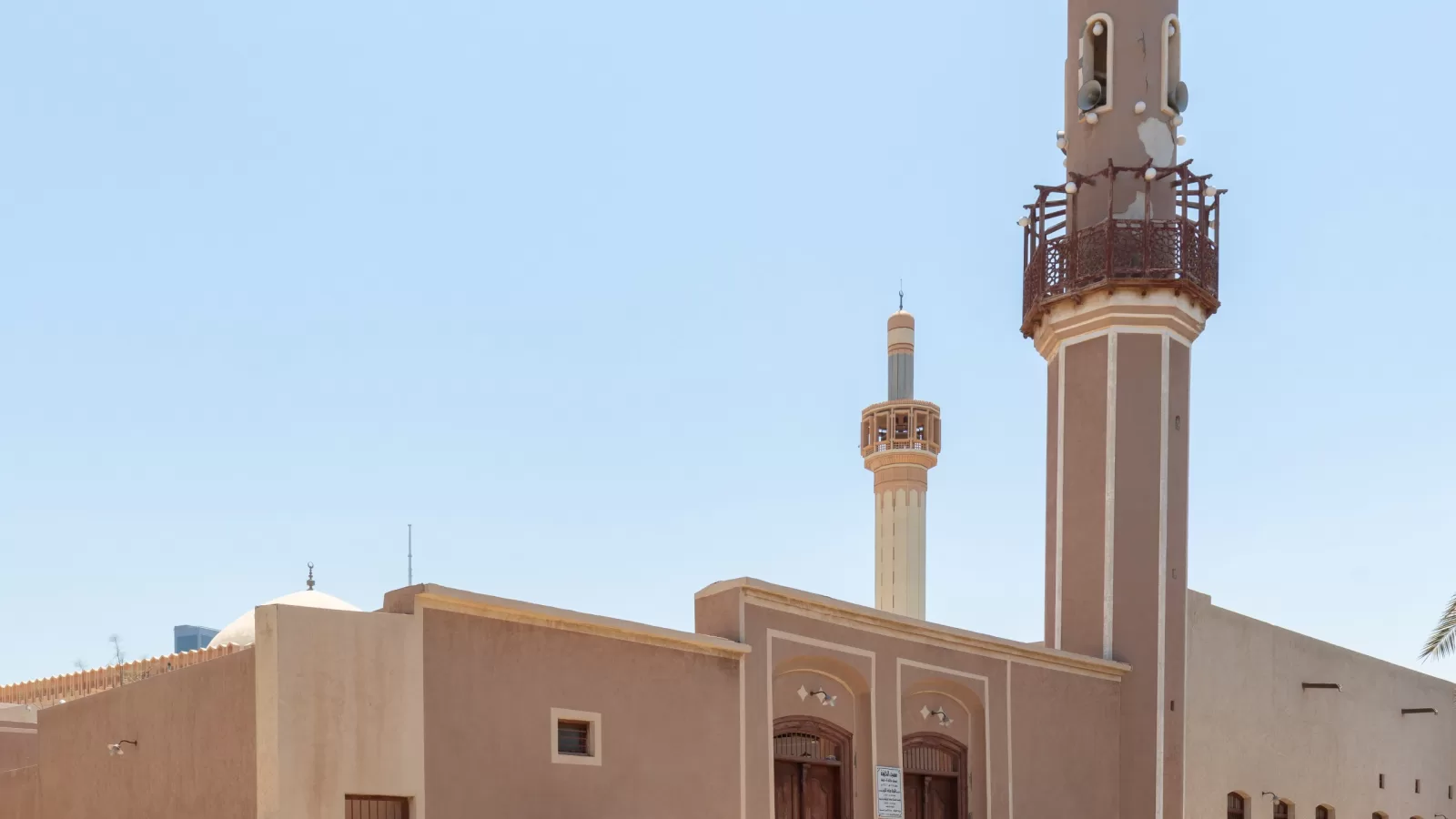
Photograph: Al Khalifa Mosque, Kuwait City. Photo by Diego Delso, licence CC BY-SA 4.0 via Wikimedia Commons. It shows a mosque standing today, not a kuttab; no photographed kuttab building survives.
Source: Kuwait News Agency (KUNA), “Kuttab: the first nucleus of education in old Kuwait”, 21 July 2016.
Kuwait One, once a week.
The most useful stories we published this week, in your inbox.
No spam. Unsubscribe anytime.