
Not everything the dialect has lost is the name of a dish. Something smaller went with them: the word for the state a food is in, and the word for how it tastes.
The researcher in Kuwaiti heritage Hussein Al Qattan listed a set of them for the Kuwait News Agency. These are the ones worth keeping.
Names for particular foods
Khaka: the grapes that fall off the bunch. They were bought deliberately, because they cost less than grapes still on the stem.
Matout: small fish, dried.
Tareeh: fish salted and then dried. Which makes the difference between the two words the salt.
Jarthi: dried milk. Dry it further and it becomes yiqit, from aqit, hardened curd.
Kafar: meat dried for eating.
Ghubaib: aish — rice — left standing a full night.
Al wadaj: rendered fat. What is left behind after rendering is called karat, and it was most often cooked with rice and mung beans.
And nine words for taste
Basij: food with no taste at all.
Masikh: with no sweetness in it, or unsalted.
Haf: with no richness or fat in it whatsoever.
Malegh: a taste you cannot get down.
Natea: delicious.
Zafar: something that carries a smell, usually of fish or eggs.
Nay: meat or fish not properly cooked through.
Bashea: the fruit of the sidr or nabq tree, and also khilal — dates that have not ripened.
Murr, alqam: bitter to the point of medicine, or tea without sugar. The word traces to the colocynth plant.
Why this matters
The report quotes the late artist Ayoub Hussein in his book “From the Words of the People of the Deera”, saying that foreign words spread among us until the old themselves were using them, and that this made us forget our own dialect, so that anyone holding on to it became an oddity.
He added that Kuwaiti words had turned into material for jokes, used on programmes to test young people who do not know them — and whoever does know one wins a prize.
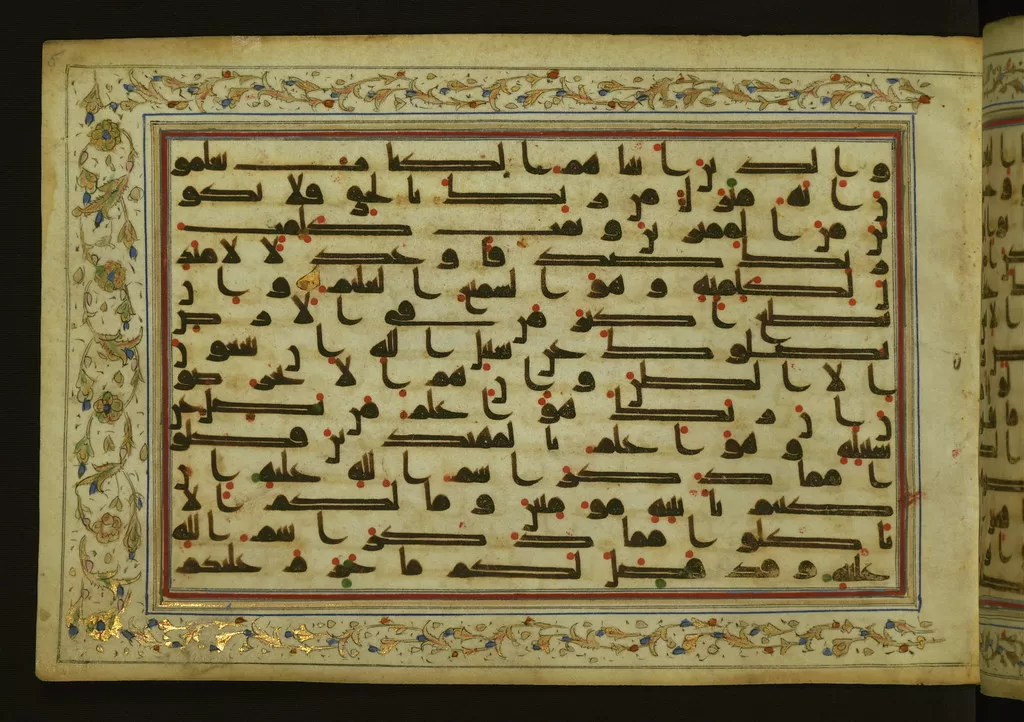
Photo: an illuminated Arabic manuscript. By Walters Art Museum Illuminated M, CC0 1.0 via Flickr.
Source: a Kuwait News Agency report on the researcher Hussein Al Qattan, quoting the book by Ayoub Hussein.
Kuwait One, once a week.
The most useful stories we published this week, in your inbox.
No spam. Unsubscribe anytime.