Marrying at the Court: One Dinar in Fees, Six If the Registrar Comes to You
The documentation office at the Ahmadi or Riggae complex, and the couple, the guardian and two witnesses must all be present.
The service is carried out in two places and no more: the documentation office at the Ahmadi courts complex, and the documentation office at the Riggae courts complex. It is open to Kuwaitis and non-Kuwaitis alike.
Who must be there
The first requirement is not a document but people: the couple, the bride’s guardian, and two witnesses. Five present, and the absence of any one of them stops the contract where it stands.
Papers, by circumstance
The document list is not the same for everyone; it branches:
- For Kuwaitis: the civil ID or the certificate of nationality.
- For residents: the civil ID or the passport.
- For those residing irregularly: the executive committee letter and proof of identity.
- If the bride is widowed: the inheritance declaration.
- If she is divorced: the divorce attestation.
- If the guardian is deceased: the inheritance declaration likewise.
- If the groom is a student, a trader, retired or not working: a letter from social insurance.
- If the groom is military: a marriage permit issued by his employer.
- If anyone is acting for another: the special power of attorney.
Steps and fees
- Bring the documents to the documentation office at either complex.
- Fill in the service form.
- Pay the fee.
The fixed fee is one dinar. There is a variable fee of six dinars, and it is paid in one case only: where a registrar travels to the couple’s location instead of them coming to the complex.
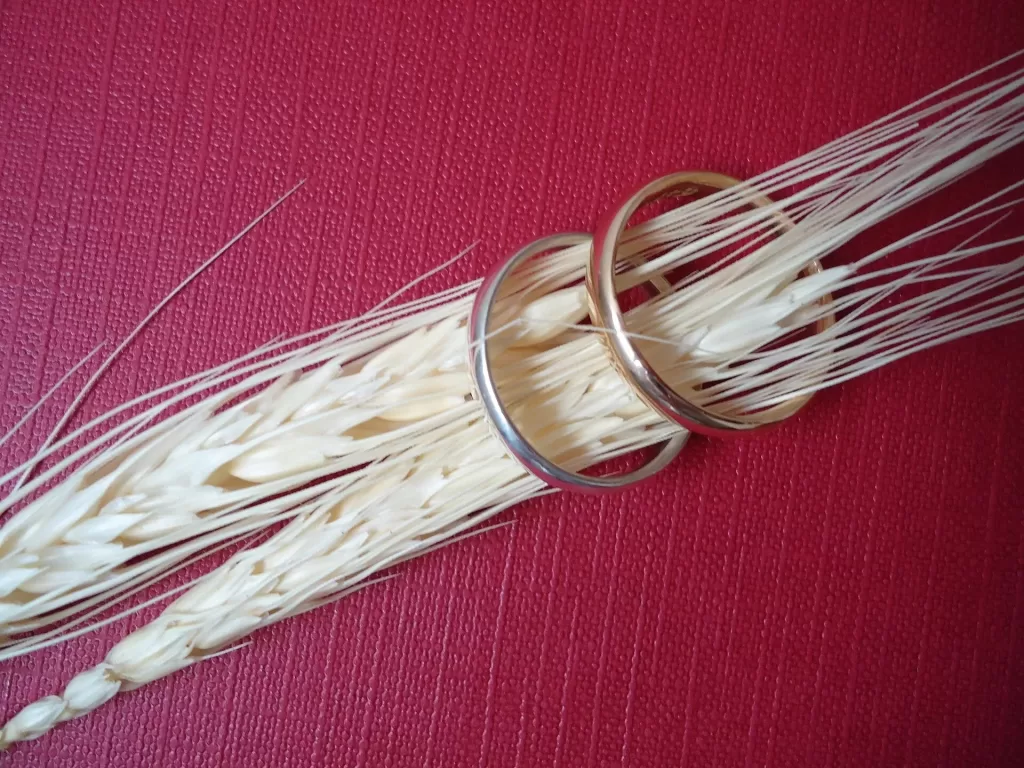
Photo: two wedding rings. By Mauro Cateb, CC BY-SA 3.0 via Wikimedia Commons.
Source: Kuwait’s e-government portal, the marriage-at-court service page, Ministry of Justice.
Kuwait One, once a week.
The most useful stories we published this week, in your inbox.
No spam. Unsubscribe anytime.