Kuwait names its years after what happened in them. One of the best known is the year of the collapse, and 8 December 1934 became a date people afterwards dated other things by: before the hadama, and after it.
What happened
Three days of continuous rain on a city built of mud. The walls drank the water and softened, the roofs of jandal poles and matting grew heavy, and then they came down. Al-Rai writes that the rain took down a third of the mud houses.
The figures as Al-Jarida reported them: more than five hundred mud houses collapsed, and some eighteen thousand people were affected. The health department’s own count that day was eleven injured and two dead.
The worst-hit belt ran between the Abdulrazzaq gate and Nayef Palace — the heart of the old town.
How much rain: two figures that cannot both be right
Here is a disagreement that has to be stated rather than smoothed. Al-Jarida in 2026 says rainfall exceeded three hundred millimetres over three consecutive days, more than a normal Kuwaiti year. An older report in the same paper, from 2017, gives three thousand millimetres in an hour and a half, which cannot stand.
One of them is almost certainly a typographical error, and there is no official meteorological record we can appeal to. So we give both and choose neither.
What the state did
The ruler was Sheikh Ahmad Al-Jaber Al-Sabah. Mosques, government buildings and Quran schools were opened to shelter those who had lost their houses, the city was divided into monitored zones, and vehicles were used to pump and clear the water in cooperation with the Kuwait Oil Company.
Not the first, and not the last
Before it came the rajbiya of October 1872, in the time of Abdullah Al-Sabah II, as Yousef Al-Shihab records. After it came the rains of 1954, under Abdullah Al-Salem, followed by a reconstruction committee headed by Sheikh Jaber Al-Ali in December of that year, as the historian Fahad Al-Abduljaleel notes.
The two papers even disagree on the numbering: Al-Rai calls 1934 the first hadama, while Al-Jarida’s 2017 report makes it the second. We pass the disagreement on rather than settle it.
Why the rain took one house and left another
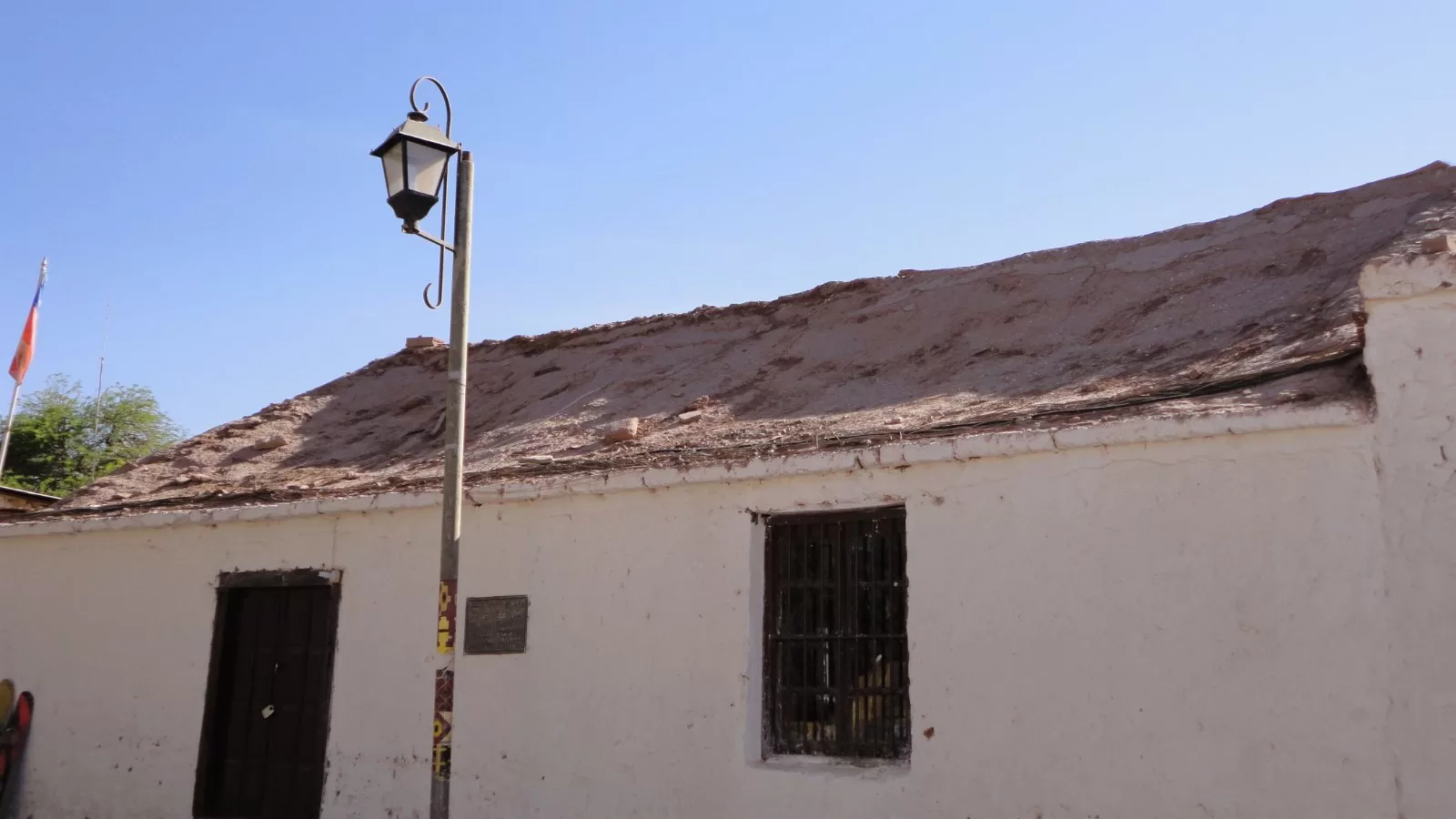
Because the building material itself was compressed earth. A mud house resists heat and insulates well, but it does not resist prolonged water. That is why the hadama became a dividing line in Kuwait’s architecture, not only in its weather: those whose houses survived repaired them, and those whose houses fell built in something else once something else was available.
Photograph: a mud-brick house; a generic image, not from Kuwait. By Daniel P. Gauer from Porto Alegre, Brasil, CC BY 2.0 via Wikimedia Commons.
Sources: Al-Rai on the anniversary of the year of the collapse; and Al-Jarida on 6 February 2026, 8 December 2013, and 9 November 2017 citing KUNA.
Kuwait One, once a week.
The most useful stories we published this week, in your inbox.
No spam. Unsubscribe anytime.