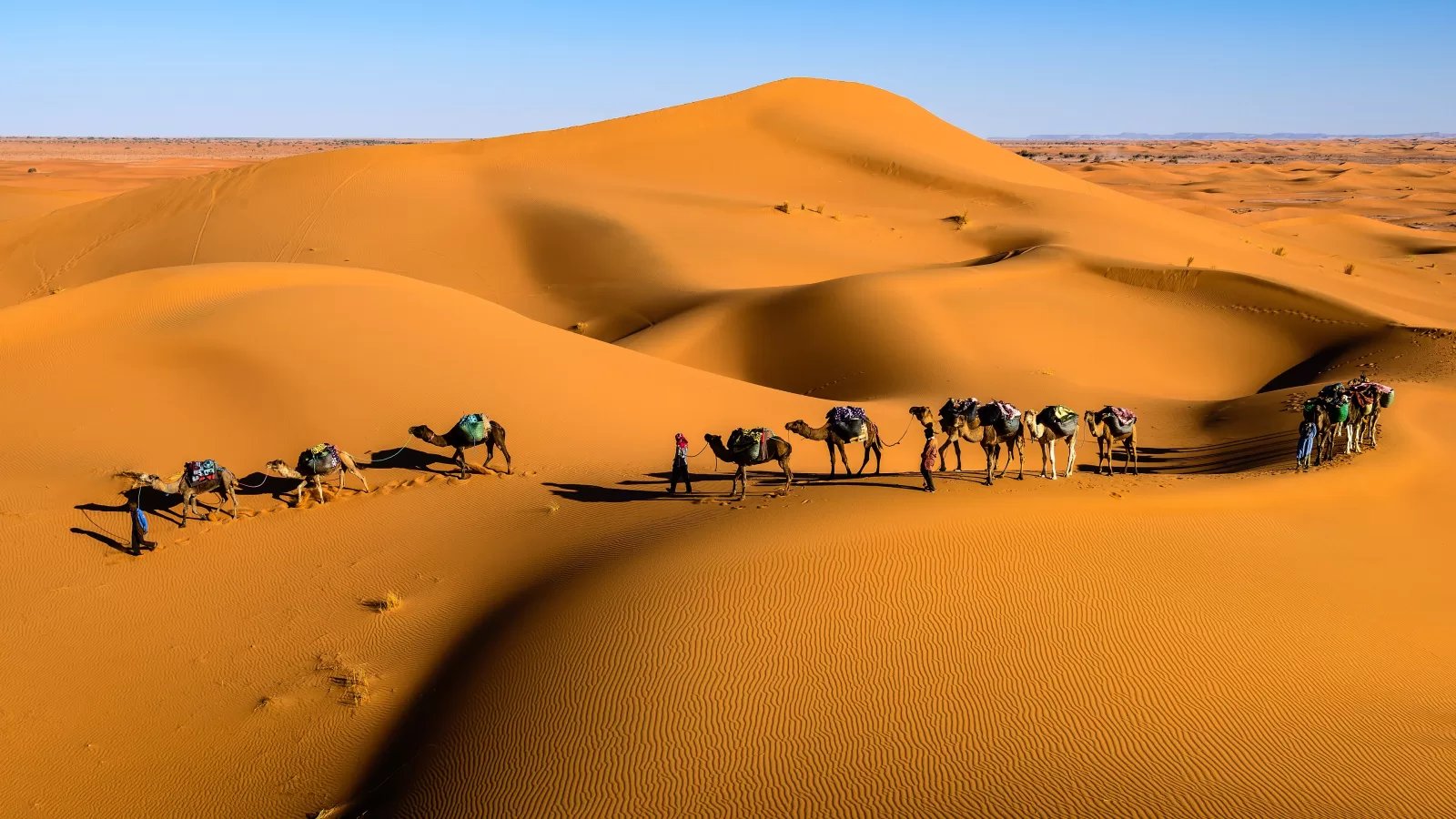
Long before Kuwait had a post office, it had runners. The government of Sheikh Abdullah bin Sabah the First put couriers on the road to carry letters between Kuwait and the English East India Company’s factories in Basra. They travelled by camel, on a route known at the time as the desert express.
Fourteen days to Aleppo
The road ran north into the Levant, and the crossing took between fourteen and twenty days to reach Aleppo. From there ships carried the mail out of Latakia to Europe. The oldest recorded run on that road left on 15 July 1775 — the same year Lorimer’s Gazetteer of the Persian Gulf dates the beginning of documented British-Kuwaiti contact.
The oldest trace of mail from Kuwait at all goes back further, to 1750, when the first known postal letter was sent out of the town.
An office inside the Agency
In 1901 Sheikh Mubarak Al-Sabah asked the British government to open a post office in Kuwait, undertaking in return that no other power would be allowed to open one. Britain agreed on 19 February 1904, on terms that attached the office to its Political Agency, which opened the same year; Sheikh Mubarak accepted that arrangement on 28 February.
Kuwaitis joined the Indian postal service there in 1919, and some were known ever after by the job rather than the family name — Jasim Abdal became Jasim al-Bosta, Khalaf Hussein became Khalaf al-Teelji, and Hamad al-Humaidi, who repaired the telegraph line between Kuwait and Basra, became Hamad al-Teel. Several rose to senior administrative posts.
Stamps with Kuwait on them
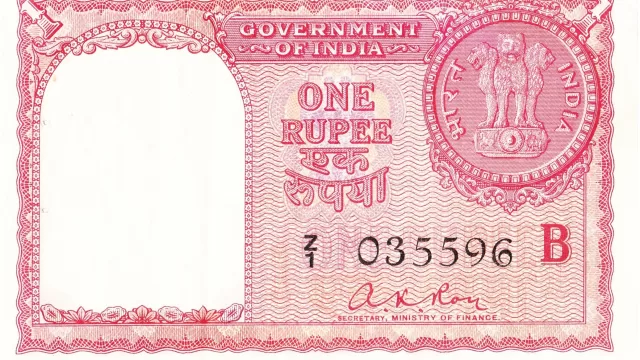
On 1 April 1923 the first Indian stamps overprinted with the name of Kuwait appeared: fourteen values running from half an anna to ten rupees, carrying the portrait of King George V. A matching set with George VI followed in 1939.
Indian and then British administration of the mail lasted until 1 February 1958, when Kuwait’s first national post office opened at a ceremony attended by Sheikh Fahad Al-Salem Al-Sabah, who was appointed head of the Post and Telephone Department. The first locally issued stamps came out the same day, bearing the portrait of Sheikh Abdullah Al-Salem in values of five, ten and forty naye paise — the Indian currency still circulating in the country at the time.
Photograph: a camel caravan in the desert — not in Kuwait, but in Morocco. Photo by Sergey Pesterev, CC BY-SA 4.0 via Wikimedia Commons.
Source: Kuwait News Agency, drawing on the researcher Mohammed Jamal’s book on the history of Kuwait’s postal service, published by the National Council for Culture, Arts and Letters, and on Lorimer’s Gazetteer.
Kuwait One, once a week.
The most useful stories we published this week, in your inbox.
No spam. Unsubscribe anytime.