A school lunch box in Kuwait’s heat: two cold sources, one above the food and one below
A frozen water bottle can stand in for an ice pack, and mayonnaise, lettuce and tomato go in fresh rather than frozen
Anything that normally lives in the fridge, such as meat, chicken, eggs and soft cheese, does not stay safe for long in a bag with no ice. Bacteria multiply fast between 4.4°C and 60°C, the range the US Department of Agriculture calls the “Danger Zone”. Its rule of thumb: food should sit out no more than two hours, or one hour once the air is above 32°C.
Here is the USDA’s routine for a packed lunch, from the night before to lunchtime.
The night before
- Cook ahead, whether chicken, pasta salad or vegetables, and let it chill fully in the fridge at 4.4°C or below. Split large batches into shallow containers so they cool faster.
- Put the gel packs in the freezer overnight.
- Sandwiches can be frozen to keep them cold, but leave out mayonnaise, lettuce and tomato and add them in the morning.
In the morning
- Wash your hands with soap and warm water for 20 seconds, and wash the board and knife between one food and the next.
- Pack the bag right before you leave, not the night before.
- Pack only what will be eaten at one meal, so nothing comes home.
- Use an insulated, soft-sided bag; it holds the cold best.
- Pack at least two cold sources with perishable food, one on top and one underneath: two frozen gel packs of at least about 13 by 8 cm each, or one gel pack plus a frozen juice box or frozen bottle of water.
At school or work
- If there is a fridge, the food goes in as soon as you arrive.
- When reheating in a microwave, cover the dish and bring the food to at least 74°C, checked with a food thermometer.
- Throw away anything left after lunch, along with the wrapping and paper bag. Don’t reuse packaging.
For a hot lunch
Soup and stew travel in an insulated flask. Fill it with boiling water, leave it a few minutes, empty it, then add the food piping hot and keep it closed until lunch, so it stays at 60°C or above.
What needs no ice
Whole, uncut fruit and vegetables, hard cheese, canned meat and fish, bread, crackers and crisps, peanut butter, jam, mustard and pickles.
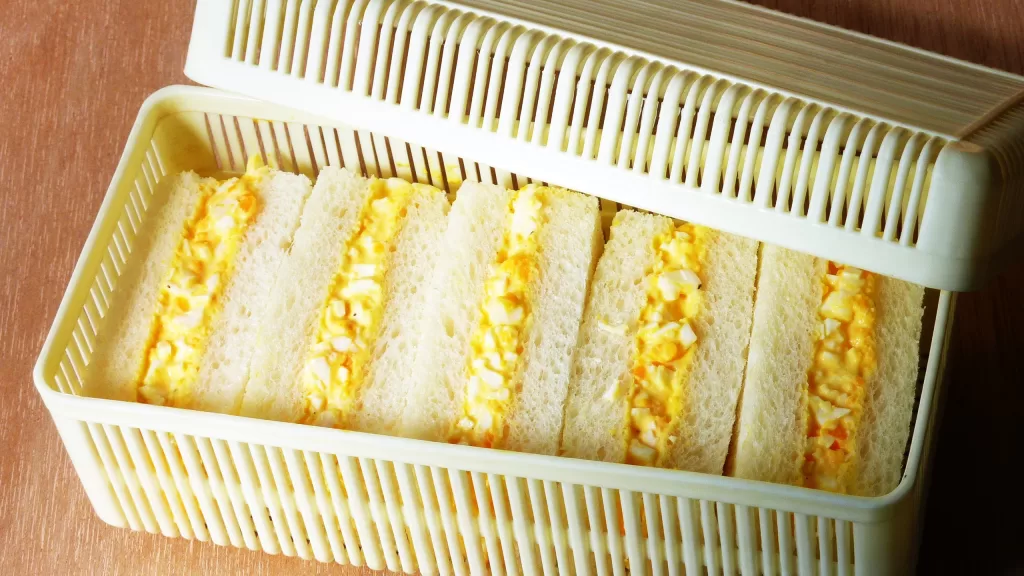
Photo: egg sandwiches in a plastic lunch case. By Quercus acuta, CC BY-SA 4.0, via Wikimedia Commons.
Source: USDA Food Safety and Inspection Service, “Keeping ‘Bag’ Lunches Safe”, read on 22 October 2026.
Kuwait One, once a week.
The most useful stories we published this week, in your inbox.
No spam. Unsubscribe anytime.