Smell gas in the kitchen? No switches, get out, close the regulator, then test with soap
A sponge dipped in soapy water shows a leaking hose, and the cylinder must always stand upright
A gas cylinder in the kitchen can run for years without trouble. When it goes wrong, it usually starts with a cracked hose or a loose connection. Here is what to do if you smell gas, and how to check the connections yourself, following guidance from the Kuwait Fire Force and the US Propane Education and Research Council.
If you smell gas
- No flames, no sparks. Put out any flame or cigarette, and do not switch on lights, appliances or a phone in the room. A spark from any of them can set off an explosion or fire.
- Get everyone out at once.
- Close the cylinder valve or regulator if you can do it safely.
- Call from outside, from a neighbour’s home or somewhere well away from the leak, on Kuwait’s emergency number 112.
- Do not go back until firefighters or a qualified technician say it is safe, and do not light the cooker until the whole installation has been checked.
The sponge and soap test
The Kuwait Fire Force recommends checking hoses and regulators from time to time: soak a piece of sponge in soapy water and run it along the hose and over the connections. No bubbles means the connections and hoses are sound. Bubbles mean a leak: close the valve and leave the cooker off until a technician has checked the installation and replaced the part.
Habits that prevent leaks
- Use hoses and regulators approved by the Kuwait Oil Tanker Company, which supplies household gas cylinders.
- Close the cylinder regulator when you finish cooking and before you leave the house.
- Keep the oven, hob, gas pipes and hoses clean and in good condition.
- Fit a gas detector in the kitchen to warn you of any leak.
- Always keep the cylinder upright with the valve on top. Laid on its side, it releases gas as a liquid instead of vapour, the flame leaps up from the burner and can start a fire beyond the cooker.
- Carry and store the cylinder carefully, away from knocks, and check it is in good condition when it is delivered.
Do not fix it yourself
Never try to modify or repair valves, regulators, connectors or cylinder parts yourself: that is how new leaks start. Leave it to a qualified technician.
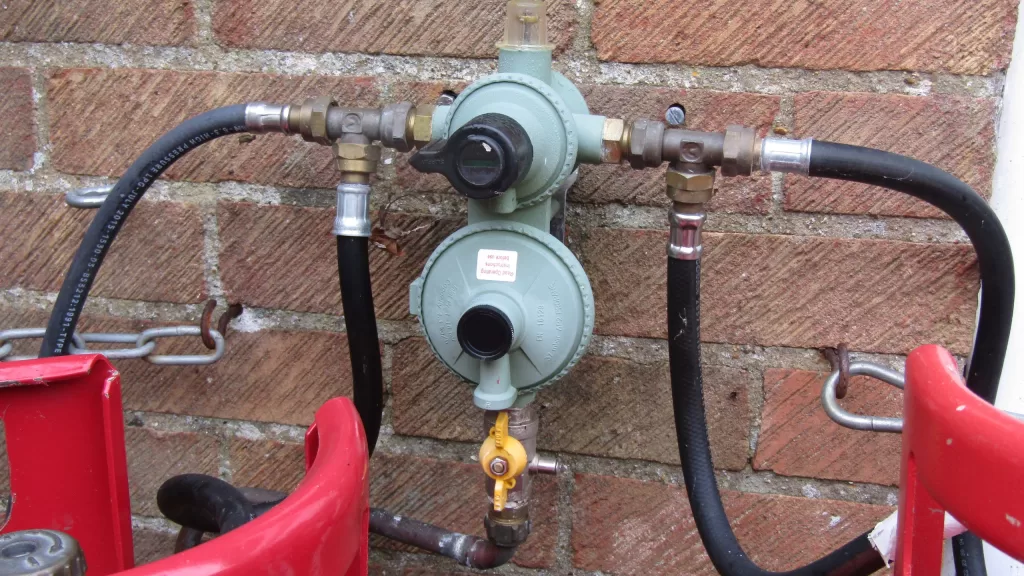
Photo: an automatic changeover gas regulator with its hoses between two cylinders, on a house wall in Britain, used as an illustration. Photograph by Kolforn, CC BY-SA 4.0, via Wikimedia Commons.
Source: Kuwait Fire Force, “Correct procedures” for gas cylinders, on its Instagram account (kff_kw); Propane Education and Research Council (PERC), “What To Do If You Smell Gas”; Pennsylvania Propane Gas Association, “Important Propane Safety Information”. All read on 1 November 2026.
Kuwait One, once a week.
The most useful stories we published this week, in your inbox.
No spam. Unsubscribe anytime.