Comprehensive car insurance in Kuwait: your car’s value is now fixed the day the policy is issued
No cutting a payout to "market value" after an accident, a mandatory inspection report before cover starts, and any unclear wording read in the policyholder's favour.
Kuwait’s Insurance Regulatory Unit has set new rules for comprehensive motor policies (officially “supplementary vehicle insurance”). Decision 53 of 2026 was published in the official gazette, Kuwait Al-Youm, this weekend and applies from the date it was issued. If you are renewing a comprehensive policy or buying one, this is what the insurer now owes you.
The car’s value is set once
When the policy is issued, the insurer must fix the car’s fair value using a documented method: the purchase invoice, the average of three quotes from qualified valuers, or a letter from the authorised dealer. Your premium is calculated on that figure.
After that, including when a claim comes in, the insurer may not revalue the car or fall back on its market value at the time of the accident if doing so would reduce the payout. The only exceptions are fraud, deliberate misrepresentation or a material error. In short, the value you paid a premium on is the value you are paid on.
Inspection before cover
The insurer has to physically inspect and photograph the car and record its condition in a report before issuing the policy. Damage noted in that report cannot later be used to reject a claim or cut a payout unless the policy expressly excludes it. Ask for a copy of the inspection report and keep it with your policy.
What changes when you claim
- Ambiguity counts for you: any unclear wording is interpreted in the policyholder’s favour when it comes from how the policy was drafted or presented.
- No hidden charges: no excess, deductible or fee applies unless it is written into the policy schedule.
- Towing and storage: you cannot be charged for towing or yard storage unless the delay was your doing and you were notified.
- A receipt for your claim: the insurer must give you proof of receipt with a claim number and date, and a written reason if it rejects all or part of it.
- Write-offs: a car counts as a total loss only when it is technically beyond repair or not economical to repair. After a single-vehicle write-off, the insurer pays you a share of the salvage value, or of what the wreck sells for, equal to your excess percentage.
- Cancellation: if the insurer cancels, it must give a reason, refund the premium for the remaining days without deducting past claims, and keep you covered through the notice period.
A QR code on every policy
Ninety days after publication, no comprehensive policy may be issued without a QR code that lets anyone check the policy’s details and status. Fleet policies are allowed for three or more vehicles, and the regulator can order an insurer to change or withdraw a non-compliant policy form or refund money it should not have collected.
If an insurer rejects or stalls your claim, the Insurance Regulatory Unit takes complaints against insurers online through the individuals’ portal on its website, signing in with your Civil ID and the Kuwait Mobile ID app.
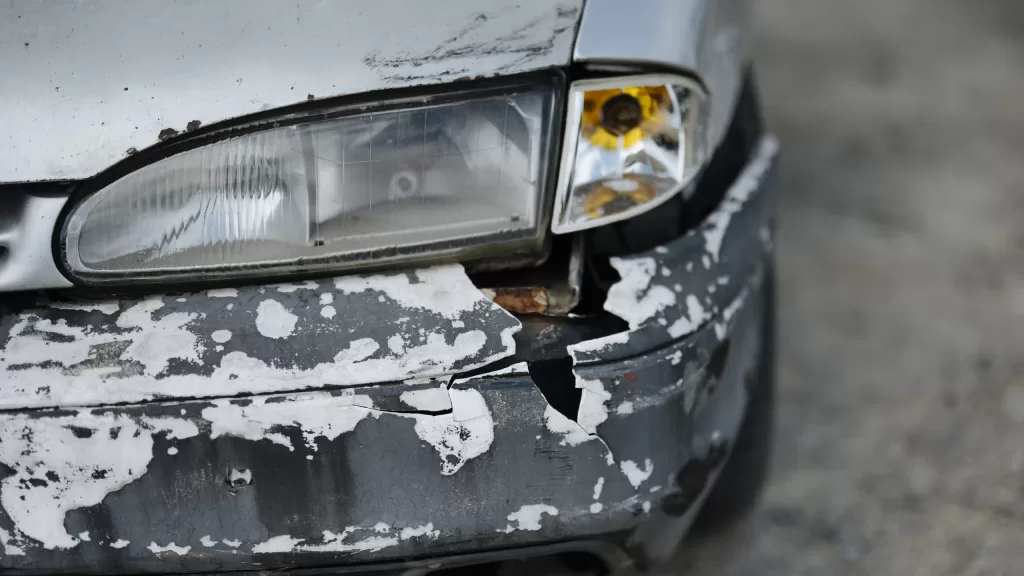
Photo: the damaged front of a car after a collision. By Shixart1985, CC BY 2.0, via Wikimedia Commons.
Source: Insurance Regulatory Unit Decision 53 of 2026, published on iru.gov.kw, and reported by Al-Jarida, 15 November 2026.
Kuwait One, once a week.
The most useful stories we published this week, in your inbox.
No spam. Unsubscribe anytime.