On the western end of Kuwait City’s old waterfront, in the Qibla quarter once known as Mahallat Al-Badr, stands a merchant house built in 1837. It passed to the heirs of Abdulaziz and Abdulmohsen Yousef Al-Badr, two of Kuwait’s leading traders, and it is one of the few houses of the old town that has kept both its plan and its original materials.
Five open courtyards
The house is arranged around five yards, each with its own job: the diwaniya courtyard where men were received, the women’s courtyard, the kitchen yard, a work yard, and a yard for the sheep.
Mud, sea stone and gypsum
The walls are mud brick and sea rock, finished in gypsum plaster. The ceiling sits four metres above the floor and is made of jandal, basjil and bawari, the traditional roofing materials of old Kuwait. The outer walls are blank; each entrance is grander or plainer depending on who it was for.
Two ways in from the sea
The main façade is the one facing the water, with stone benches on either side where the men sat. It has two entrances: a large arched gateway leading right into the men’s reception yard, and a pair of doors leading left into the work yard.
Set into each is a small wicket door, known locally as “abu khukha” — the only way into the house once the big doors were shut. Above the façade rise wind catchers (badgir), open towers that pulled air down to cool the rooms in summer, as in most of old Kuwait’s houses.
From trader’s home to state property
- 1965: the government acquired the house.
- 1968: it passed to the Department of Antiquities and Museums of the National Council for Culture, Arts and Letters.
- 1976: it became the temporary home of the Kuwait National Museum.
As of 2025 it housed the council’s department for folk music heritage, with plans to turn it into a museum of Kuwaiti folk heritage.
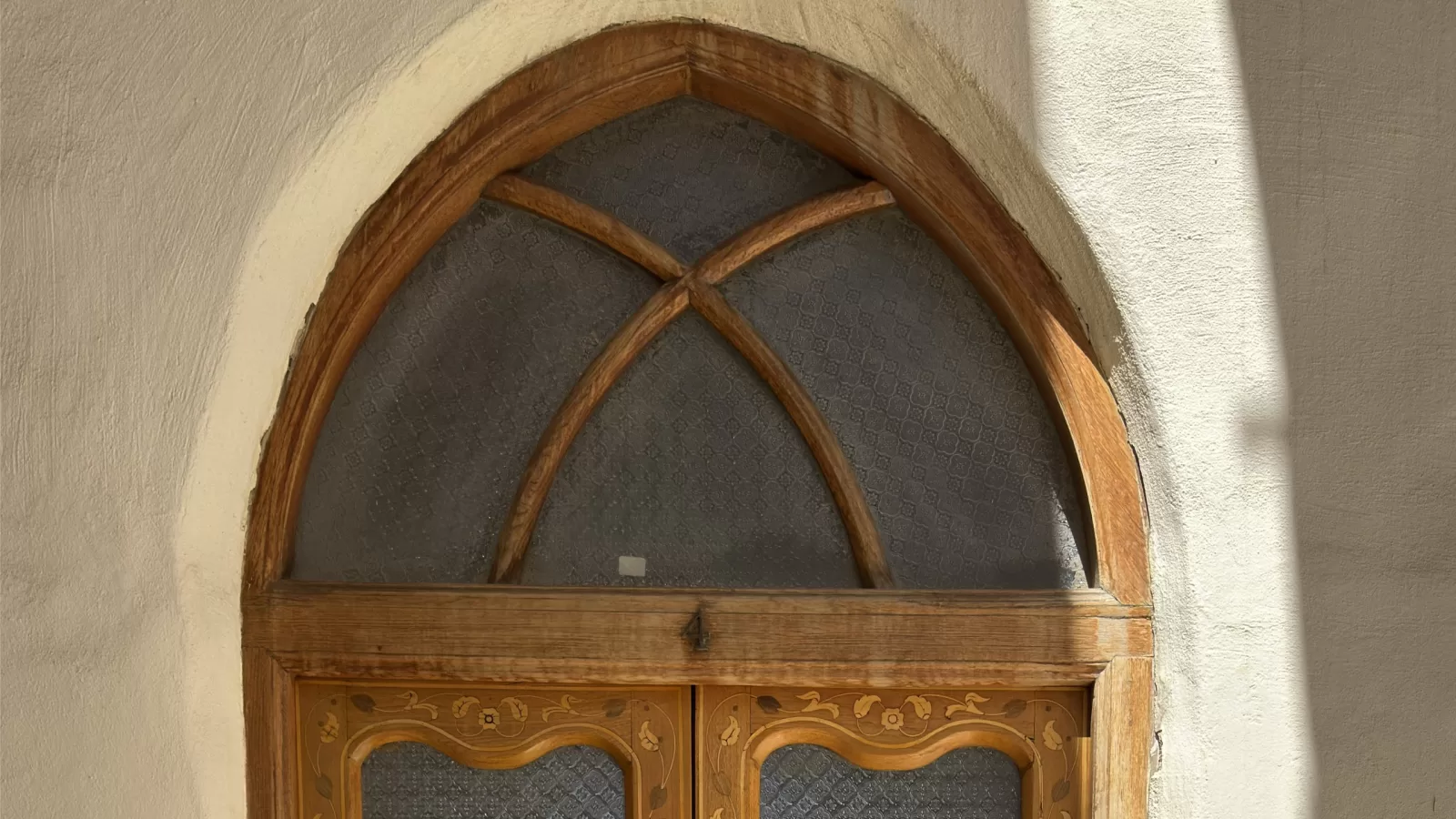
Photo: an old wooden door in a Kuwaiti house, not Bayt Al-Badr itself. By Di7ane, CC BY-SA 4.0 via Wikimedia Commons.
Source: “Bayt Al-Badr”, Al-Rai, 26 July 2010; “Kuwait’s cultural landmarks (22): Bayt Al-Badr”, Al-Wifaq, 13 July 2025, citing the Ministry of Information’s guide to cultural destinations in Kuwait.
Kuwait One, once a week.
The most useful stories we published this week, in your inbox.
No spam. Unsubscribe anytime.