
On 14 August two contradictory numbers about the same project appeared in the American press. The first: Tesla is applying to run five thousand self-driving taxis in Las Vegas. The second: the regulator granted it ten cars.
Both numbers are correct. The distance between them is the story.
What Tesla asked for and what it got
Tesla applied to the Nevada Transportation Authority to operate five thousand robotaxi vehicles in Clark County, where Las Vegas sits. On 27 July the permit was issued, and the figure in it was ten vehicles.
And the count was not the only limit. The permit also required:
- A top speed of no more than 45 miles per hour, about 72 kilometres.
- Operation within the Strip corridor alone, not across the county.
- An explicit ban on picking up passengers at Harry Reid International Airport, which is the single place a visitor most needs a taxi.
- A clear marking on the vehicle reading “robotaxi”, and notification to the passenger on every trip that they are riding in a driverless car.
- “Appropriate human oversight”, without the text clarifying whether that means an escort inside the car or remote monitoring.
- Any expansion in the count or the operating area requires a fresh approval.
Then the number changed
On 20 August the Nevada Transportation Authority voted unanimously for commercial permits raising the ceilings: five thousand vehicles for Tesla, a thousand for Waymo, and a thousand for Uber through its partnerships with Motional and Zoox. Together, the permits allow up to eight thousand autonomous vehicles to be deployed in Clark County over twelve months.
And this is exactly where the exaggeration starts. Because a ceiling is not a plan.
Testimony from inside Tesla
Tesla’s lead Cybercab engineer put it plainly: “Five thousand was always a ceiling for us. I don’t think we’ll be in a position to deploy five thousand vehicles by this time next year, and not because of the technology.”
That last clause is the one that matters. When a technical lead says the obstacle is not the technology, they are talking about manufacturing, regulation, insurance and operational infrastructure: who repairs the vehicle, who charges it, who cleans it, and who carries the liability in a crash.
Why this matters outside Las Vegas
Because the way Nevada has handled the file has become a model worth studying. The regulator did not say no, and did not say yes. It gave ten vehicles in a narrow area at a limited speed, then watched, then raised the ceiling less than a month later.
That gradualism is what separates a technology announcement from an actual deployment. And when this technology reaches other markets, the practical question will not be how many vehicles were licensed, but how many are actually driving, at what speed, on which street, and who is watching them.
The difference between five thousand and ten is not a licensing detail. It is the difference between what a company promises and what reality permits.
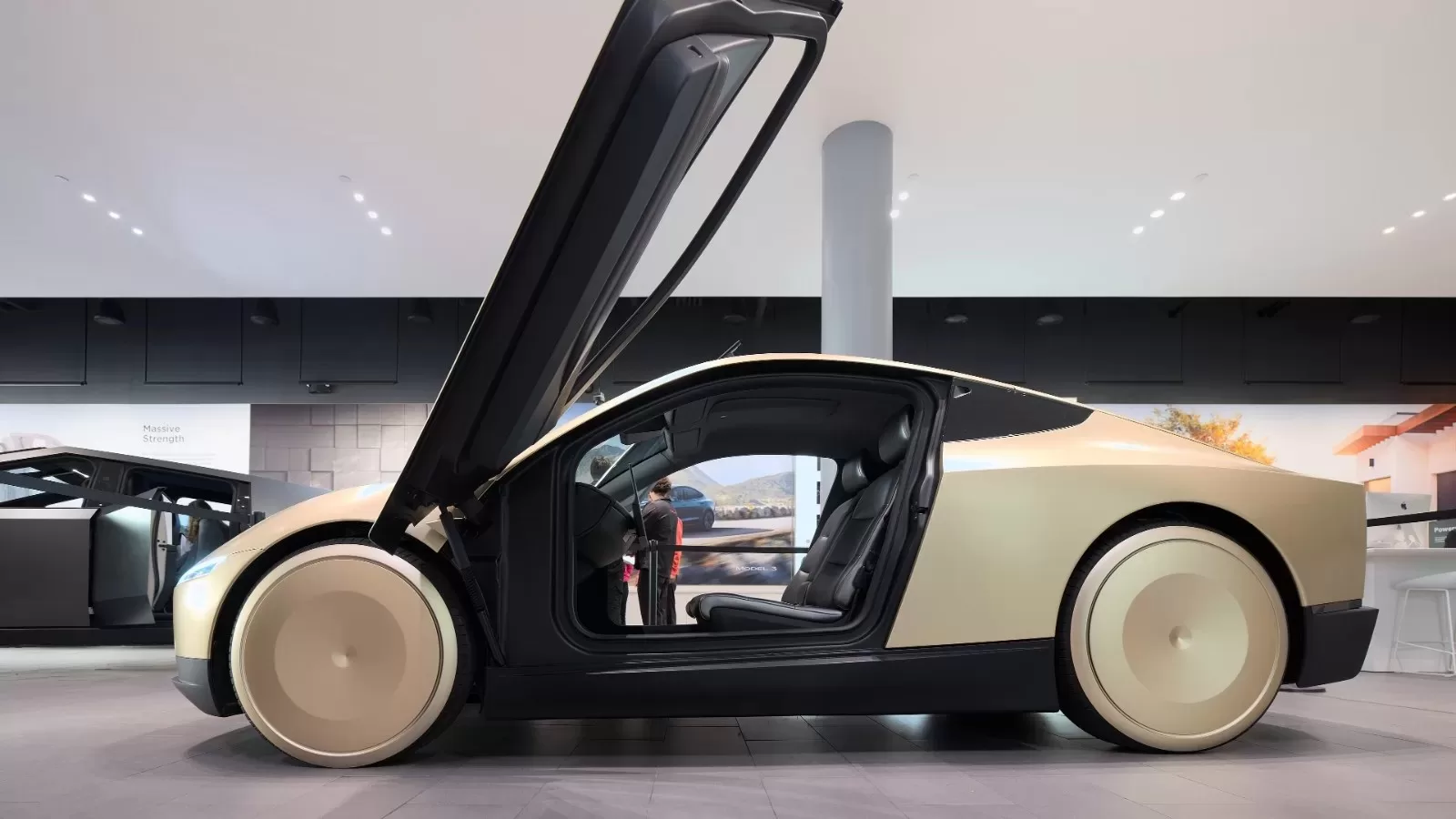
Photo: a Tesla Cybercab — by Dllu via Wikimedia Commons, CC BY-SA 4.0
Further reading: TechCrunch, 20 August 2026 · Axios, 14 August 2026 · Electrek
Kuwait One, once a week.
The most useful stories we published this week, in your inbox.
No spam. Unsubscribe anytime.