
In Jabriya there is a house with a museum underneath it. In the winter of 1990 there was also a wall down there, painted the same colour as the rest of the wall, with paintings hung on it, and behind it the manuscripts and the ceramics.
The museum is open to visitors today, and the ticket is three dinars.
Who built it
Tareq Sayed Rajab started collecting in the 1940s, after visiting Baghdad as a teenager, then tracked manuscripts through England in the 1950s. His wife Jehan, whose interest was in cultures and anthropology, collected with him across the Middle East through the 1960s and 1970s.
The museum opened formally in 1980, the first museum of Islamic art in Kuwait and the Gulf. In 2007 a second museum opened, dedicated to Arabic calligraphy.
What is in it
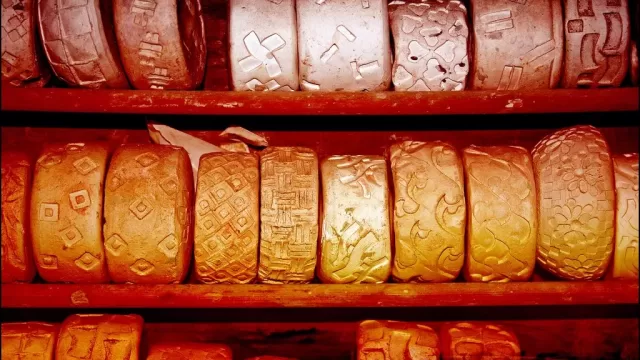
Fifty years of collecting: manuscripts, miniatures, ceramics, metalwork, glass, arms, textiles, costume and jewellery. Among the counts: two hundred firearms, forty-one swords, seventy-three daggers, thousands of pieces of silver, and Qur’ans going back to the seventh century.
What happened during the invasion
On 2 August 1990 Tareq was in Jordan with his two elder sons, and Jehan stayed in Kuwait with the youngest, Nader. International phone lines were cut after the first day, and the family was isolated for seven months.
They shut the museum’s heavy Indian doors and took down the signs. Then the work began: packing manuscripts and ceramics into crates, cases and bags, and hiding them in side rooms and in a large void behind one of the façades.
Carpenters sealed the entrances with wooden boards, painted them the colour of the walls, and hung David Roberts prints on them so they read as ordinary wall.
The other section — five or six thousand pieces of jewellery, costume, textiles and stringed instruments — was beyond the hands available to pack, so it was sealed off entirely. The gold room was closed off specially, and traces of that work are still visible today.
What was lost
Tareq had stored between three and five hundred hand-woven Iraqi rugs at the New English School next door. Iraqi forces occupied the school throughout the occupation. The entire collection was destroyed.
The hour that nearly ended it
Shortly before the ground war began, Iraqi security men came to the house with weapons raised, entered through the internal door, and searched the museum for more than an hour.
They took nothing but cigarettes and cassette tapes. And they promised to come back.
The following evening the ground war began, and Kuwait was liberated shortly afterwards. There was no return visit.
After liberation, Colonel Jeffrey Greenhut took on opening the false walls and supplied the museum with generators to bring the power back.
Visiting
- The museum: Jabriya, block 12, street 5, building 22.
- The calligraphy museum: Jabriya, block 12, street 1, building 2.
- Hours: Saturday to Thursday, 9am to 1pm and 4:30pm to 8:30pm. Friday 9am to 1pm only.
- Tickets: KD 3 for adults, KD 1.5 for under-eighteens, free for under-sixes.
- The same ticket covers both museums.
These are private museums, not state ones. What you see in them was gathered by one family over half a century, and defended with a painted wall through the worst winter the country has had.
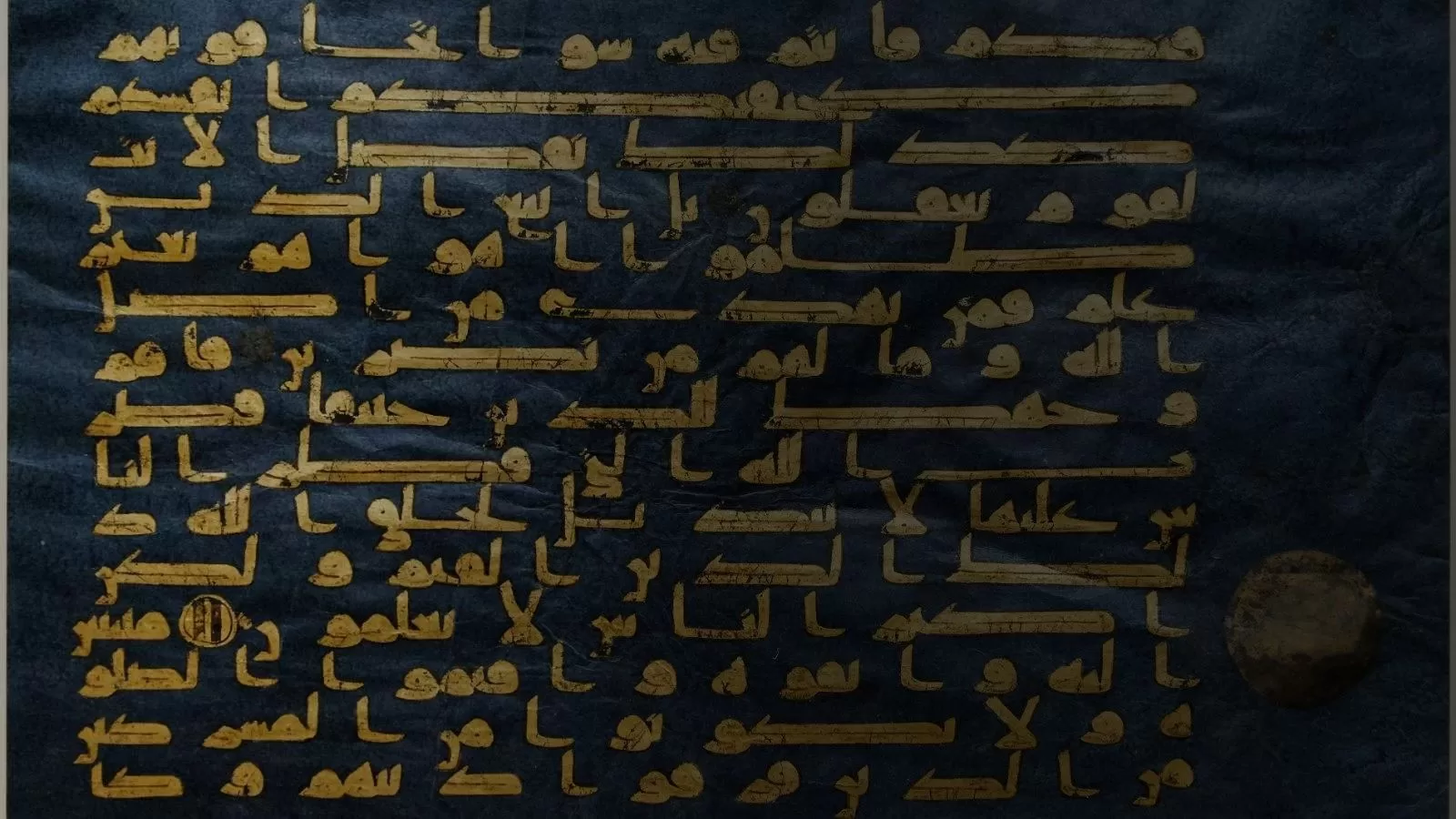
Photo: a leaf from the Blue Qur’an, the Metropolitan Museum, licence CC BY 2.5. An illustrative image of early Qur’anic art; it does not show the museum’s holdings.
Sources: the museum’s own account of the invasion · visiting times and prices on its website.
Kuwait One, once a week.
The most useful stories we published this week, in your inbox.
No spam. Unsubscribe anytime.