
In the fish market before the sun is up, when the pavement is still wet and the smell of the sea is stronger than anything else, you can spot the zubaidi from a distance. Its colour is a polished-looking silver, its body flat and broad, and the seller lifts it in one hand to show you it is whole. Nobody haggles over zubaidi the way they haggle over anything else.
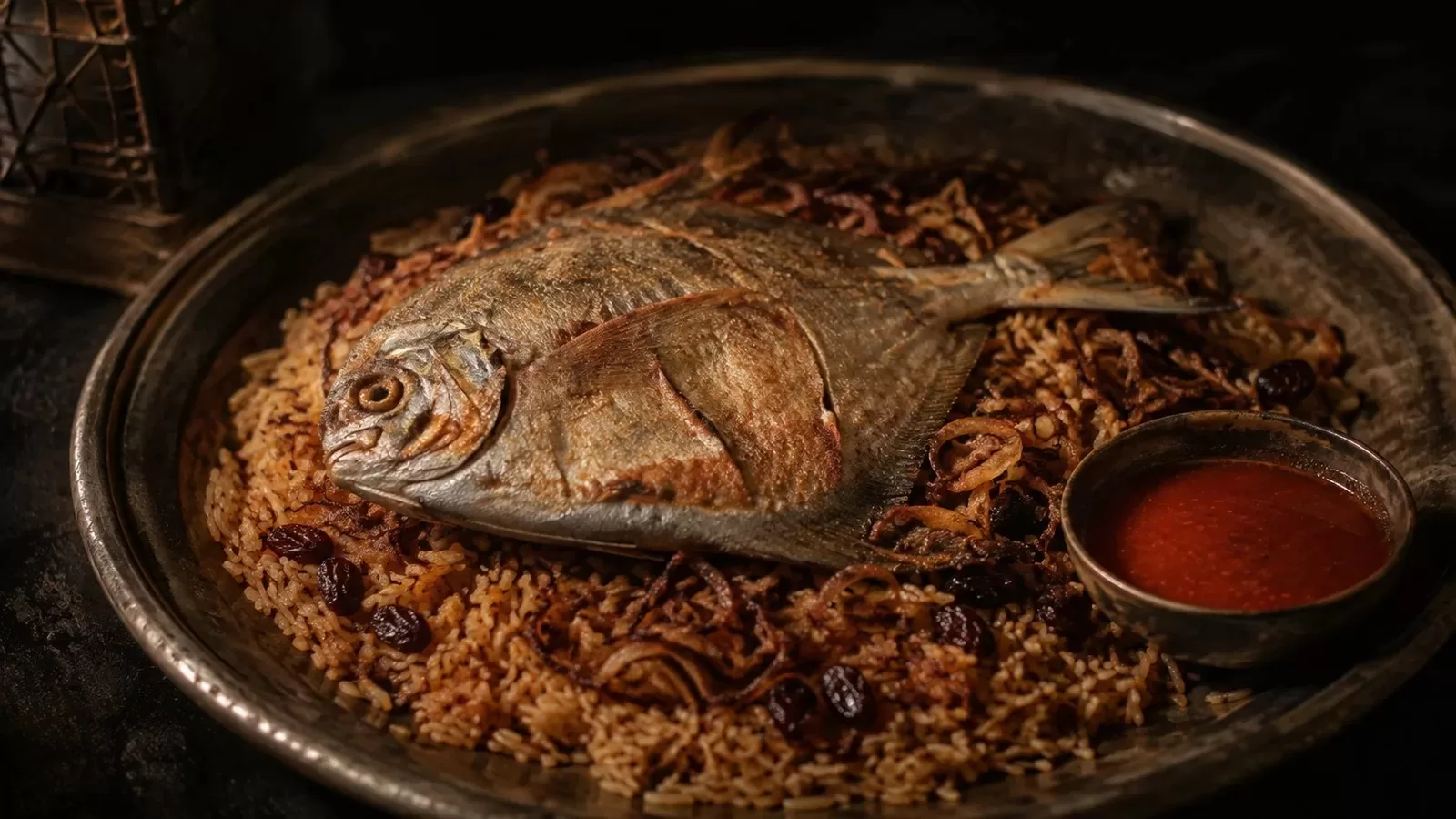
And it is from this fish in particular that mutabbaq zubaidi comes — the dish named every time the question of Kuwait’s national dish is raised.
Why the zubaidi and nothing else
Kuwait is a sea city with plenty of fish: hammour, safi, meed, nuwaibi. But the zubaidi took a place nobody competes for. Its flesh is white with few bones, its texture survives frying and then cooking over rice without falling apart, and its season is short — which on its own is enough to make a reputation.
In the seasons when it is scarce, its price becomes majlis conversation. And to anyone who knows the market, the price of zubaidi is an unfailing indicator of how the sea has been that year.
Where the name comes from
“Mutabbaq” comes from folding: one thing folded onto another. The rice is cooked in the fish broth and its spices, then the pot is turned over or the fish is laid on top, so the dish becomes two layers rather than one. The name describes the method rather than the flavour, and that is a habit in this cuisine: machboos from pressing, margoog from rolling thin, mutabbaq from folding. The names tell you what the hand does to the pot.
It is the same method the old Kuwaiti kitchen is built on: one pot, meat or fish first, then whatever soaks up the broth. The material changed and the logic stayed.
What goes with it
Mutabbaq is not served alone. Beside it goes daggous — the hot tomato sauce that is barely ever absent from a Kuwaiti table — and sometimes fried onion, raisins and nuts over the rice. The balance is deliberate: fried fish, rice saturated with broth, and something sour and hot to cut the richness.
Two dishes on one throne
Mutabbaq samak is named in the sources as a Kuwaiti national dish, and machboos is named alongside it in the same place. Accounts differ on which came first and which has the better claim, and the matter has never been officially settled. The likelihood is that the disagreement itself is the answer: a city built on the sea and on trade together, and two dishes representing both.
Mutabbaq today
It is still cooked at home, still served in popular restaurants, and the zubaidi season is still known as its season. The tools changed and the method stayed: fried, then folded, then turned onto the tray in the single movement anyone who has cooked it once knows.
Go back to the market before the sun. The pavement is still wet, the silver is still shining on the table, and the fish that will sit on top of the rice in a few hours still carries the smell of the sea it came out of.
Further reading: the Popular Heritage Exhibition, National Council for Culture, Arts and Letters · the Center for Research and Studies on Kuwait
Kuwait One, once a week.
The most useful stories we published this week, in your inbox.
No spam. Unsubscribe anytime.