Kuwait’s iftar cannon: two shots from the seafront, then one from Naif Palace
A gunner trained by the Ottomans, a wartime purchase, and a 1992 gift that still marks sunset during Ramadan
Before clocks and radio, Kuwait City knew it was time to break the Ramadan fast from a single sound that carried across every quarter: a cannon shot. It still goes off at sunset each day of the holy month, from the courtyard of Naif Palace, and state television carries it live.
The first gunner
The astronomer and historian Adel Al-Saadoun, in his Encyclopaedia of Kuwaiti Firsts, names the first man to fire Kuwait’s Ramadan cannon as Ali bin Uqab Al-Khazraji, who had learned gunnery from the Ottomans. Sheikh Mubarak Al-Sabah gave him the job of firing it at iftar and again at imsak, the pre-dawn start of the fast: two shots each time. Under Sheikh Ahmad Al-Jaber it dropped to one.
The gun stood on the shore at a spot called Seif Al-Toub, beside Seif Palace, where the Foreign Ministry stands today, next to the flagpole. Researchers describe it housed in a tin room with two doors, a large one facing the sea and a smaller one facing land, with a sack of gunpowder inside. Bin Uqab watched his old pocket watch, and when the sun went down he lit the powder in the muzzle.
Children gathered by the gun from mid-afternoon and cheered when it fired.
Two stories about the first gun
Sources disagree on where the gun came from. The writer Sultan Al-Osaidan dates Kuwait’s first cannon to 1907, under Sheikh Mubarak, and says it may have been a gift from the ruler of Iran at the time. It sat by the sea near Seif Palace and moved to Naif Palace in the 1930s.
The late astronomer Saleh Al-Ojairi told a newspaper a different story: the government bought the cannon, together with an air-raid siren, to defend the town during the Second World War. Neither was ever used in anger, and both were later put to work announcing the times of the fast.
Naif Palace
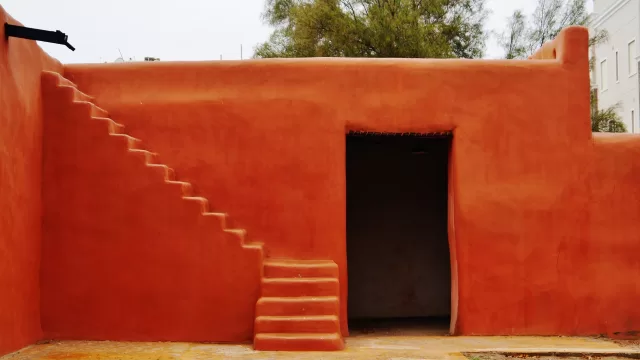
The palace itself was built of mud on a sandy rise called Saihad Naif; naif means high in Kuwaiti dialect. Work began in 1919 and finished the following year under Sheikh Salem Al-Mubarak, beside the southern stretch of the 1920 wall. It was rebuilt in cement and brick from 1950, housed the Public Security directorate, and later became the seat of the Capital Governorate. Al-Osaidan writes that in the early 1960s the army took over the firing, with two guns: one at Seif Palace and one at Naif Palace.
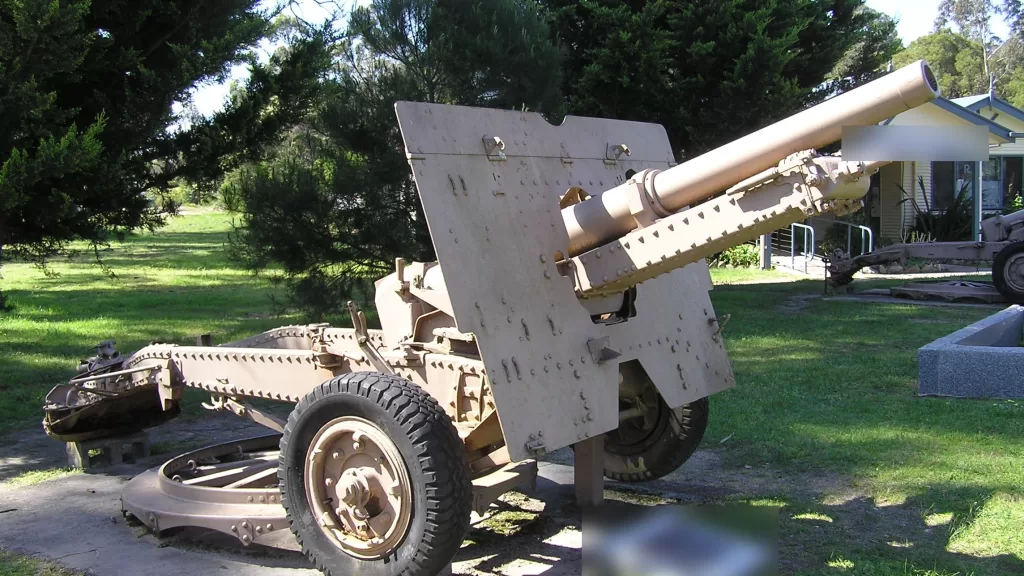
The gun fired today was a gift from Bahrain in 1992. It is British-made, a 25-pounder, and fires a single round with the sunset call to prayer, crewed by an officer and three men. The courtyard is open to families throughout the month to watch it.
Photo: a British 25-pounder field gun on outdoor display. It is the same calibre as the Naif Palace gun, but not that gun. By Graeme Bartlett, CC BY-SA 3.0 via Wikimedia Commons, edited by Kuwait One.
Source: Adel Al-Saadoun, Encyclopaedia of Kuwaiti Firsts, and remarks by astronomer Saleh Al-Ojairi, as reported by Al-Wasat on 18 February 2026; Sultan Al-Osaidan’s article as carried by the Kuwait History forum; on the palace, Hamad Al-Saeedan’s Concise Kuwaiti Encyclopaedia and Kuwait Heritage Society chairman Fahad Ghazi Abduljalil speaking to Al Jazeera Net on 28 August 2022.
Kuwait One, once a week.
The most useful stories we published this week, in your inbox.
No spam. Unsubscribe anytime.