
In the Qibla quarter there was a diwan open all year. Its owner sat in it after sunset, and whoever came sat with him. And in the summer of 1938 the diwan was not a room for conversation: sources, among them a book published by the Center for Research and Studies on Kuwait, say that the Legislative Council elections were held in it, and that the diwan became the seat of its meetings. The National Assembly’s official site names no particular place.
This is the Al-Sagar family. And to understand how a merchants’ diwan reached the heart of the country’s first parliamentary experiment, you have to start from the sea.
Voyage captains, not diving captains
Here is the commonest confusion. The word nakhoda carries two meanings: the diving nakhoda who commands a pearling boat, and the voyage nakhoda who commands a trading ship to India and East Africa. The Al-Sagars are the second, not the first.
In 1845 the nakhoda Yusuf Al-Sagar drowned near the coast of Cochin in Malabar, returning from the Bay of Bengal aboard his baghla “Al-Wafra”, carrying more than seven hundred and fifty tonnes of dates.
And that distinction is not linguistic. When the pearl market collapsed in the 1930s in the face of Japanese cultured pearls, many fortunes went with it. The date trade and shipping, by contrast, grew in those very years — which the Center for Research and Studies on Kuwait offers as the explanation for the family holding its position while everything around it changed.
The king of dates
Hamad Abdullah Al-Sagar, born in 1871 in the eastern quarter, became the largest date merchant in Kuwait, to the point of being called “the king of dates”, according to a biography published by Bayt Al-Zakat.
He was not a middleman buying and selling but an owner of the source: extensive palm groves in Basra, the village of Kut Al-Khalifa, and holdings running through southern Iraq. From there the ships moved to Bombay, Karachi and Porbandar in Gujarat.
His biography also has him as the first Kuwaiti to own a motorised launch, in 1914, and his ship shelled in the Shatt al-Arab when the British took the Kuwaiti flag for an Ottoman one — an account given by his son Jassem and relayed by Saif Marzouq Al-Shamlan.
What is not usually mentioned is the other side: he was the largest donor to the Ahmadiya school, and gave up part of his seafront land for a children’s school, on the site where the National Museum stands today.
From trade to the council
In April 1921, after the death of Sheikh Salem Al-Mubarak, the merchants submitted a petition to Sheikh Ahmad Al-Jaber, and the country’s first Shura council was formed: twelve appointed members, six for Sharq and six for Qibla. Hamad Al-Sagar chaired it.
The council did not survive two months. Hamad Al-Sagar died in January 1930.
And here a common error is worth flagging: the man of 1938 is not Hamad but his son Abdullah Hamad Al-Sagar, born in 1910. He led the national bloc, signed the reform petition, and won the June 1938 elections with a hundred votes in joint second place with Yusuf bin Issa Al-Qinai, according to the records of the British Political Resident. The council was chaired by Sheikh Abdullah Al-Salem Al-Sabah.
The chamber and the assembly
The third generation is Abdulaziz Hamad Al-Sagar, born in 1912 — some sources say 1913 — and died in 2005. He studied at the Mubarakiya and then the Ahmadiya, and was sent to Bombay in 1922.
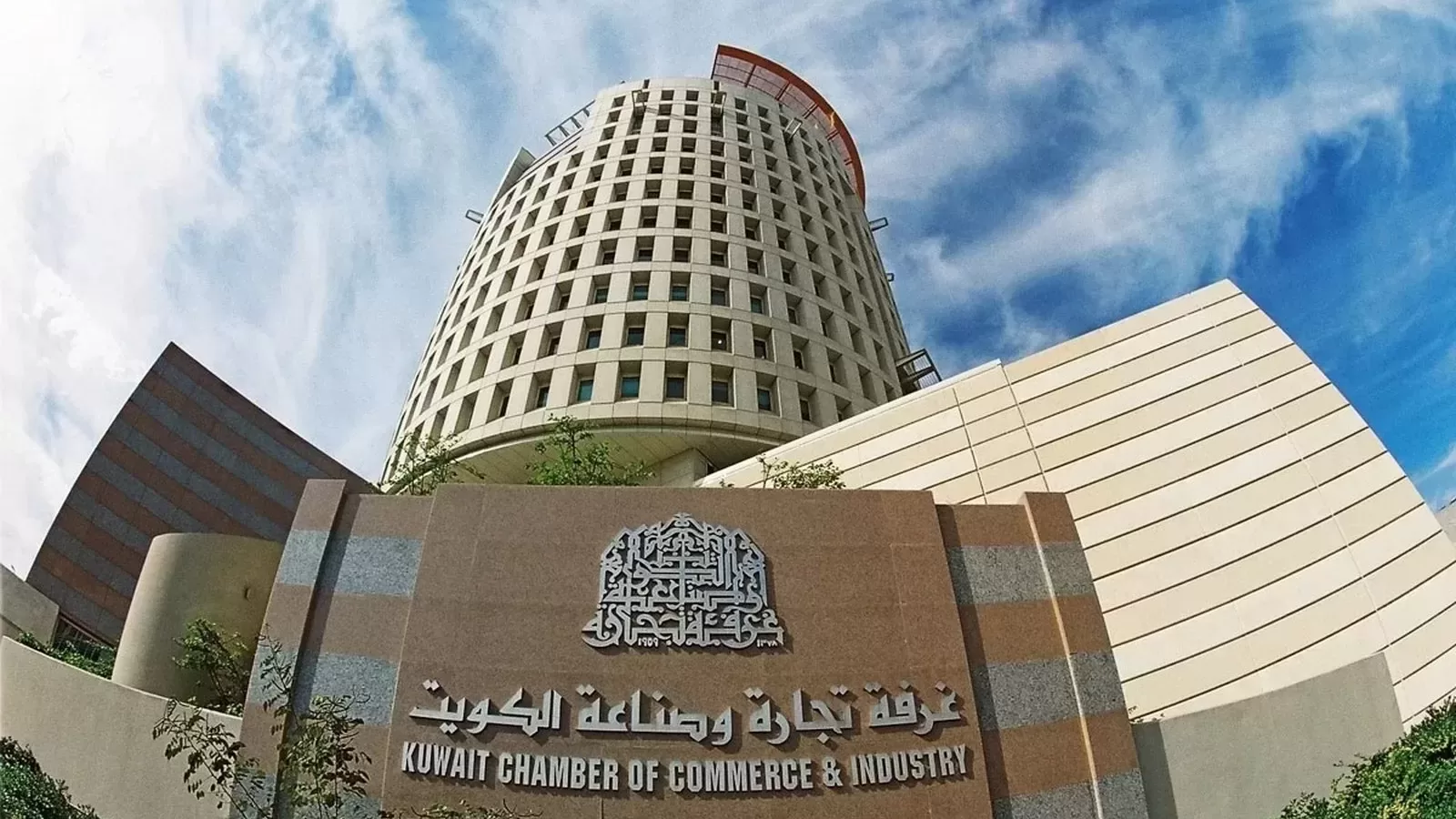
His name is tied to two institutions. The first is the Kuwait Chamber of Commerce and Industry, established in law by a statute published in “Kuwait Al-Youm” on 28 June 1959, with accounts of an earlier nucleus dating to 1955.
The second is the National Assembly. Abdulaziz Al-Sagar was the first speaker of the elected National Assembly in its first legislative term in 1963. Before him, Abdullatif Thunayan Al-Ghanim chaired the Constituent Assembly that drew up the constitution, which is why Al-Ghanim’s name heads the list of speakers on the official site.
He then resigned the speakership in 1965 in protest at the government’s interpretation of article 131 of the constitution.
What remains today
The family’s presence today is institutional more than it is a company carrying its name:
- Isam Jassem Al-Sagar, vice chairman and group chief executive of the National Bank of Kuwait — the bank Abdulaziz Al-Sagar was one of nine founders of in 1952.
- Mohammed Jassem Al-Sagar, chairman of the Kuwait Chamber of Commerce and Industry since 2020, and editor-in-chief of Al-Qabas between 1983 and 1999.
- The Hamad Abdulaziz Al-Sagar Centre for Technology and Innovation, opened in December 2025 inside the chamber’s own tower.
Go back to the diwan in Qibla. A room where a date merchant sat after sunset became, in a single summer, a polling hall. And that is the difference between a wealthy family and a merchant family: the first owns money, the second owns a place where people gather.
Further reading: the National Assembly — former speakers · Bayt Al-Zakat — biography of Hamad Abdullah Al-Sagar · Kuwait elections database — June 1938
Kuwait One, once a week.
The most useful stories we published this week, in your inbox.
No spam. Unsubscribe anytime.