
Luqaimat is one of the few sweets that fails quietly. The batter looks right, the oil is hot, the shape is acceptable, and then the piece comes out heavy and solid inside instead of airy and light. And in most cases the cause is not the quantities but the time and the heat.
These are the points that actually decide the result.
The batter is a liquid, not a dough
The commonest mistake is treating luqaimat batter like dough. It is not a dough to be kneaded and cut, but a thick pourable batter with the consistency of heavy yoghurt, sliding slowly off the spoon rather than dropping in one lump.
A stiff batter gives a solid piece. An over-thin batter breaks up in the oil and does not hold its shape. The right consistency is between them, and it is what lets the piece inflate inside while setting outside.
Resting is not an optional step
The yeast needs time to work, and that time is what creates the voids inside the piece. The batter is left somewhere warm until clear bubbles show on its surface and it grows in volume.
And if the batter is fried before it has fermented, nothing will expand the piece from within, and it will come out dense however well you manage the rest. Conversely, a batter left too long collapses and picks up a sour note.
Oil: the real enemy is not coldness
Everybody remembers that the oil has to be hot. The more dangerous case is oil that is hotter than it should be.
In overheated oil the surface colours quickly and reaches an acceptable brown while the inside has not cooked. The result is a piece that looks ready and is raw in the middle.
And in cold oil the piece absorbs the fat before its crust has formed, so it comes out saturated and heavy.
The simple test: drop in a bead of batter. If it sinks and then rises calmly within a few seconds with small bubbles around it, the heat is right. If it rises immediately and colours in moments, the oil is too hot. And if it stays on the bottom, it is too cold.
Movement in the oil
A piece left sitting cooks on one side and comes out uneven and oval. Continuous gentle stirring while frying is what makes it round and evenly coloured on every side.
And do not fill the pot. Every piece added lowers the oil temperature, and a full pot means falling heat and grease-logged pieces. Small batches are faster to a good result even though they look slower.
The syrup: the timing decides the crunch
This is where the work of all the previous steps gets thrown away.
A very hot piece plunged straight into syrup absorbs it and loses its crunch within minutes. A completely cold piece will not hold the syrup at all, and it runs off to the bottom of the plate.
The middle is right: leave the pieces a moment on a rack until their steam settles, then pour the syrup over them at serving rather than before. And anyone keeping them for later is better off serving the syrup in a bowl on the side.
Date syrup is not the only option. Many Kuwaiti households use a sugar syrup with saffron and cardamom, some combine the two, and sesame is scattered over the plate.
In short
- A thick pourable batter, not a dough.
- Enough resting for the bubbles to show, and no more.
- Steady medium heat, and small batches.
- Continuous stirring in the oil.
- Syrup at serving, on a warm piece rather than a scalding one.
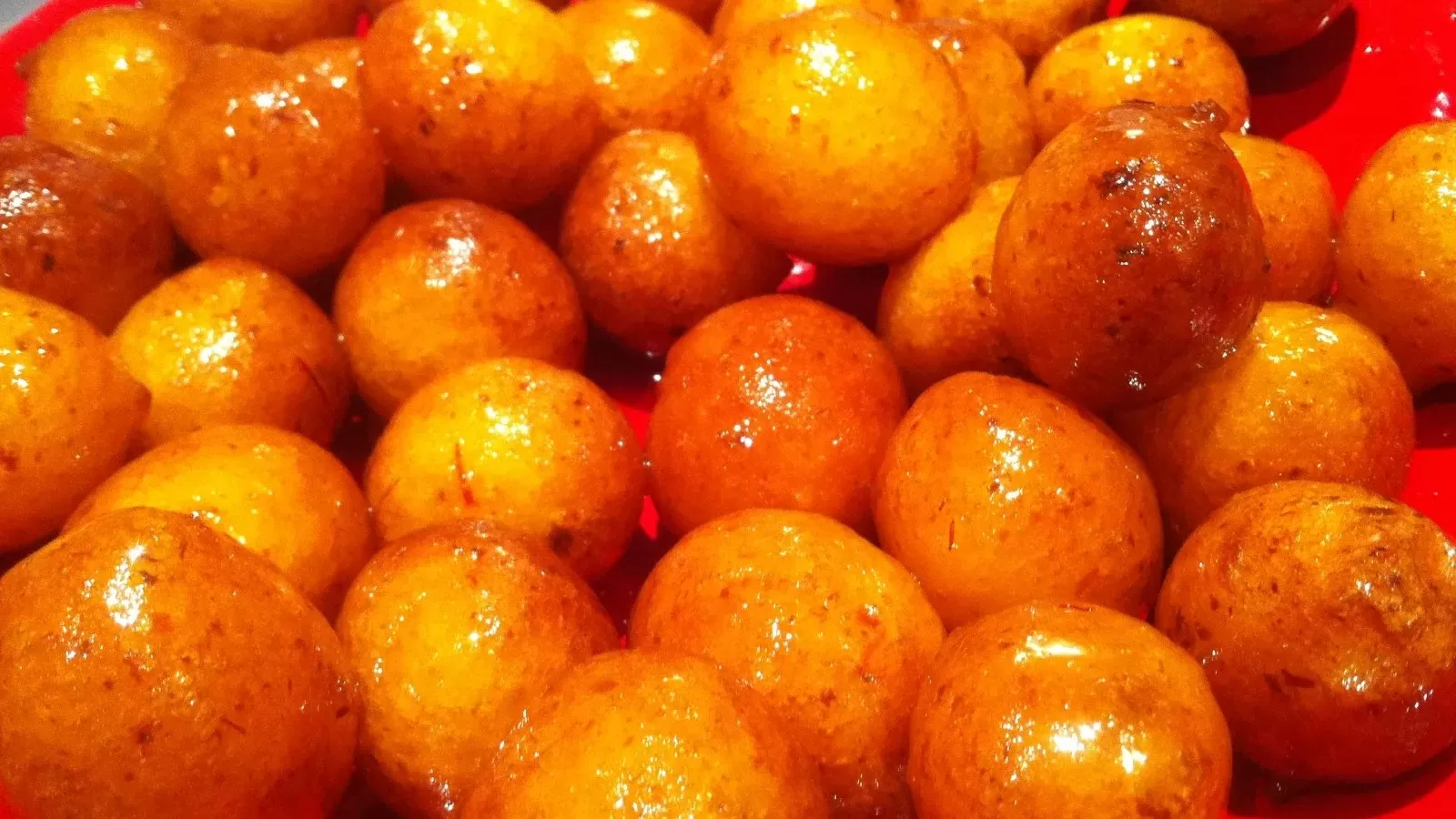
Photo: Kuwaiti luqaimat — by Aldousari via Wikimedia Commons, CC BY-SA 3.0
Kuwait One, once a week.
The most useful stories we published this week, in your inbox.
No spam. Unsubscribe anytime.