
There was no instrument aboard a Kuwaiti ship for measuring wind speed. The instrument was the sail itself.
Five sails ordered from largest to smallest, each belonging to one state of the air. Choosing the sail was a reading of the weather, and the decision was the nakhoda’s.
The ladder
- Ood: the largest sail, raised in moderate weather when the air is favourable.
- Safdeera: between the ood and the tarkeet, raised when the air strengthens.
- Tarkeet: smaller than the safdeera, for stronger air.
- Qalami: smaller than the tarkeet, for when the wind rises further.
- Jeeb: the smallest, raised only when the wind is very strong.
There are other, smaller sails with their own uses, but they go up only occasionally.
Note the logic: the stronger the wind, the smaller the sail. The largest is not the best but the fittest for one condition. And a ship flying the ood in a wind that calls for the jeeb is a ship on her way to the bottom.
Where the cloth came from
The sailcloth, called the ghazl, was brought from Bahrain, India, Karachi and Brava in bolts called dariya. A single bolt ran forty to fifty metres long and seventy centimetres wide.
The bolt was cut into rectangular pieces called shaqq, then sewn to form the sail according to the type and size of ship, following agreed measurements.
And the sewing was done with a large needle called the meebar, one of the known tools of the trade alongside the adze, the saw and the plane.
And the ropes
The ropes were made from coconut fibre and from palm frond stalks, and brought from Calcutta in coils of various sizes.
Every rope had a name according to its thickness and use: the thick one is called the ammar, the divers’ ropes are known as abraidoon, and among the finest is a type called sarkali. There were also cotton and hemp ropes.
Even the knots had names: the nashfa, the tarbee’a, the ghurfa, and the hindiya.
Why all these names
Because a mistake at sea does not tolerate explanation. When the nakhoda shouts the name of a sail, there is no time to describe it. One word abbreviates a complete order: take that down and get this one up, now.
The vocabulary that looks like heritage to us today was a precise working language in its time, born of necessity rather than of taste.
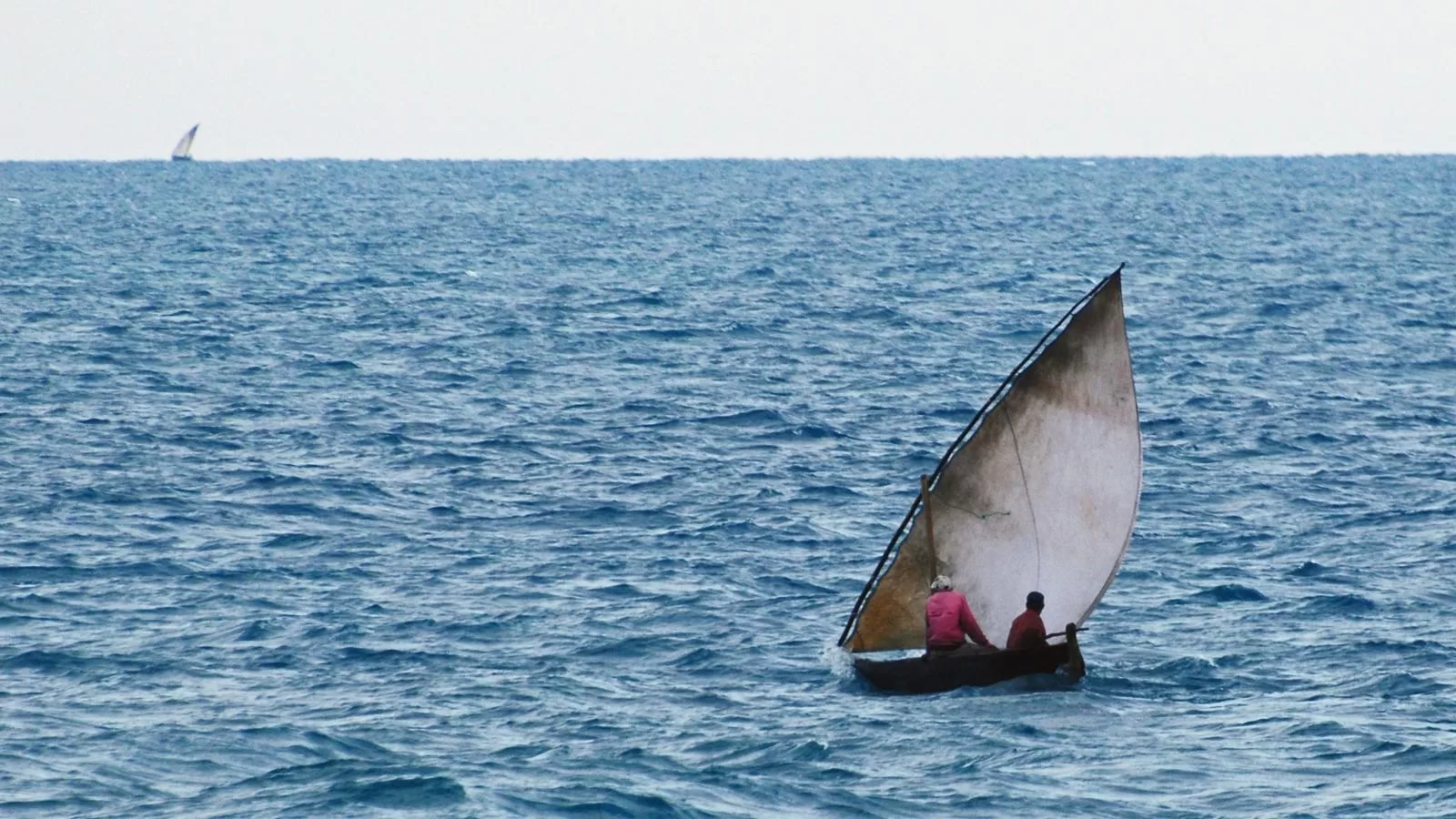
Photo: by Harvey Barrison via Wikimedia Commons, CC BY-SA 2.0. The photo is of a sailing vessel in East Africa and does not depict a Kuwaiti ship.
Further reading: the Kuwait History Forum, maritime history section
Kuwait One, once a week.
The most useful stories we published this week, in your inbox.
No spam. Unsubscribe anytime.