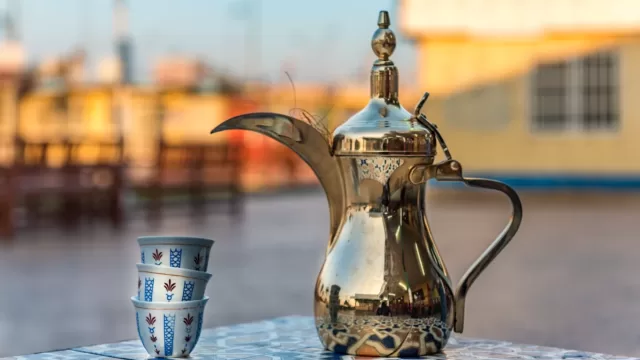

In the old Kuwaiti kitchen there were no scales. The quantity was measured by the vessel you poured it into, so the unit of measurement stayed something you hold in your hand rather than a number on a dial.
The tin that became a unit
In his series “A Heritage Window: the Kuwaiti kitchen of old”, published in Al-Qabas, Dr Saud Mohammed Al-Osfour records that the cheelat al-aish — the rice measure — was reckoned by the “arnas” tin, the Kuwaiti name for canned pineapple. He says of it that it is “the one relied on by Kuwaitis to judge the amount needed for a family meal, and it still is in most households”, adding that any vessel of similar size does the same job.
And Al-Osfour gives no volume in millilitres for that tin, for a reason at the heart of the idea: the measure was the vessel itself, not what it held. Which is how the measure stayed alive after the kitchen it was born in disappeared.
Before the tin: the ghirara and the zabeel
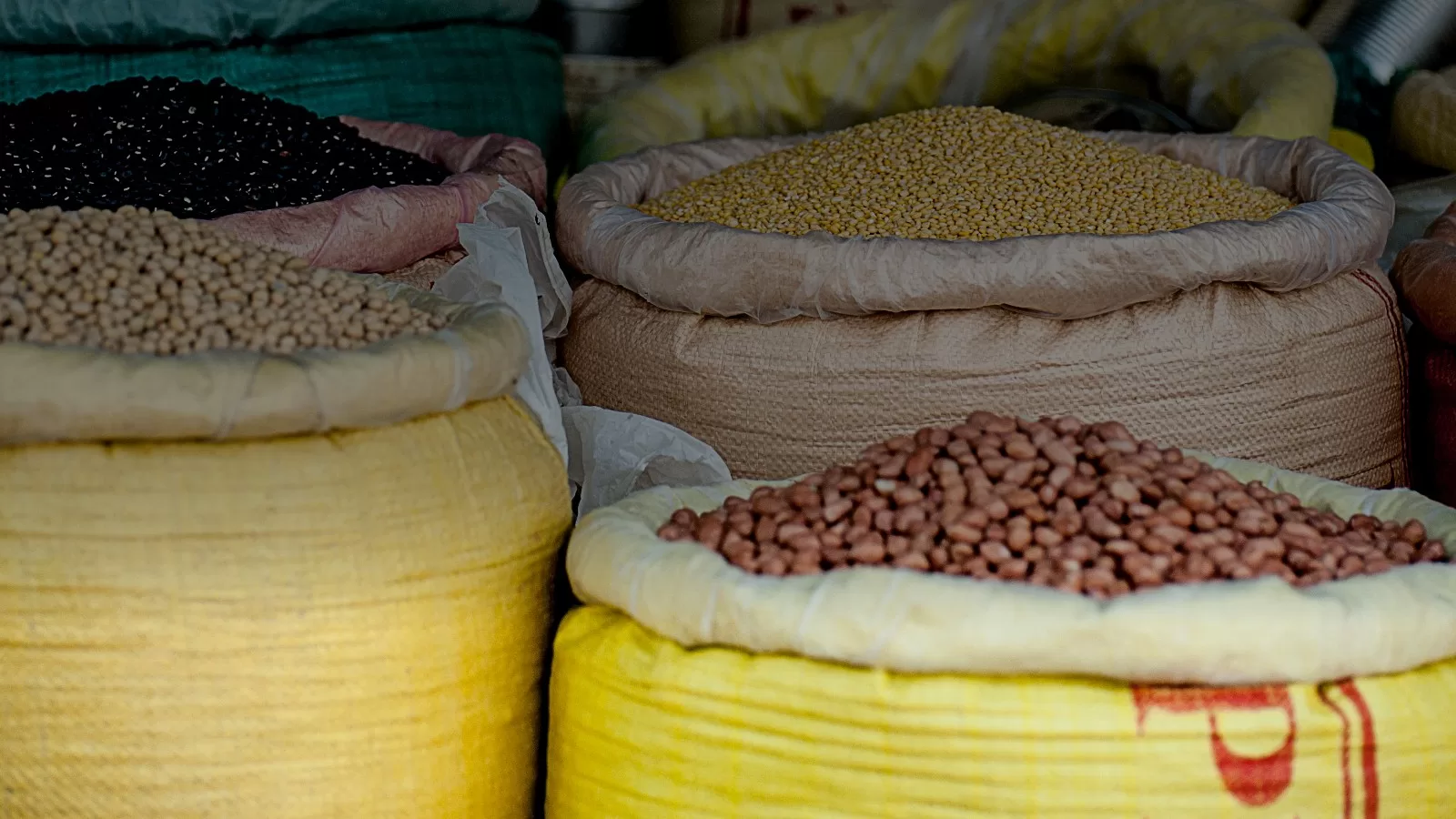
Grain was not kept in boxes. The yuniya, koniya or qoniya — three pronunciations of the same word — is the sackcloth ghirara, and in it were kept rice (aish), sugar (shakar) and salt. The zabeel or zanbeel was made by the palm-weaver from palm fronds, and food was put in it or carried in it.
With them went the mihqan, a vessel for emptying liquid — fat and the like — from one container into another, made of metal before it was made of plastic.
What pounds and grinds
The minhaz is a hard wooden vessel like a mortar, in which wheat grains are crushed, used especially for pounding the grain for harees. The raha is two hard stones, one above the other with a handle on top, for grinding and cracking grain. The mathana was a hand-cranked metal mill before electric ones entered the home. And the hawan is for pounding pieces small.
The sufra before the table
The sufra was made by the palm-weaver from palm fronds, and food was placed on it to be eaten; it was later replaced by the simat, made of plastic. And the tasat al-khubz kept the bread.
Why this matters today
Because measuring by the vessel has not disappeared. Anyone cooking machboos today does not weigh the grain; they count it in cups or tins. What was lost along the way is the name of the unit, not the method itself.
Source: Dr Saud Mohammed Al-Osfour, “A Heritage Window: the Kuwaiti kitchen of old”, Al-Qabas, November and December 2019.
Kuwait One, once a week.
The most useful stories we published this week, in your inbox.
No spam. Unsubscribe anytime.