
Before plastic, most of what was in a Kuwaiti house came out of a single tree. The trunk, the fronds, the frond stalks and the leaflets were all raw material in the craftsman’s hands.
The Kuwaiti heritage researcher Dr Adel Mohammed Al-Abdulmughni says society in the early part of the last century met its needs from palm crafts, because the materials were locally available and its finances were modest.
The diver’s rope, and how it is made
Zaibal and eeda are two names for the long ropes used by those who worked at sea, and by divers especially as they descended for pearls.
And making them starts not from the leaflets but from the date stalk after the fruit is harvested. The fine hanging branches, called shamareekh, are removed, leaving the asu, the thick parts. It is soaked in water and pounded well until fine thread-like strands come away, which are then woven and plaited together into a rope.
What was in the kitchen
Tabaq: a flat, round, shallow vessel woven from palm leaflets, holding all sorts of things.
Guffa: a deep round vessel, nearly hemispherical, also of leaflets, holding the woman of the house’s own belongings.
Sufra: spread out when the family sat down to eat.
Malala: placed over cooked food in pots and vessels, to keep it out of reach of children and cats.
Rakk: a conical vessel of fine frond stalks, reserved for grapes and fresh dates for its light weight and ease of carrying and keeping.
What was in the room
Makhma: of palm leaflets, with which the woman swept the house.
Mihaffa: of leaflets, with a handle of frond stalks, waved left and right to move the air and cool things down. Older people used it most in summer.
Haseer: the matting that stood in for carpet, put in the rooms or the diwaniya to sit on.
Manz: a small child’s cot made from palm frond stalks.
What was in the street and the souk
Zabeel: a round vessel with two handles to carry it by. It was used for carrying building materials, and women used it in the souk for their shopping and then carried it on their heads.
Yalla: a large leaflet vessel used by porters to hold buyers’ goods from the markets.
Gafas: a cage of frond stalks for keeping birds, some of which is still made today.
And a toy
Kafoud: an old children’s toy. The two ends of a frond stalk are tied with a taut string, the string decorated with coloured rags, and the child pushes it along the ground and rides it as though mounted on an animal.
Fifteen things, from one palm.
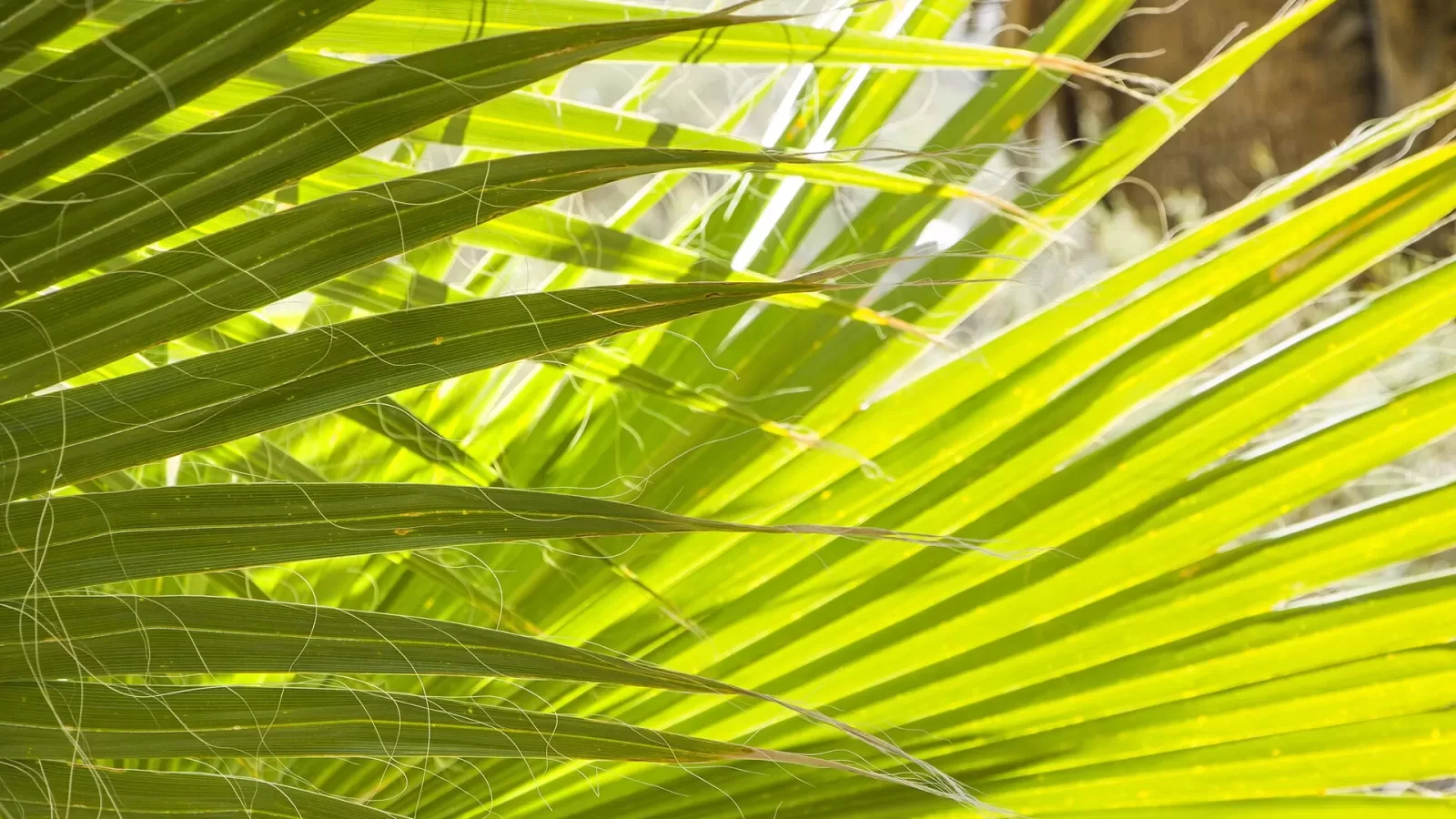
Photo: palm fronds. By Joshua Tree National Park, public domain via Wikimedia Commons.
Source: a Kuwait News Agency report on the researcher Dr Adel Mohammed Al-Abdulmughni.
Kuwait One, once a week.
The most useful stories we published this week, in your inbox.
No spam. Unsubscribe anytime.