
In old Kuwait the souks were not only places to buy and sell. They were where news arrived, where deals were made, and where a town of merchants met itself. Each trade had its own market, and each market had its own hours and its own crowd.
Mubarakiya
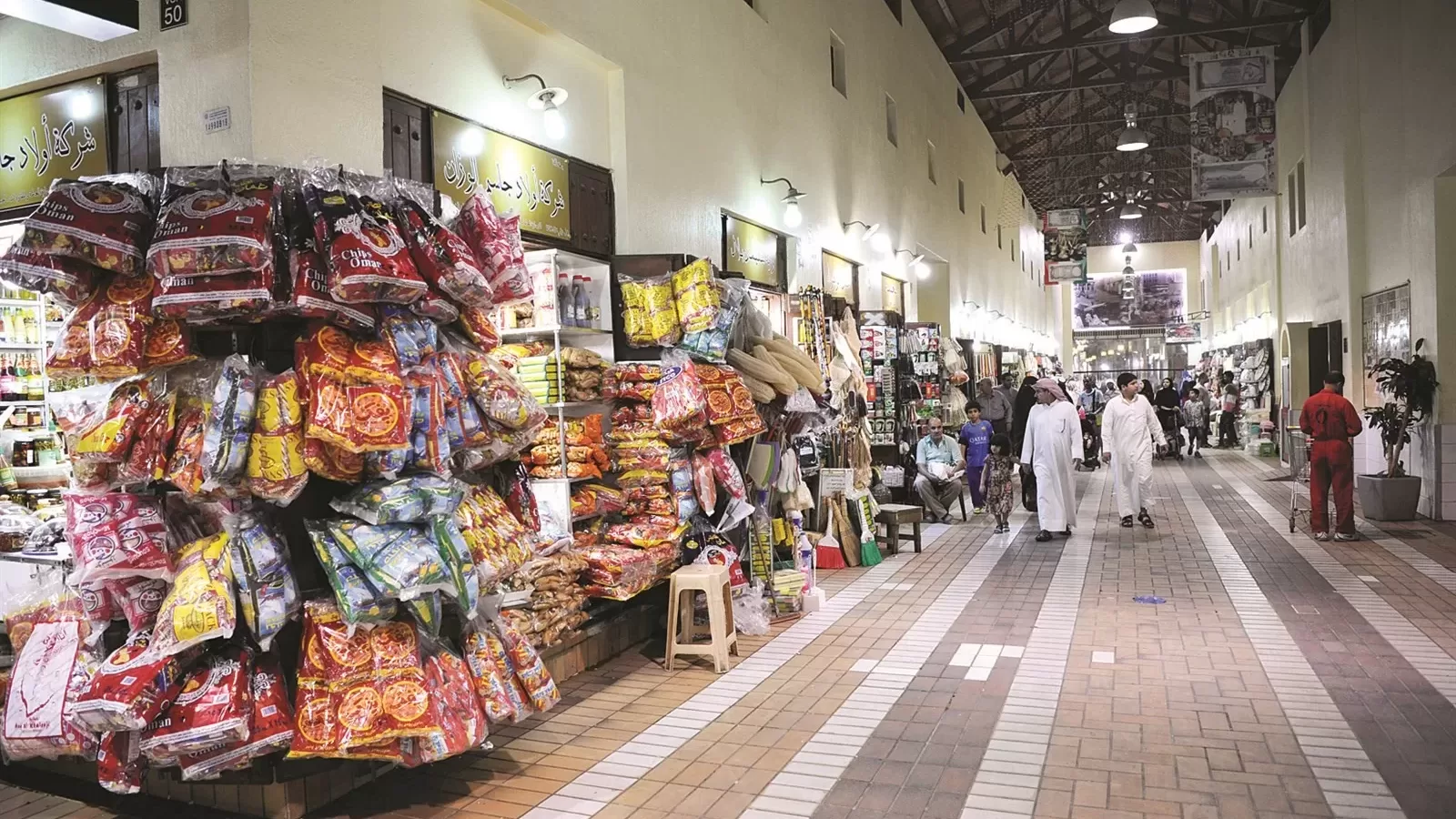
The best known, and for many years the working centre. Stone-paved lanes, small shops carrying their owners’ names, the smell of spice and coffee, and traders calling across the passage. It is still standing, and today it is both a piece of the past and a place people visit for its own sake.
The gold souk
Under a wooden roof carried on columns. Not only a place to sell jewellery but a standing display of local craft, where hand-worked patterns met the symbolism of particular occasions. In a town where wealth moved with the seasons, gold was also the family’s store of value.
The money changers
Men sat on stone benches, exchanged currencies, wrote receipts by hand, and talked about the state of trade. No machines and no counters — paper, a pen, and a reputation. In a port taking coins from India, Persia and the Ottoman lands, the changer was as necessary as the shipper.
Souk Wajif
The name is said to come from standing: people stood in it, negotiating rather than sitting down. It was where townspeople and visitors from outside met, and where a stranger stopped being one quickly.
The fish market
Loud, fast, and unmistakable by smell. The fishermen came in from the Gulf, the auction started, and the prices moved in a few minutes. Everything about it ran on the tide rather than on the clock.
Not only trade
Popular poets moved between the shops reciting, and were paid in coins or in goodwill. Craftsmen — the cobbler, the blacksmith — worked in the open where people could watch, making shoes, knives and keys in front of their customers.
Women were present in this picture and not at its edges. Many sold incense, perfume and cloth from behind wooden tables. The souk gave them their place by custom rather than by any written rule.
The names that went
Older Kuwaitis still talk about souks that have gone from the signage and stayed in the memory: Souk Al-Silah, which sold what a hunter or a soldier needed; Souk Al-Maqaseeb for second-hand and lost goods; and the charcoal, date and carpet souks.
The modern markets that replaced them are air-conditioned, clean and orderly, and colder. Mubarakiya is what survives of the other kind — a working market that is also a piece of the city’s memory.
Further reading: the National Council for Culture, Arts and Letters · the Center for Research and Studies on Kuwait
Kuwait One, once a week.
The most useful stories we published this week, in your inbox.
No spam. Unsubscribe anytime.