The Kuwaiti Dinar: From the Rupee to a Currency of Its Own
Law 32 of 1961 created the monetary board, and the first notes were issued on the day independence was declared. The six issues since, and what the 1991 one replaced.
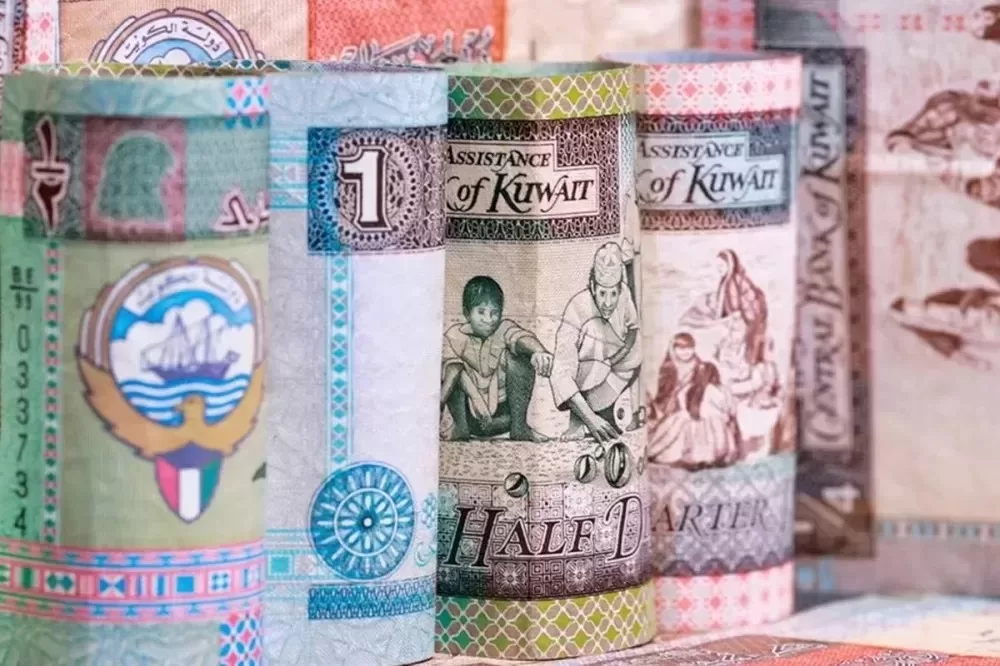
The Kuwaiti dinar was not always the country’s monetary marker. The money people once handled carried the portrait of a king from somewhere else, and its value moved with policies Kuwait had no say in.
The Indian rupee
Before it issued its own money, the Indian rupee circulated in Kuwait, as it did in other Gulf states such as Bahrain and Qatar. It was issued by India’s central bank and used for daily transactions — Kuwait being under British protection and India then part of the British crown.
With the rise in economic activity in the 1950s, and particularly after the oil boom, Kuwait began to need a national currency that would let the state set its own monetary policy, insulate the economy from imported inflation or from disruptions tied to the rupee, and mark its sovereign standing.
The dinar arrives
On 1 April 1961, Law 32 of 1961 established the Kuwaiti Currency Board, charged with issuing the country’s first money: the Kuwaiti dinar.
And on 19 June 1961 — the same day Kuwait declared independence — the first official issue appeared.
What marked it
- A strong exchange rate, built on a solid monetary base backed by substantial oil and cash reserves.
- National designs: the notes carried images from Kuwait’s history — the towers, ships, markets and heritage buildings.
- Relative stability, keeping its position among the strongest currencies in the world by exchange rate against the dollar.
Six issues
- First issue, 1961: denominations of ¼, ½, 1, 5 and 10 dinars.
- Second issue, 1970: new designs and improved security features.
- Third issue, 1980: more advanced, with clearer colours.
- Fourth issue, 1991: after the liberation of Kuwait from the Iraqi invasion, when the notes taken by the Iraqi regime were cancelled and new ones issued.
- Fifth issue, 1994: better designs and more advanced security.
- Sixth issue, 2014: the current one, on durable polymer, carrying architectural and heritage views of Kuwait alongside modern ones.
Why it holds its value
The dinar is the world’s highest-valued currency by nominal exchange rate against the US dollar. The reasons given are the state’s large financial reserves, the conservative monetary policy of the Central Bank of Kuwait, and the peg to a basket of currencies rather than to the dollar alone, which adds stability.
More than the financial strength, the dinar became a marker of the country’s independence and of its success in building monetary institutions of its own.
Further reading: the Central Bank of Kuwait · the Kuwait Investment Authority
Kuwait One, once a week.
The most useful stories we published this week, in your inbox.
No spam. Unsubscribe anytime.