The “set date and time automatically” switch on your phone looks like housekeeping. It is actually the near end of a chain that starts inside an atom. The International Bureau of Weights and Measures defines the second by fixing the unperturbed ground-state hyperfine transition frequency of the caesium-133 atom at 9,192,631,770 hertz. The unit is not a slice of the Earth’s rotation; it is a count taken in a laboratory.
Getting that count to you is a separate problem. The US National Institute of Standards and Technology, which runs one of the internet’s time services, calls the Network Time Protocol the most commonly used internet time protocol, and still answers two older ones: Daytime on port 13 and Time on port 37. Daytime, it says, will generally be correct to within a tenth of a second.
The sentence worth reading twice is the caveat: the accuracy a user actually sees “will usually be determined largely by the stability and reciprocity of the network connection” between the server and their machine. A caesium standard good to fractions of a billionth of a second is only as good as the route home. Practically: leave the automatic setting on, and do not trust an ordinary device to resolve differences finer than about a tenth of a second.
One change is coming that matters to anyone who writes software. The leap second — an extra second inserted into UTC to track the Earth’s slowing spin — has caused repeated outages, because a clock repeats the same value twice. In 2022 the General Conference on Weights and Measures resolved that the maximum value for the difference between UT1 and UTC “will be increased in, or before, 2035”, which removes the need to insert seconds at all. Code written for the years ahead will not have to survive a clock stepping backwards.
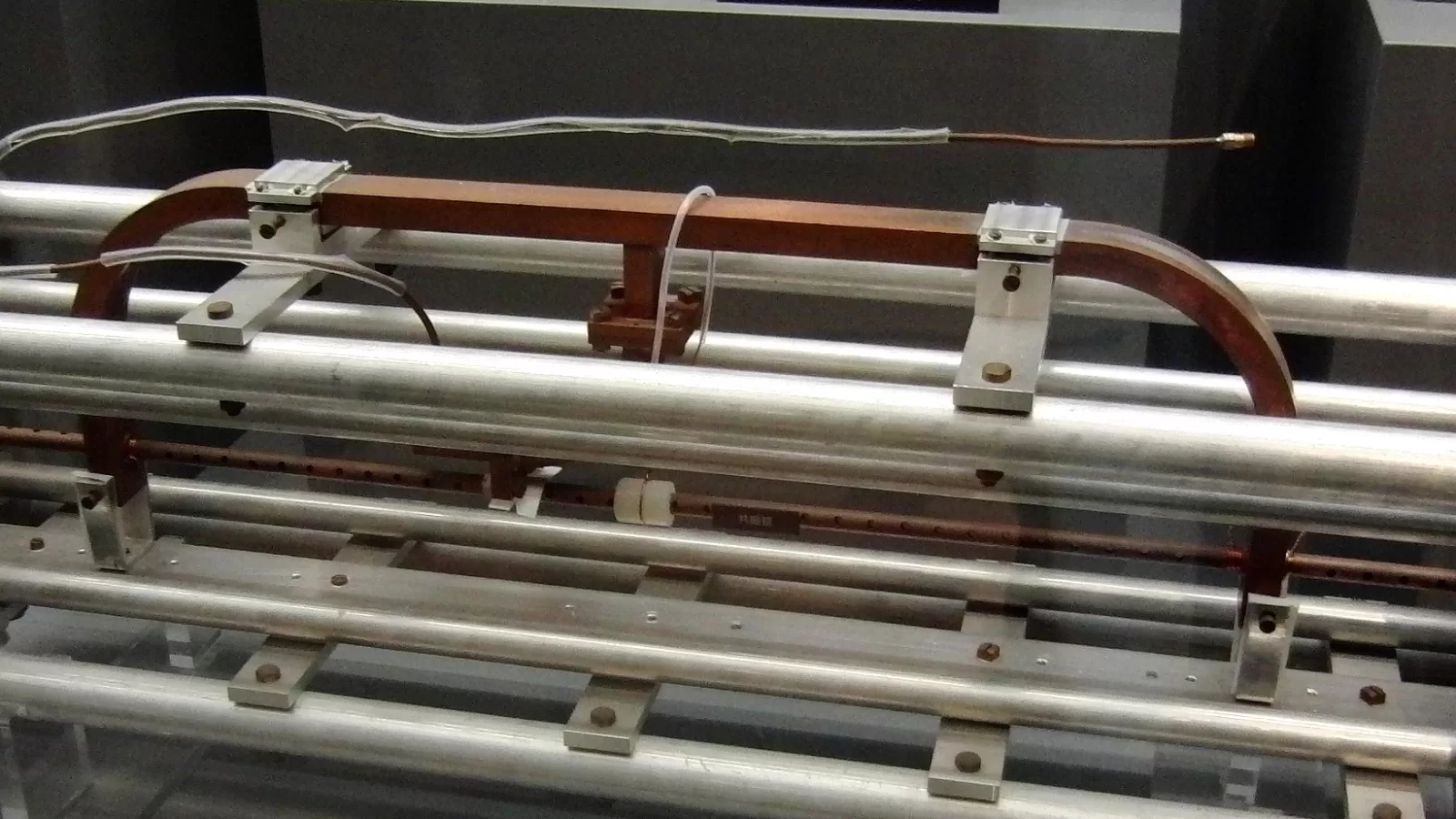
Photograph: A caesium beam resonator tube on museum display. Photo by Momotarou2012, CC BY-SA 3.0 via Wikimedia Commons.
Source: International Bureau of Weights and Measures — the definition of the second, and Resolution 4 of the 2022 General Conference. US National Institute of Standards and Technology — Internet Time Service.
Kuwait One, once a week.
The most useful stories we published this week, in your inbox.
No spam. Unsubscribe anytime.