In the 1930s Kuwait’s drinking water did not come out of its own ground. It came by sea, on Kuwaiti water boats that sailed to the Shatt al-Arab and brought fresh river water home. The whole supply line ran through someone else’s territory: the estuary lies in Iraq.
What happened along that line is preserved in two files from the British India Office Records, held by the British Library and digitised by the Qatar Digital Library.
File one: 1936 to 1939
Titled “Koweit: Water Supply”, it runs from 6 October 1936 to 31 October 1939. According to the library’s catalogue, it concerns Kuwait’s dependence on Iraq for water and covers:
- delays to Kuwaiti water boats in the Shatt al-Arab caused by Iraqi customs, which led to a water shortage in Kuwait;
- complaints by the Ruler of Kuwait, Sheikh Ahmad Al-Jaber, to the British authorities in 1936 and 1937;
- the British view that the Iraqi measures might have been prompted by smuggling out of Kuwait;
- a “Note on the Drinking Water Available in Kuwait and the Immediate Vicinity” by the British Political Agent in Kuwait;
- letters from A. Beeby Thompson & Partners, consulting engineers in London, proposing a hydrological survey of Kuwait in 1938;
- a proposal by the Political Resident in the Gulf, Sir Trenchard Fowle, that the British government pay for the survey, and the refusal of the Foreign Office and other departments, on strategic or political grounds, in 1938 and 1939.
File two: looking for an alternative
The second file spans a longer stretch, 2 May 1932 to 17 June 1943, across 232 folios. Its subject is the supply of water to Kuwait from the Shatt al-Arab, including incidents over customs payments, the customary right of people around the estuary to draw water from it, and the boring of wells inside Kuwait as an alternative.
Most of the letters passed between the Political Agency in Kuwait and the Residency at Bushire, with experts and Kuwait Oil Company staff brought in on how to find fresh water for the town.
What the two files add up to
The archive shows a town drinking from a river it did not control, where a customs dispute was enough to leave it short of water. That is why the question was being asked in the 1930s: was there water under Kuwait that could replace the boats? The files don’t answer it. They do show when it was first put, and who declined to pay for the search.
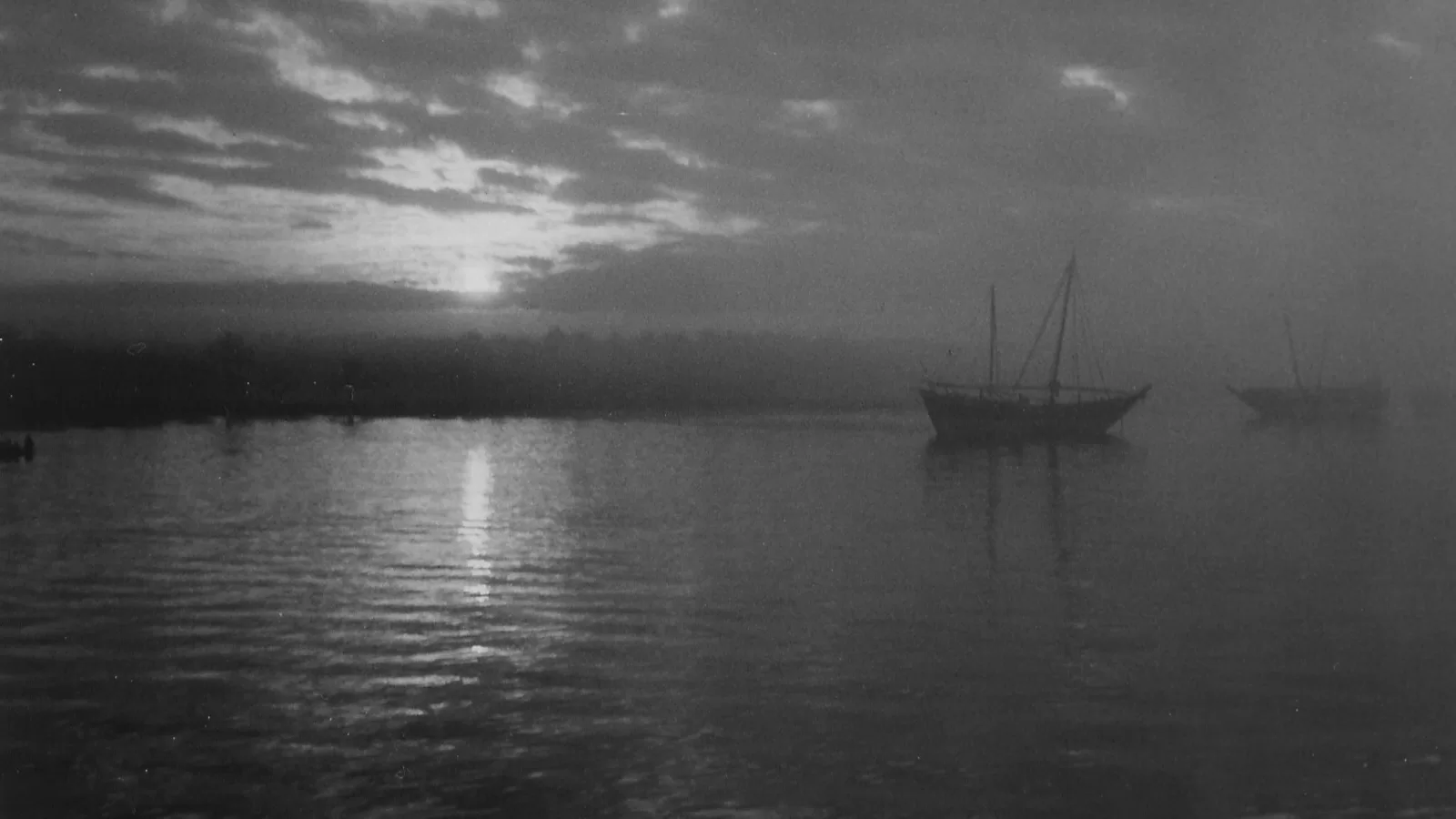
Photo: evening on the Shatt al-Arab in 1958, showing the river rather than the Kuwaiti water boats themselves, by Buonasera, CC BY-SA 3.0, via Wikimedia Commons.
Sources: Qatar Digital Library, Coll 30/166 “Koweit: Water Supply” (1936–1939) and File 2/8 “Kuwait water supply from Shatt al-Arab” (1932–1943), British Library India Office Records.
Kuwait One, once a week.
The most useful stories we published this week, in your inbox.
No spam. Unsubscribe anytime.