Since 27 March 2026, power banks have had their own rules in aviation. The International Civil Aviation Organization (ICAO) issued an addendum to its Technical Instructions, effective the same day, that separates power banks from spare batteries and tightens how they travel. The number that decides everything is the watt-hour rating, not the big milliamp-hour figure on the box.
Work out the number yourself
Watt-hours are capacity in amp-hours multiplied by the nominal voltage. Every lithium-ion battery is supposed to have its Wh rating printed on the casing. If yours doesn’t, read the capacity and voltage off the label:
- Divide the mAh figure by 1,000 to get amp-hours.
- Multiply by the cell voltage printed next to the capacity, usually 3.6V or 3.7V, not the 5V output.
- Example: a 20,000mAh pack at 3.7V is 20 × 3.7 = 74Wh.
By the same sum, the 100Wh limit works out to about 27,000mAh at 3.7V. If airport staff can’t confirm the rating from the battery or its paperwork, the airline is entitled to refuse it.
What is allowed
- Up to 100Wh: hand luggage only, no approval needed. Never in checked bags.
- Between 100Wh and 160Wh: the International Air Transport Association (IATA) lists these as forbidden in its passenger table, although the ICAO addendum allows them with airline approval. IATA says that allowance will not appear in the edition of its regulations that takes effect on 1 January 2027.
- Over 160Wh: not carried by passengers at all; it has to travel as cargo under the dangerous goods rules.
The new cabin rules
- No more than two power banks per passenger.
- No recharging the power bank from the aircraft’s power supply in flight.
- A recommendation not to use it to charge your phone or other devices on board.
- Each power bank protected against short circuits: original packaging, taped terminals or its own pouch.
IATA also advises keeping power banks out of overhead lockers, travelling with them below 25% charge where possible, and letting them cool before packing if you have just charged them. Anything that turns hot or starts smoking should be reported to the crew straight away.
Before you fly
These are international minimums, and each country’s aviation authority decides how they apply. Airlines can set stricter conditions, and many have. Check your airline’s dangerous goods page before the trip, and look at the label on your power bank before it goes in your bag.
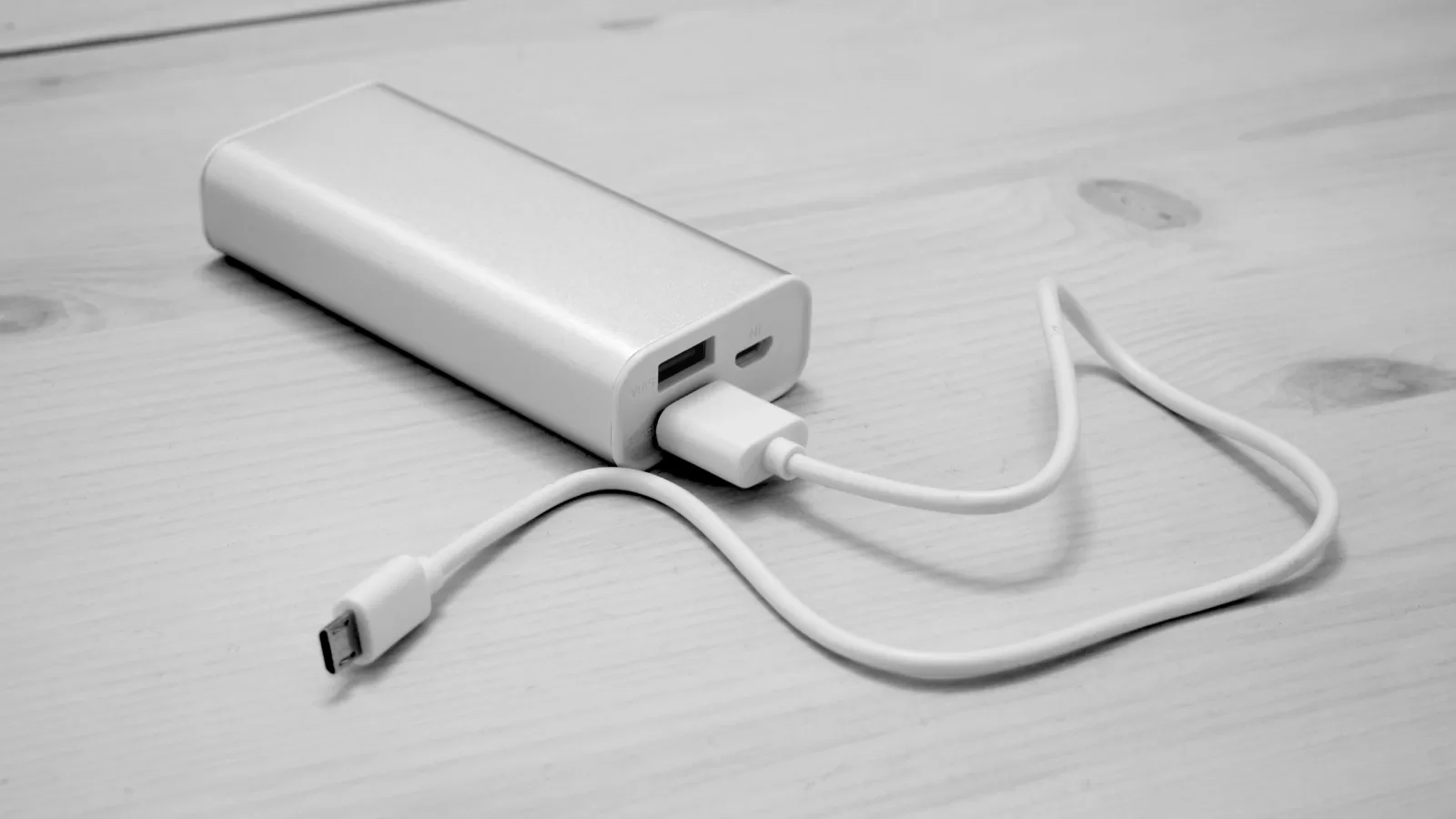
Photo: A power bank with a charging cable on a wooden table. Photograph by Santeri Viinamäki, CC BY-SA 4.0, via Wikimedia Commons.
Source: International Air Transport Association (IATA), “Changes Regarding Power Banks” and “Passengers Travelling with Lithium Batteries 2026”, both issued 31 March 2026.
Kuwait One, once a week.
The most useful stories we published this week, in your inbox.
No spam. Unsubscribe anytime.