Your child’s car seat: which type at which age, and when the belt alone is enough
Five steps settle the choice and the fitting, from rear-facing to the shoulder-and-thigh test.
The right seat depends on your child’s age, height and weight together, and then on the limits the manufacturer prints on the seat itself. This is the order set out by the US National Highway Traffic Safety Administration (NHTSA), step by step.
1. Choose the type by age
- Birth to 12 months: always a rear-facing seat.
- 1 to 3 years: keep them rear-facing as long as possible, until they reach the top height or weight the manufacturer allows. Then move to a forward-facing seat with a harness and tether.
- 4 to 7 years: the forward-facing harnessed seat until they outgrow it, then a booster seat, still in the back.
- 8 to 12 years: the booster until the car’s seat belt fits them properly.
2. Read the seat’s label before buying and fitting
The height and weight limits on the seat are what count, together with your car’s owner’s manual on how to install it. Not every seat fits every car, so try the seat in your car before you buy it.
3. Fit it one way, not two
Install the seat with either the lower anchors, two small bars in the gap between the back seat’s backrest and cushion, or the car’s seat belt. Never both. If you use the belt, lock it the way the owner’s manual describes. With a forward-facing seat, attach the top tether to its anchor in the car where both manufacturers allow it.
4. Back seat through age 12
Children ride in the back seat at least through age 12, whatever seat they use.
5. The belt test: when the booster can go
- The lap belt lies snugly across the upper thighs, not the stomach.
- The shoulder belt crosses the shoulder and chest, not the neck or face.
If either fails, your child still needs the booster.
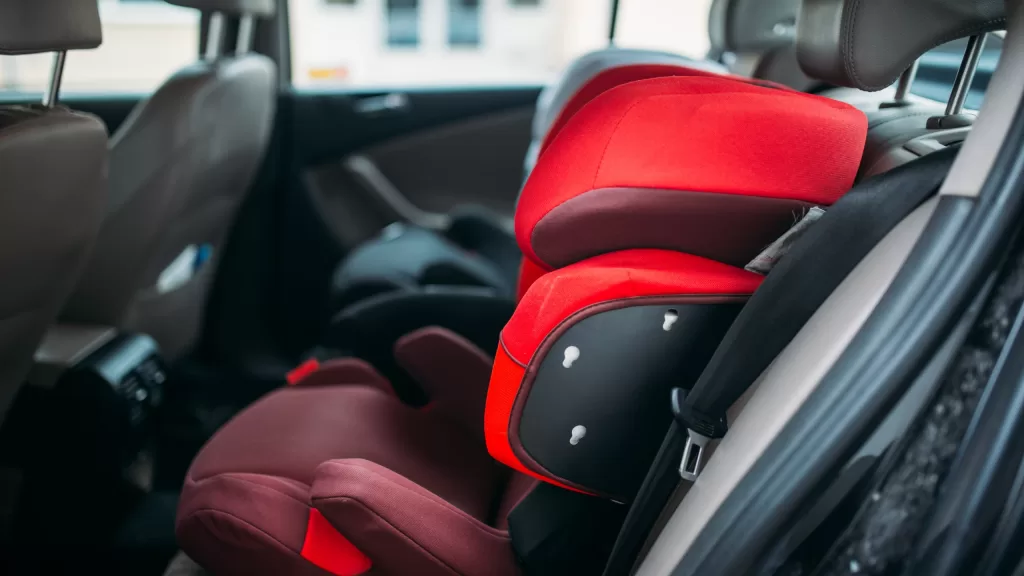
Photo: a high-back booster seat fitted in a car’s back seat. Photograph by Shixart1985, CC BY 2.0 via Wikimedia Commons.
Source: “Car Seats and Booster Seats”, US National Highway Traffic Safety Administration (nhtsa.gov), read 16 October 2026.
Kuwait One, once a week.
The most useful stories we published this week, in your inbox.
No spam. Unsubscribe anytime.