Cutting boards: one for raw meat, one for salad, and a spoon of bleach to sanitise
Wash with hot soapy water after every use, flood it with a chlorine solution for a few minutes, and replace it once knife grooves are too deep to clean.
Bacteria from raw meat, chicken or fish stay on a cutting board after the food is gone, and move onto whatever you cut next. The real risk is food that won’t be cooked afterwards, like salad or bread. These are the steps from the US Department of Agriculture’s Food Safety and Inspection Service.
1. Two boards, not one
Keep one board for fresh produce and bread and a separate one for raw meat, poultry and seafood. Wood is fine, as is a non-porous surface such as plastic, marble or glass; non-porous boards are easier to clean.
2. Wash after every use
- Wash the board in hot, soapy water.
- Rinse with clear water.
- Air dry, or pat dry with clean paper towels.
Plastic, acrylic and glass boards and solid wood boards can go in the dishwasher. Laminated wooden boards may crack and split there.
3. Sanitise with bleach
- Mix one tablespoon of unscented liquid chlorine bleach into a US gallon (3.8 litres) of water, a little under a teaspoon per litre.
- Flood the board’s surface and leave it for several minutes.
- Rinse with clear water, then air dry or pat dry with clean paper towels.
This works for wood and plastic alike. Bamboo is harder and absorbs less water than other woods, so hot soapy water is enough, with sanitising optional; rub it with mineral oil to keep it from drying out.
4. When to throw it away
Every board, wood or plastic, wears out. Once it is badly worn or has deep knife grooves that are hard to clean, replace it.
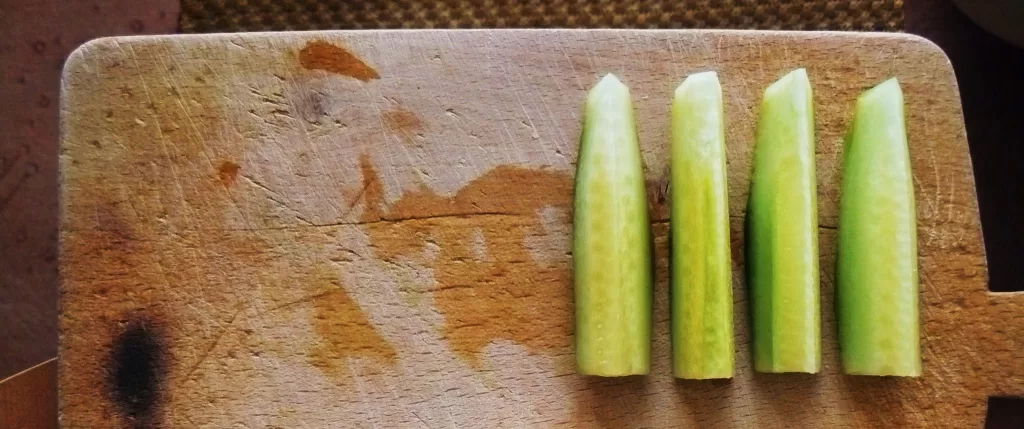
Photo: an old wooden cutting board with knife marks and stains. By MOs810, CC BY-SA 3.0, via Wikimedia Commons.
Source: USDA Food Safety and Inspection Service, “Cutting Boards” (updated 27 August 2024), read 30 October 2026.
Kuwait One, once a week.
The most useful stories we published this week, in your inbox.
No spam. Unsubscribe anytime.