Washing fruit and vegetables: running water and your hands, no soap
Seven steps from the US Food and Drug Administration, and why you rinse before you peel.
Food poisoning doesn’t only come from meat. The US Food and Drug Administration points out that fruit and vegetables have been behind large outbreaks — spinach, cantaloupe, tomatoes, lettuce — and that produce can pick up germs on the farm, in transit, or in your own kitchen, from a hand, a knife or the fridge.
At the shop
Pick produce that isn’t bruised or damaged. Pre-cut items, such as bagged lettuce or melon slices, should come from the chiller or a bed of ice, and stay cold once you get them home.
Seven steps in the kitchen
- Wash your hands with warm water and soap for 20 seconds, before and after preparing produce.
- Cut away bruised or damaged parts before you prepare or eat it.
- Rinse before you peel, so the knife doesn’t carry dirt and bacteria from the skin into the flesh.
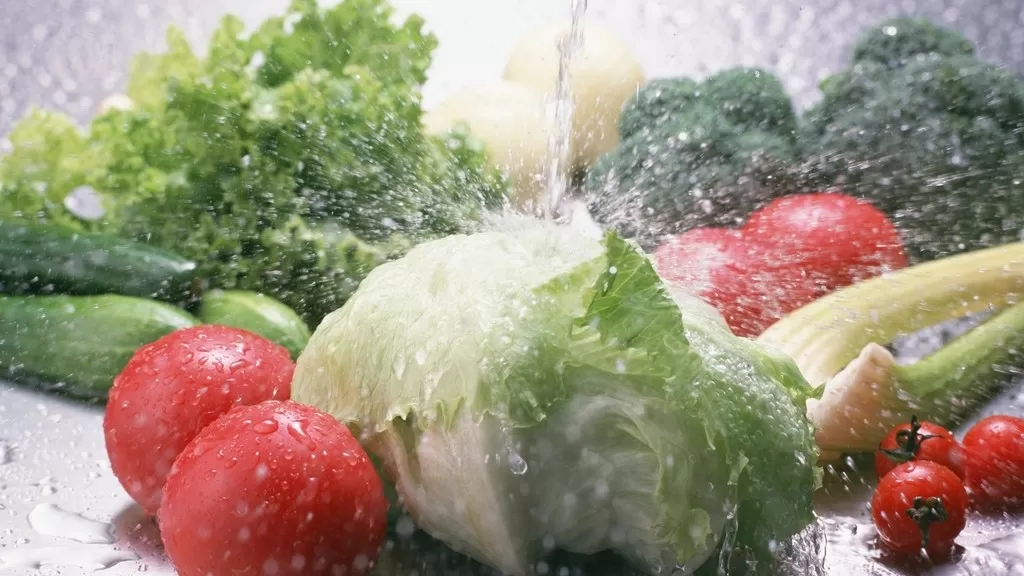
- Rub the produce gently with your hand under plain running tap water. Water is enough — no soap, no special produce wash.
- For firm skins such as melons and cucumbers, use a clean vegetable brush.
- Dry with a clean cloth or a paper towel; drying removes more of whatever bacteria are left.
- Take the outermost leaves off a head of lettuce or cabbage.
After washing
Keep perishable produce in the fridge at 4°C (40°F) or below, and cut it on a different board from the one you use for raw meat.
Photo: lettuce, tomatoes and cucumbers under running water. Image from rawpixel, CC0 (public domain), via Openverse.
Source: US Food and Drug Administration, 7 Tips for Cleaning Fruits, Vegetables.
Kuwait One, once a week.
The most useful stories we published this week, in your inbox.
No spam. Unsubscribe anytime.