The Marafie family: date groves, a filled-in harbour, and Kuwait’s biggest boom
From Wasat to Muscat and Bombay — and a ship that sailed once, then broke up off the coast.
Most Kuwaiti merchant families were known for one trade. The Marafie were known for dates — grown on their own groves along the Shatt al-Arab, shipped in their own booms, and sold as far as India and East Africa. Shaikh Abdulaziz Al-Rasheed’s early history of Kuwait lists them among the families of the Wasat quarter, beside Shaikh Yusuf bin Isa, Al-Abdulrazzaq, Al-Jabr and Al-Shaheen Al-Ghanim.
Arrival
The family’s own diwan dates their move to Kuwait to 1708, when their ancestor Ahmad Al-Rais is said to have brought his business across from Bandar Mashour on sixteen vessels. The name itself, the diwan explains, is a contraction of Mohammed Rafi’. Writing in Al-Qabas in 2002, the historian Farhan Al-Farhan called the family large enough to count as a tribe, with the sea still in its blood.
Palms to Bombay
According to the diwan, the family bought groves in Qasba, Fallahiya and Dawraq until, in the late eighteenth century, they held more than 180,000 bearing palms. An office in Muscat re-exported dates to Africa. A typical circuit ran Kuwait, Basra, India, Africa, Muscat, Bahrain and home again, with building materials and food on the return leg.
A harbour filled in
The family kept its own naqa’a, a walled anchorage, in front of the Marafie quarter in Wasat, between the Bin Khamis and Shaikhs’ harbours. Early in Shaikh Mubarak Al-Sabah’s reign, Mohammed Ali Marafie began filling it in — about three metres deep at high tide — and built on the new ground: houses for his sons in sea rock and cement brought from Abadan, a clinic for men and women with a house for its doctor, a school, and a workshop making small boats to move dates around the groves.
Winter waves still flooded some of those houses, which needed constant repair. They stood until the mid-1960s, when the state bought the land and built the Ministry of Foreign Affairs on it.
The ship that sailed once
The diwan lists sixteen well-known family vessels between 1887 and 1948. The largest was the boom Al-Mohammadi, built in India in 1916 for Hussain Marafie and his nephew Mohammed Hussain Nasrallah Marafie: about 450 tonnes, with a crew of sixty. Kuwait’s harbours were too small for her. She made a single voyage under Captain Saud Al-Samaka, then broke up off the Kuwaiti coast, and her timber went into two smaller booms and a good many doors.
Still on the shore
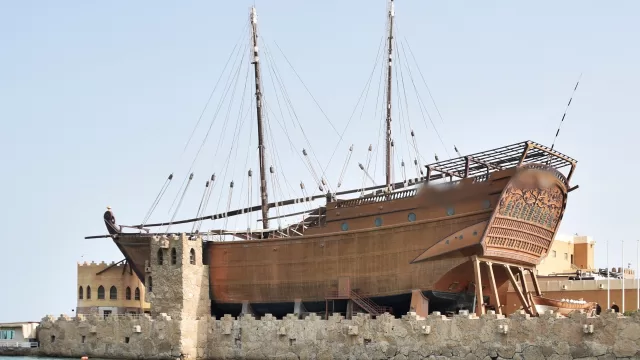
The wooden dhow Al-Hashemi II on the Bidaa shore, listed by Guinness as the largest dhow in the world, was built by Abdulhussain Mohammed Rafi’ Marafie, Al-Rai reports. We wrote about visiting it in The Largest Wooden Ship Ever Built Stands in Salmiya.
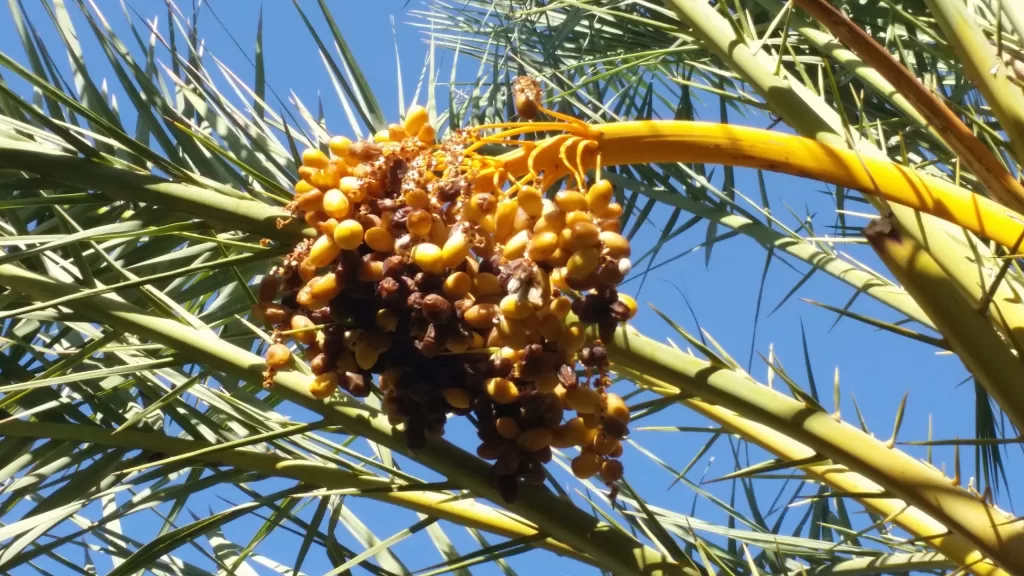
Photo: A bunch of dates on a palm — the nearest real thing to the family’s trade, not from its groves. Photo by Emőke Dénes, CC BY-SA 4.0, via Wikimedia Commons.
Source: Farhan Al-Farhan, “Al-Marafie”, Al-Qabas, 19 February 2002 (via Kuwait History forum); Diwan Al-Marafie, family history and harbour and ships pages; “Al-Marafie: a bright page in Kuwait’s history”, Al-Rai, 22 March 2021.
Kuwait One, once a week.
The most useful stories we published this week, in your inbox.
No spam. Unsubscribe anytime.