The Al-Subaih family: Basra dates for India, and two houses for the hungry
A Dawasir household from a village near Riyadh that settled in Fareej Al-Farij, then the Qibla quarter.
The Al-Subaih were among the first families to come to Kuwait from Najd, and one of the best-known Dawasir families in its history. Their most famous name, Yousef Al-Subaih, was a merchant whose trade reached India and Africa. He is remembered even more for what he did when Kuwait went hungry.
From Al-Bir to Fareej Al-Farij
The family came from Al-Bir, a village about 40 kilometres from Riyadh, early in Kuwait’s history, when famine in Najd pushed many families towards the Gulf coast. They first lived in Fareej Al-Farij, then moved to the Qibla quarter beside the Al-Abduljaleel, Al-Fawzan and Al-Haroun families: in those days, men of the same tribe built next to one another.
Basra dates for India
Yousef Al-Subaih extended his business to Basra, the land of palms, and shipped its dates to India, Africa and beyond. He owned palm groves in Zubair, which tied him closely to the town, and poets came to sit with him there, among them Abdulghaffar Al-Akhras. He also traded horses, a rare possession at the time, alongside other merchants including the Al-Bader family.
Two houses in the hungry years
Kuwaitis called the famine of 1868 to 1871 Al-Hailag, the hungry years, when people were reduced to eating the blood of slaughtered animals. The historian Abdulaziz Al-Rasheed records that two of Kuwait’s richest men stepped in: Yousef Al-Bader, who gave money to the needy, and Yousef Al-Subaih, who set aside two houses, one in Kuwait and one in Zubair. The poor were sheltered in both, fed and clothed, and those who died there were prepared for burial at his expense.
A grandson who planted mosque palms
In the twentieth century a descendant, Subaih Barrak Al-Subaih, quietly planted date palms in many of Kuwait’s mosques, something few people knew about him. He died in 1975.
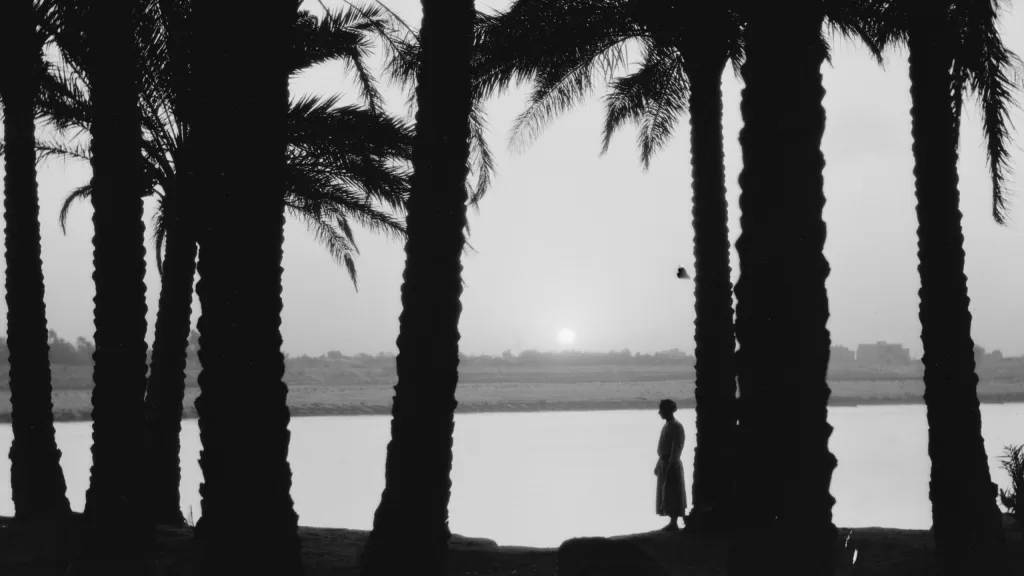
Photo: palm grove at sunrise on the Euphrates near Hilla, Iraq. Matson Collection, Library of Congress, public domain, via Wikimedia Commons. It shows the Iraqi palm country Kuwaiti merchants traded in, not the family’s own groves.
Source: Farhan Al-Farhan, “The Al-Subaih in Kuwait and Najd” (2003), reproduced on the Kuwait History forum, quoting Abdulaziz Al-Rasheed’s History of Kuwait and Sheikh Yousef bin Issa’s Pages from the History of Kuwait; Dr Saleh Al-Ojairi, “Al-Hailag Years”, Kuwait Times, 23 October 2016.
Kuwait One, once a week.
The most useful stories we published this week, in your inbox.
No spam. Unsubscribe anytime.