

A cart selling nakhi, a kiosk selling sandwiches, a food truck: each of them needs a document called a “light food sales permit”. And the body issuing it is not the municipality alone but the General Traffic Department, whose conditions explain why this sector is as narrow as it is.
Two conditions on the applicant
- Being a Kuwaiti national.
- Holding a general driving licence.
The second is the surprise for many: a private driving licence is not enough. The general licence is a different document, for driving public vehicles, with its own conditions and validity. So the owner of the business either holds it themselves, or the business is not in their name.
And four documents
- A permit from the municipality.
- Approval from the traffic engineering department.
- Approval from the technical inspection department.
- A criminal record certificate.
Note that three of the four are approvals from different bodies, each looking at something else: the municipality at the activity itself, traffic engineering at the location and the movement around it, and technical inspection at the vehicle and its roadworthiness. The fourth, the criminal record certificate, is a personal condition on the applicant rather than on the business.
Why this matters to an ordinary reader
Because the sequence explains what you see on the road. A food cart is not a venture opened on one person’s decision: it is an inspected vehicle, in a location traffic engineering approved, in an activity the municipality licensed, in the name of someone who has been through a criminal record check.
And anyone buying from a cart or a kiosk can ask about the permit the same way they would ask about the health licence in a shop.
Source: the General Traffic Department, Ministry of Interior, page on the light food sales permit.
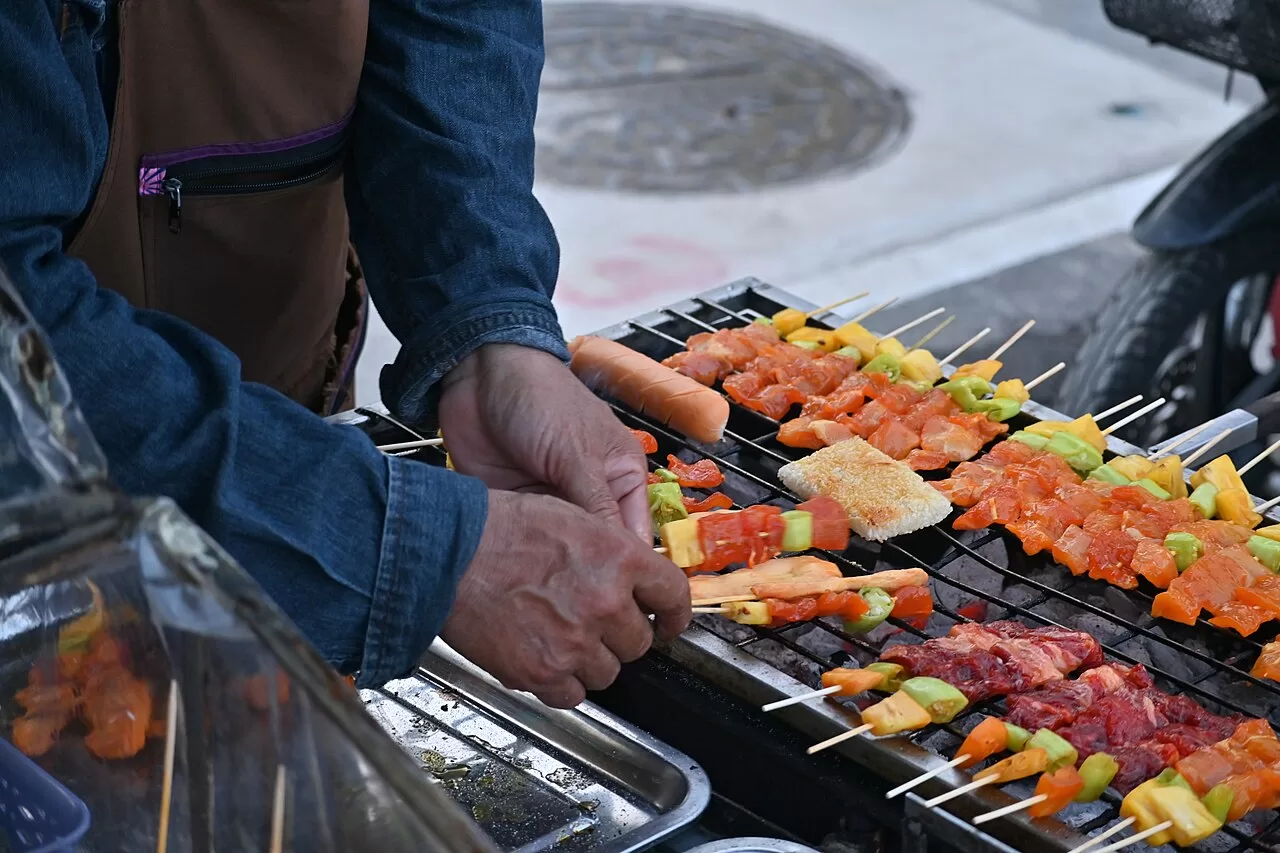
Photo: meat and vegetable skewers on a charcoal grill. By PattayaPatrol, CC BY-SA 4.0 via Wikimedia Commons.
Kuwait One, once a week.
The most useful stories we published this week, in your inbox.
No spam. Unsubscribe anytime.