The Extension and Repair Loan: Thirty-Five Thousand Across Four Payments
The largest instalment lands at the black structure stage over 195 metres, and the house must be eight years old.
The loan is not paid out in one go. It is split into four instalments tied to building stages, so the next one does not reach you before the previous stage is finished. That alone changes how an extension has to be planned.
The four instalments
- Starting work and pouring the foundations: 20 per cent.
- The black structure over 195 square metres: 40 per cent, the largest.
- Plastering: 30 per cent.
- Flooring: 10 per cent.
The ceiling is KD 35,000, and the purpose of the loan is to increase the use of existing housing: extension, adding a floor, or repair.
Who it is for
- The housing in question is a private-sector house or a government house.
- The head of the household or the applicant is a Kuwaiti national. Where there is no head of household, the family must be at least two unmarried Kuwaitis.
- Eight years must have passed since the house was built, or fifteen since the housing application was submitted.
- The applicant must not own another property, nor share ownership of another property that provides suitable housing care for them and their family.
Three exceptions to the other-property condition
- Anyone with two families or more.
- Where a family member has a severe or moderate disability, provided the money goes to meeting their needs.
- Where every property owned is in need of essential repair.
In these cases, mortgaging the property the loan is for is enough on its own.
And anyone who has sold their home
Someone who sold a private or government house and has never taken a loan may use it. Someone who sold and has borrowed before is considered for the balance repaid, up to a maximum of KD 35,000.
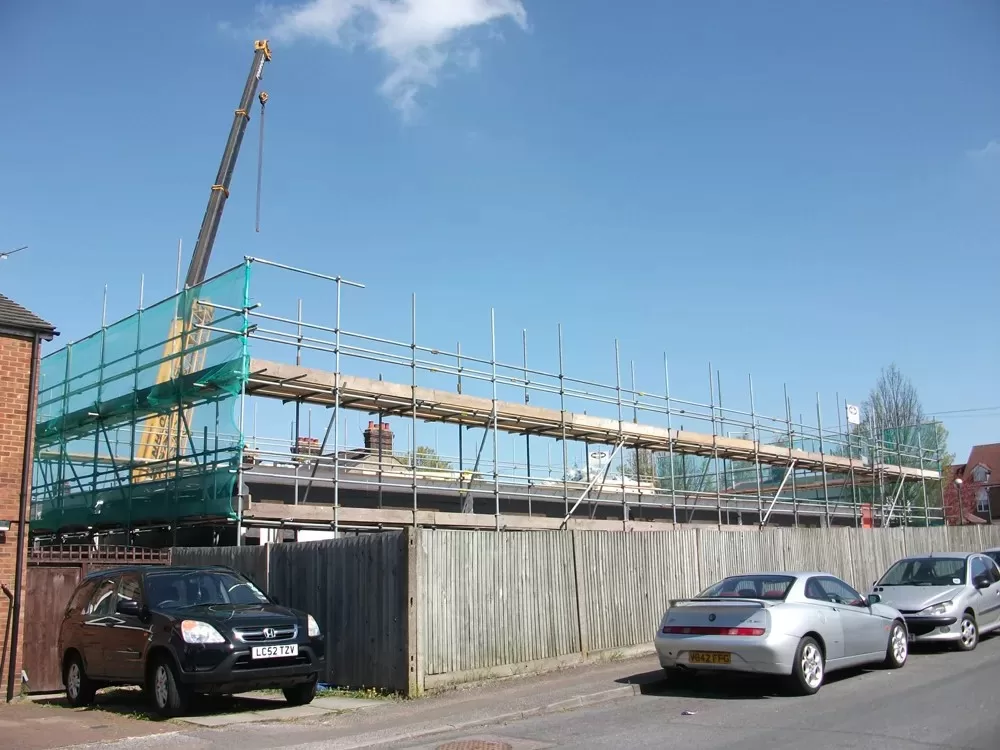
Photo: scaffolding on a building. By John Webb, CC BY-SA 2.0 via Wikimedia Commons.
Source: Kuwait’s e-government portal, the extension and repair loans page, Kuwait Credit Bank.
Kuwait One, once a week.
The most useful stories we published this week, in your inbox.
No spam. Unsubscribe anytime.