A port, a school, a factory and houses: what Kuwait’s first dinar notes showed
It replaced the Indian rupee in April 1961, and the ten carried a sailing boom.
Until the spring of 1961, Kuwait bought and sold in Indian rupees. Amiri Decree No. 41 of 1960, the Kuwaiti currency law, made the dinar the national currency and set up the Kuwait Currency Board, chaired by the finance minister of the day, Sheikh Jaber Al-Ahmad. On 1 April 1961 the dinar went into circulation.
Taking the rupee off the market
The changeover followed an agreement between the Kuwaiti and Indian governments, and the Post Department and Kuwait’s banks handled swapping the Indian notes and coins for dinars and withdrawing them. The idea of a national currency had been under study since 1958.
What the five notes showed
Every denomination carried a portrait of Sheikh Abdullah Al-Salem Al-Sabah on the front, with the signature of the Currency Board’s chairman. The backs chose the country’s new projects:
- Quarter dinar: Shuwaikh Port.
- Half dinar: Shuwaikh Secondary School.
- One dinar: the cement products factory.
- Five dinars: the low-income houses built by the government.
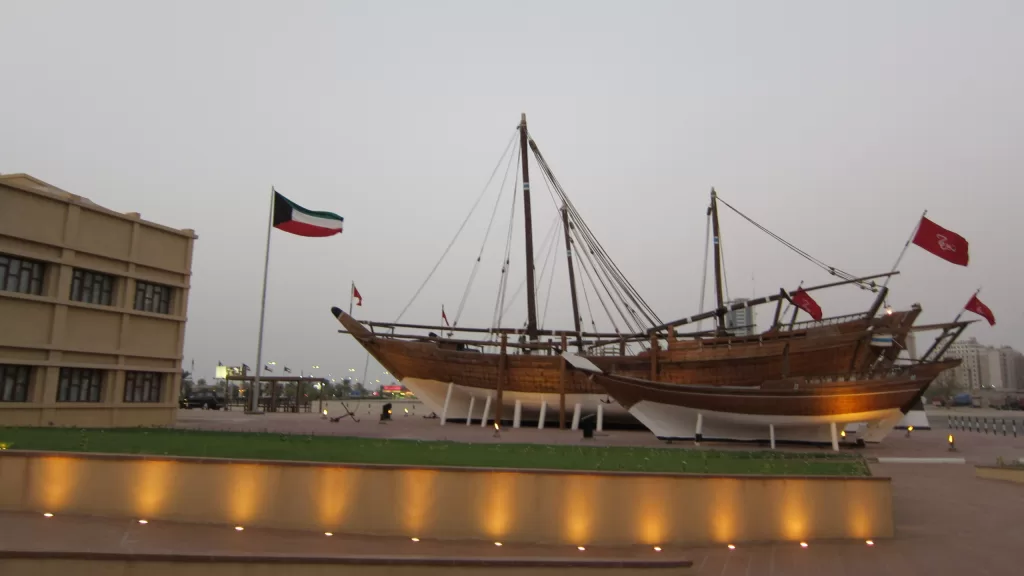
- Ten dinars: the Kuwaiti sailing boom.
Four of the five notes pictured what had been built in the 1950s; the sea was left to the largest note alone.
When it ended
The first issue was withdrawn on 1 February 1982, stopped being legal tender on 31 May 1982, and could no longer be exchanged after 1 February 1992. Five more issues followed; the sixth, in circulation today, came out on 29 June 2014.
Photo: wooden ships on display outside the Maritime Museum in Kuwait City, not the banknote itself. Photograph by Kuwaitsoccer, CC BY-SA 3.0 via Wikimedia Commons.
Source: Central Bank of Kuwait, “First Issue” and banknotes introduction pages on cbk.gov.kw, read 16 October 2026; KUNA, as reported by Al-Jarida, 9 April 2017.
Kuwait One, once a week.
The most useful stories we published this week, in your inbox.
No spam. Unsubscribe anytime.