

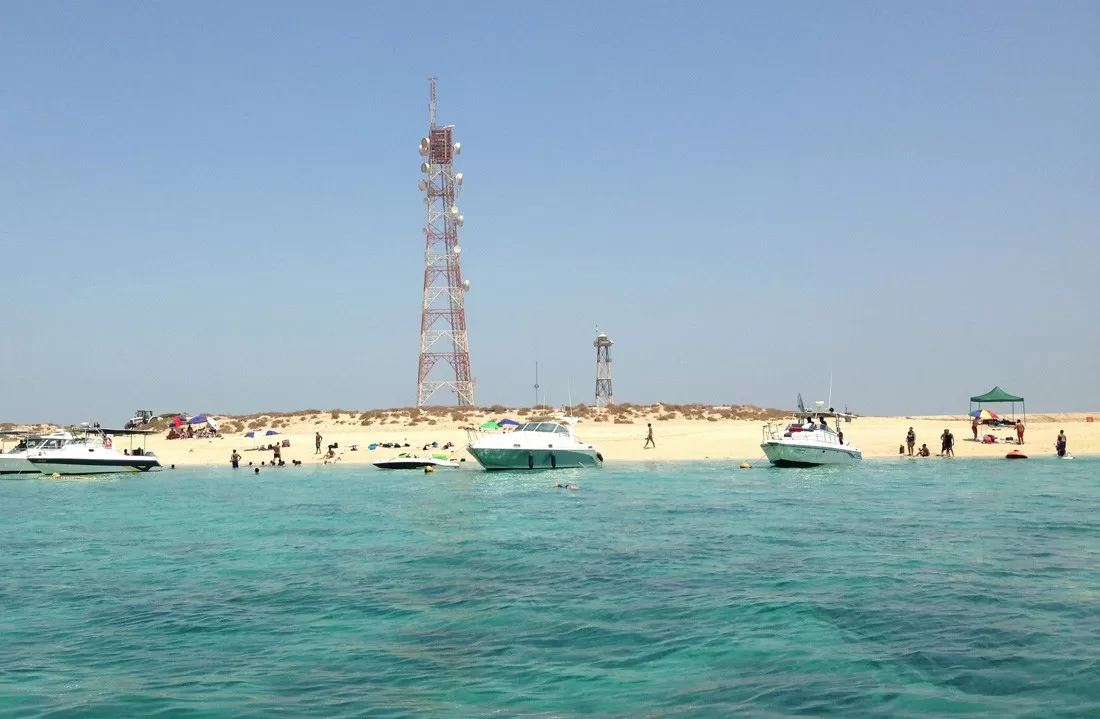
Out in the Gulf, Kuwait’s islands sit scattered along the horizon. Some carry three thousand years of history, others are empty and quiet. Visiting them is less a tourist trip than a look at the maritime side of the country.
Failaka: the island of old civilisations
No account of Kuwait’s islands starts anywhere else. Settlement here goes back more than three thousand years, and the inscriptions and ruins found on it belong to the Dilmun and Greek civilisations, which makes it an archaeological site of real weight.
Before the Iraqi invasion Failaka was full of life, with schools, health centres and mosques, and people came for weekends. Today it reads more like an open-air museum, with development projects intended to bring visitors back.
Umm Al Maradim: quiet at the edge of the country
A remote island close to Saudi territorial waters, which makes it a geographic and diplomatic marker at once. Its distinctive round shape and the depth of the water around it made it a favourite anchorage for divers. Its name is said to come from a bird once common there. Getting to it is a long boat trip and a genuine excursion.
Kubbar: still water and birdwatching
South of the country and uninhabited, but rich in wildlife. Kubbar is a nature reserve that draws divers and birdwatchers; clear water and coral reefs make it a standard stop on boat tours. In migration season the sky above it fills with birds resting on their way through.
Qaruh: the first Kuwaiti land the sun reaches
The southernmost point of Kuwaiti territory. Its name comes from the tar that seeps up through it, which sailors once used to coat their boats. The water around it is clear, the coral is in good condition, and it is among the least polluted of the islands.
Bubiyan: the largest and the richest ecologically
Bubiyan is not a conventional destination, but it interests anyone who follows wildlife. It is the largest of the Kuwaiti islands and is classified as a nature reserve, home to flamingos, sea eagles and much else. Calls to develop it for sustainable eco-tourism have grown, alongside concern for how fragile its environment is.
Getting out there
Several tour operators run trips to the islands, mainly at weekends and in the milder seasons. A trip usually covers swimming, snorkelling, fishing and time on the sand. Some allow camping and an overnight stay on the safer islands.
Sources: Kuwait Municipality · Public Authority for Civil Information · the National Council for Culture, Arts and Letters, which oversees archaeological sites on the Kuwaiti islands.
Kuwait One, once a week.
The most useful stories we published this week, in your inbox.
No spam. Unsubscribe anytime.