Leftovers: into the fridge within two hours, eaten within four days, reheated to 74°C
In Kuwait’s heat the safe window shrinks to one hour, and a big pot should be split across shallow containers so it cools quickly.
The rice and stew left over from lunch don’t go bad because they were left over. They go bad because they were left out. Bacteria multiply fastest between 4°C and 60°C, which is the temperature of a normal room. The US Department of Agriculture’s Food Safety and Inspection Service boils safe handling down to a few steps.
1. Fridge within two hours
Cooked food should go into the fridge within two hours of cooking, or of coming off a warming tray. Anything that has sat at room temperature longer than that should be thrown away. The window drops to one hour when it is above 32°C, as at an outdoor gathering or a desert camp, which describes most of the year in Kuwait.
2. Split the big pot
A full pot stays warm in the middle for hours, even inside the fridge. Divide it into small, shallow containers and cut large roasts or whole chickens into pieces so the food drops quickly to 4°C or below. Hot food can go straight into the fridge, or be chilled first in a sink of ice water.
3. Cover it well
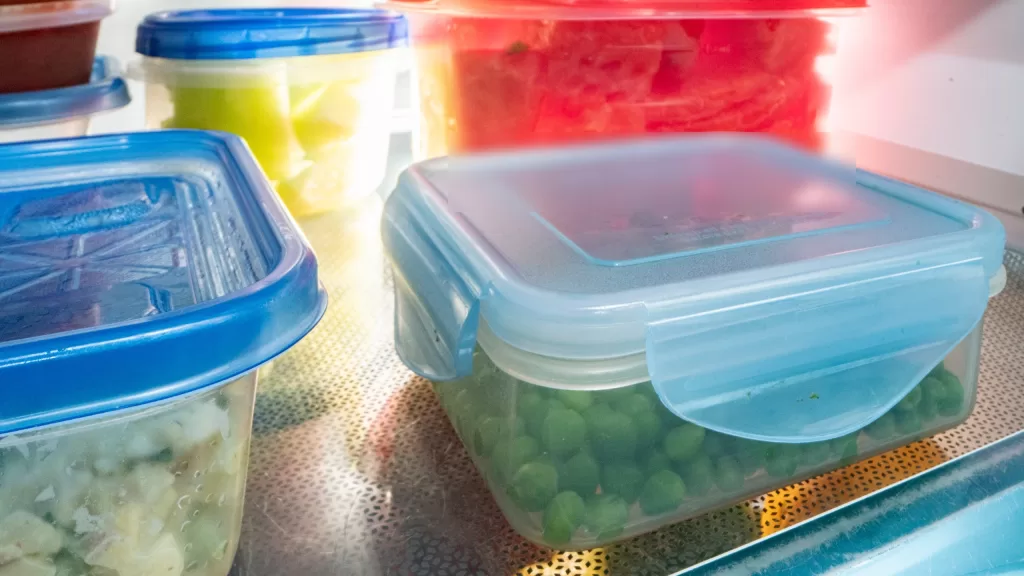
Cover leftovers or seal them in containers. That keeps bacteria out, holds in moisture and stops smells travelling between dishes.
4. Three to four days
Leftovers keep for 3 to 4 days in the fridge and 3 to 4 months in the freezer. Frozen food stays safe beyond that, but loses moisture and flavour.
5. Reheat to 74°C
Reheated leftovers should reach 74°C on a food thermometer. Bring sauces, soups and gravies to a rolling boil. In the microwave, cover the dish with a vented lid and check the temperature in several places, because microwaves leave cold spots.
Frozen leftovers can be reheated without thawing; it just takes longer. Anything remaining after frozen leftovers have been reheated to 74°C can safely be frozen again.
Photo: covered containers of leftovers on a refrigerator shelf, with the embossed wording on the lid blurred. US Department of Agriculture, public domain via Wikimedia Commons.
Source: USDA Food Safety and Inspection Service, “Leftovers and Food Safety”, read on 16 November 2026.
Kuwait One, once a week.
The most useful stories we published this week, in your inbox.
No spam. Unsubscribe anytime.