
When Kuwait was a sea town growing quietly at the edge of the Gulf, there were no paved streets, no traffic signals and no fuel stations. Getting anywhere ran at walking pace, and the means of transport were a fair reflection of that.
On foot
The first means was walking. People covered long distances in the sun, between the markets and the quarters or from the houses to the sea. It was not remarkable at the time; everybody knew everybody, so they walked together and talked on the way.
Donkeys and mules
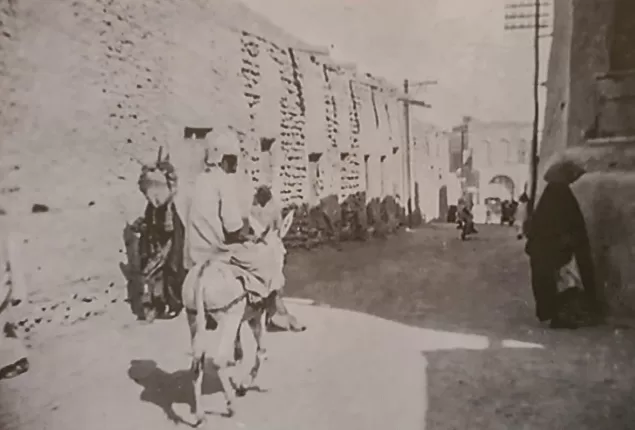
Then came donkeys and mules as the main way of moving things, particularly goods and baggage. They tolerated the heat, knew the town’s narrow lanes, and were used constantly to deliver vegetables, firewood and water. Some men specialised in hiring donkeys out, or worked as their drivers, leading them house to house and knowing every customer.
Camels for the long haul
Camels were used for long journeys, particularly into the desert and to places far from town. A caravan of dozens of animals carried dates, provisions and water, and travelled for days.
Wooden carts
From the start of the twentieth century wooden carts entered daily life, pulled by donkeys or horses, used to carry people at occasions or on formal visits, and sometimes decorated for weddings. A cart was a mark of comfort, and its owner was spoken of as a man of means.
Bicycles
As contact with the outside world grew, particularly with India and Iraq, bicycles began arriving. The sight of someone riding one through a souk drew attention at first and quickly became ordinary. Young men especially took to them, for the speed and the ease.
Cars
In the 1930s and 1940s cars arrived, at first a handful belonging to merchants or foreign residents, and then bought by local families despite the difficulty of getting fuel or spare parts. The roads were still dirt, so the cars threw up dust behind them and needed constant maintenance — and people stopped to watch them pass.
Among the most visible vehicles of that period were the dawabeet, small trucks used to carry passengers and goods around the town, particularly between the souk and the port or out to the surrounding villages. The driver called the destination in the street — a quarter’s name, or “the souk” — and whoever wanted it climbed aboard for a small fare.
Not only tools
These were part of the fabric of the place rather than equipment. The donkey knew the way home, the camel was treated as a companion, the bicycle was left at the door unlocked, and the car was washed by hand and looked after like a member of the household.
Further reading: the National Council for Culture, Arts and Letters · the Center for Research and Studies on Kuwait
Kuwait One, once a week.
The most useful stories we published this week, in your inbox.
No spam. Unsubscribe anytime.