Safat Square: where the desert came to trade, and where Kuwait’s first street began
Caravans arrived through the Shamiya Gate with ghee, wool and camel hair, and left with dates, rice, tea and Indian cloth.
Before cars arrived and streets were cut through the old town, Safat Square was where Kuwait met the desert. Abdulaziz Al-Rasheed’s History of Kuwait places it in the Al-Wasat quarter, between Sharq and Qibla, the same district that held the ruler’s residence, the customs house, the main souq, the Mubarakiya School, the Ahliya Library and the Literary Club.
What the caravans brought
Bedouin traders came in through the Shamiya Gate, mostly in spring, carrying what their flocks and herds produced: ghee, milk and yaqt (dried yoghurt), camel hair, wool spun by the women, tent cloth and cloaks, and desert truffles when they were in season. They went home with what the desert couldn’t provide: dates, tea, wheat, rice, sugar, and cloth that merchants shipped in from India. Much of it changed hands by barter rather than for cash.
That’s why, in the first half of the 20th century, the square was enormous, with the shops set well back to leave room for caravans and their camels. Over the years the shops crept forward until the open space shrank. At one point more than fifty tin-built stalls ringed it, selling ghee, fresh milk and groceries.
A court in the afternoon, a fairground at Eid
It was more than a market. A member of the ruling family would sit there after the afternoon prayer to settle disputes over trade and the sea. At Eid it filled with children’s rides and swings, little ones rode donkeys decorated and dyed with henna, and the ardha sword dance was performed before the sheikhs and notables. On 25 February 1950 it hosted the biggest celebration it had yet seen, for Sheikh Abdullah Al-Salem’s accession.
From a dirt square to the heart of the modern city
A well-documented thread on the Kuwait History forum records a simple overland customs post built in the middle of Safat around 1914, to tax livestock and some of the goods sold there. When the 1920 city wall went up, Safat ended up inside it and carried on much as before. From the 1930s government buildings began to surround it: public security, the old municipality and the police department.
In 1945 Kuwait’s first proper street started here and ran to Dasman Palace; it’s now Ahmad Al-Jaber Street. In 1949 the British Bank of the Middle East moved here from the merchants’ souq, and from the 1940s to the 1960s the middle of the square served as a taxi rank. Historian Mohammad Abdulhadi Jamal describes how it became the most important square in the city, framed by four main roads: New Street from the harbour, Dasman Street from the palace, Fahad Al-Salem Street from the Jahra Gate, and the caravan road (today’s Abdullah Al-Salem Street) from the Naif Gate.
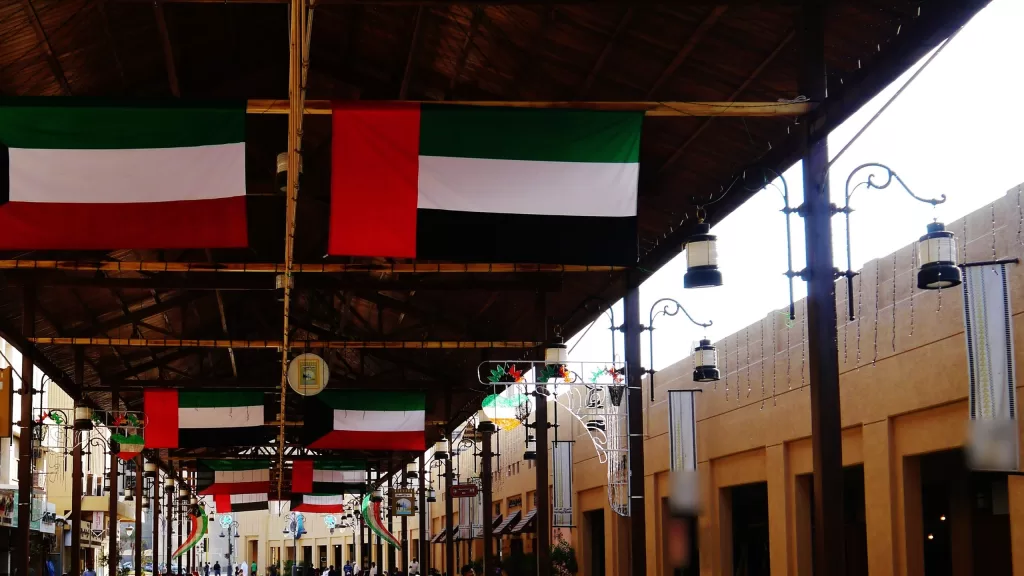
Photo: A covered walkway in Souq Al-Mubarakiya, next to Safat Square today, not the square itself. Zairon, CC BY 4.0, via Wikimedia Commons.
Sources: Abdulaziz Al-Rasheed, History of Kuwait, and Mohammad Abdulhadi Jamal on the old markets, as quoted in the Kuwait History forum thread on Safat Square (13 June 2021); Al-Anba, “Safat Square: the trading and heritage heart of old Kuwait”, 8 January 2016.
Kuwait One, once a week.
The most useful stories we published this week, in your inbox.
No spam. Unsubscribe anytime.