
Kuwait was a small town growing on the shore of the Gulf, breathing through its port. The sea was not the only neighbour: raiding, rival tribes and whatever came out of the desert were present in people’s minds. Out of that came the idea of a wall.
Kuwait built three walls at three different points in its history. Each was a direct answer to an event. Accounts differ over the dates and the routes of all three, and the Center for Research and Studies on Kuwait holds studies on them.
The first wall, around 1760
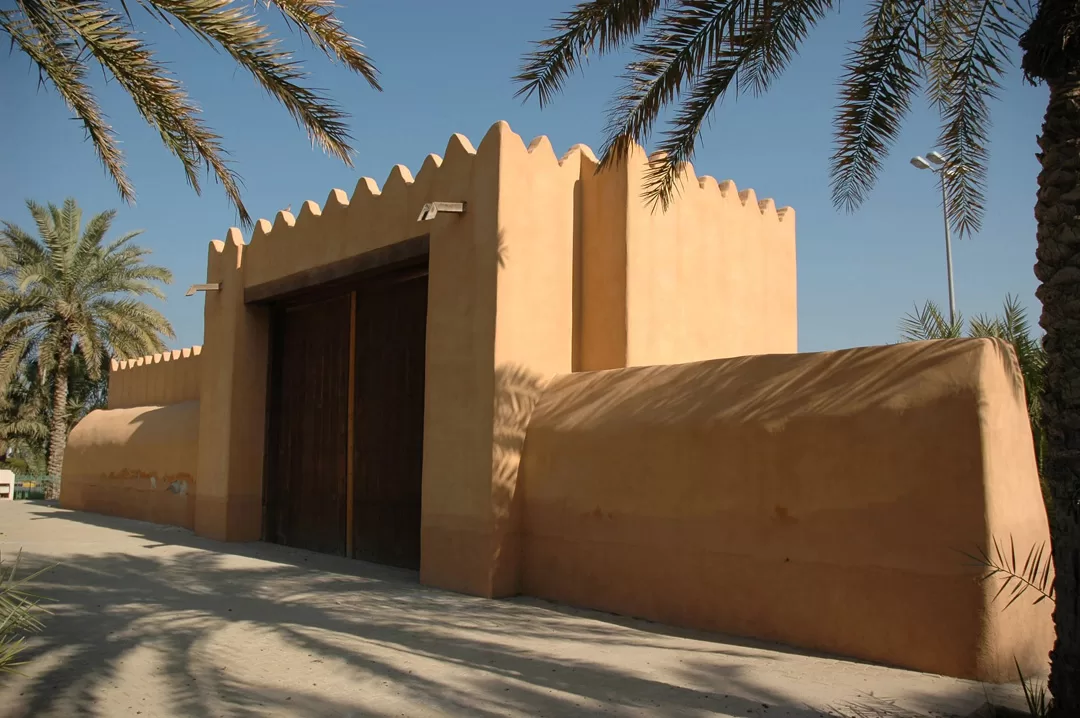
Popular accounts describe the first wall as rudimentary and low, enclosing the town’s core — the mud houses, the simple markets and the diwaniyas where a quarter’s people met. It was not a military fortification in any conventional sense but closer to a fence of mud and stone.
It went up in response to regional disturbances in the Peninsula and to tribal raids that occasionally reached the edge of the town. Building it worked by shared obligation: each household sent a man to the work, and every hand took part in maintaining the earth wall.
The second wall, 1814
About half a century later, with real threats rising from outside, the second wall was built — more organised and more solid than the first. It covered a wider area and enclosed more people and buildings.
Building it became a public occasion. Majlis conversation turned on where the towers should stand, how big the gates should be, and whether the wall would hold. Some accounts describe Kuwaitis young and old working side by side on it, children carrying the bricks, women preparing the water, men building.
Among its landmarks were well-known gates such as Darwazat Abdulrazzaq and Darwazat Al-Shamiya, names that later became the names of districts. The gates were not only entrances but checkpoints, through which people and goods passed under the eye of the guards.
The third wall, 1920
The third was the most consequential. In 1920, with tensions rising in the region — after the battle of Hamdh, and with the threat from the Ikhwan forces under Faisal Al-Duwaish growing — the town concluded it was exposed.
The people of Kuwait assembled and built the wall in a matter of days. The town became an open worksite. The third wall ran more than six kilometres, with five main gates and twenty-six watchtowers. Its gates carried names such as Darwazat Al-Buraisi, Darwazat Al-Jahra and Darwazat Al-Shaab.
And despite the wall’s scale, the real test came quickly. At the battle of Jahra, Kuwait faced one of the hardest moments in its history, and the wall was the last defence the town had behind it. Men stood on it with whatever weapons were available.
The battle ended and the wall held. Years later the town began to expand beyond it, and eventually the bulldozers came through it for new roads. The gates that survive stand as monuments, and their names stayed on the districts.
What was behind the wall
The people who lived inside the walls were not shut in; they were enclosed. The narrow lanes carried the town’s daily traffic, the mud walls kept the heat out, children played in the shade of the towers, and the diwaniyas filled in the evening.
Which is why talking about Kuwait’s walls is not really about mud and timber gates. It is about a period in which protection was a collective job, and the town was small enough for everyone to have a hand in it.
Further reading: the Center for Research and Studies on Kuwait · the Kuwait News Agency (KUNA)
Kuwait One, once a week.
The most useful stories we published this week, in your inbox.
No spam. Unsubscribe anytime.