
A small shop near the Khaldiya co-op has been selling nakhi and bajella since 1965. Its current owner took it over in 1992. The menu has not changed since that day.
That alone is rare. Most of what we eat has turned over two or three times in the same span.
What it actually is
The recipe is close to nothing, and that is its secret:
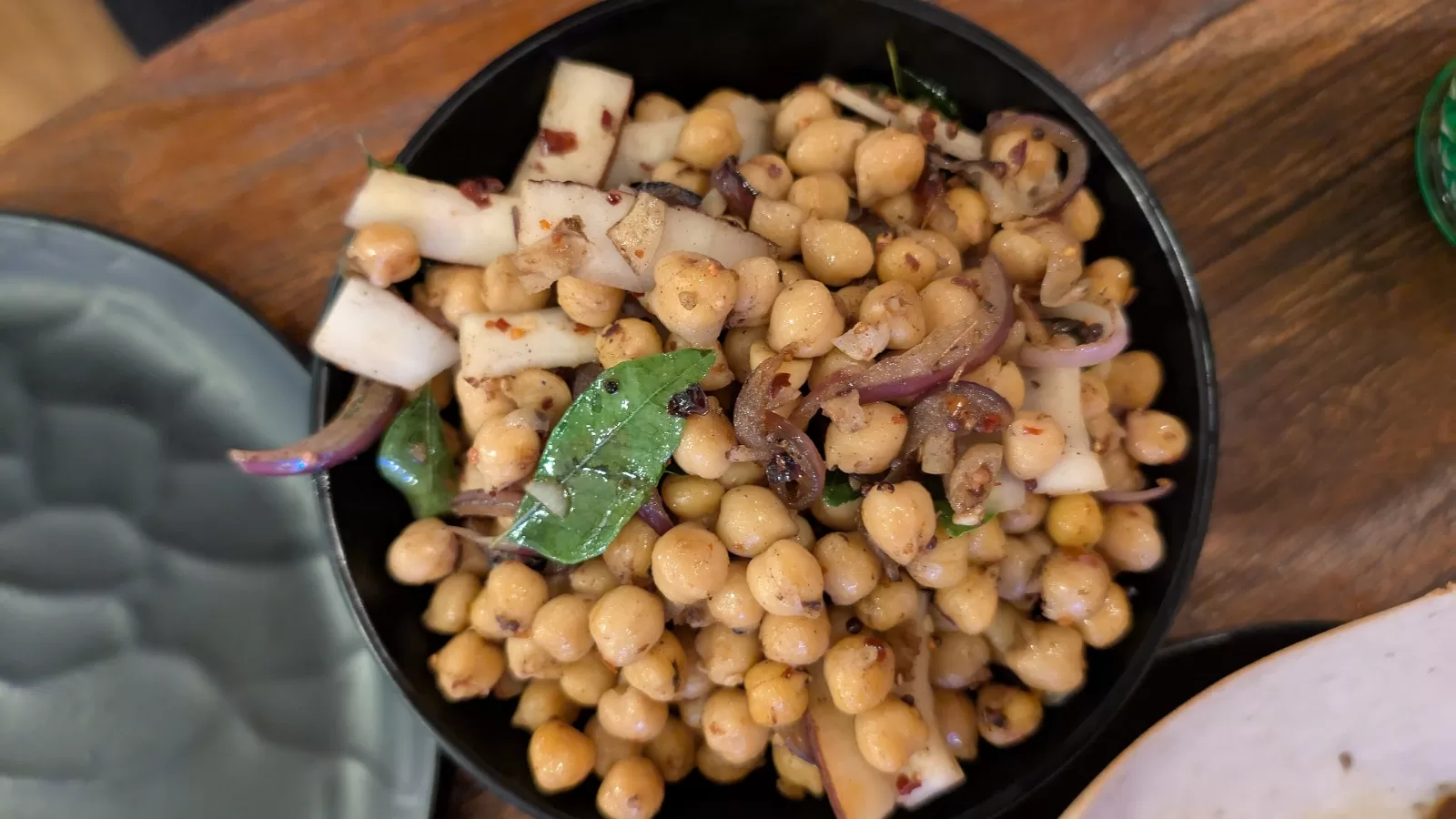
- Nakhi: chickpeas boiled in water and salt, served with chilli.
- Bajella: broad beans, made in exactly the same way.
- Aash: lentils with onion, garlic, pepper and salt.
The same shops also carry harees, slow-cooked with boiled meat until the fibres fall apart, and jireesh, which is the same idea with chicken.
A cook in one of these shops summed up the whole trade in a sentence: preparation is easy, we need nothing but the grain and the water.
A shop without a single chair
No seats and no tables. Huge stainless pots on the boil, and you take your order in a small white plastic tub or in a container you have brought from home.
The container you bring is a detail worth noticing. This habit is older than every current conversation about cutting plastic, and it existed for a purely practical reason: the tub costs money, and the container is already yours.
Where it came from
These shops were opened by the Iranian community in Kuwait in the 1950s, and spread afterwards around the co-ops. Which is why you find them today where you find a co-op: near a place people pass every day, not a place they set out for on an occasion.
Sitting beside the co-op is not a coincidence. This is food bought on the way, not food you make a trip for.
And Ramadan
Orders triple in Ramadan, and the day stretches from 11 in the morning to 2 after midnight.
Fifteen hours over a boiling pot, to sell chickpeas and beans.
Why it survived
Because there is nothing in it that can be improved. Chickpeas, water and salt do not accept a luxury version, and every attempt to upgrade the dish ends in a different dish.
And because the price stayed within everyone’s reach. Food that does not get expensive does not need to reinvent itself to stay.
Photo: by Andy Li via Wikimedia Commons, CC0. The photo is illustrative of a plate of boiled chickpeas.
Further reading: Kuwait Times: nakhi and bajella
Kuwait One, once a week.
The most useful stories we published this week, in your inbox.
No spam. Unsubscribe anytime.