The Mubarakiya School: Where Formal Education in the Gulf Started
Before it there were the kuttab rooms. The 1910 proposal, the opposition it met, the subjects it added, and the names that came out of it.
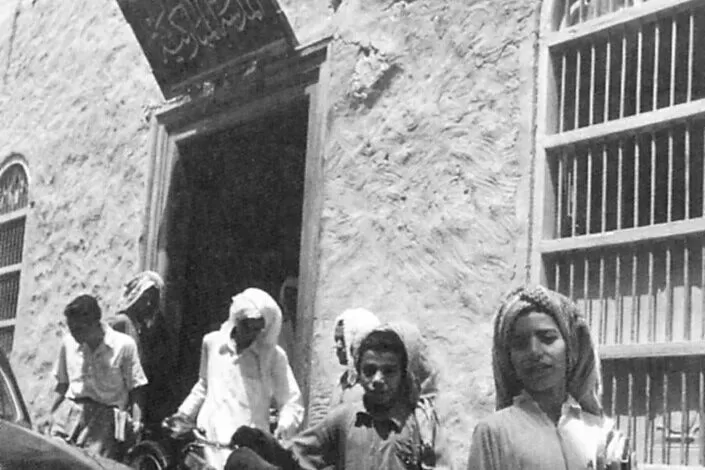
In the heart of old Kuwait City, close to the markets and the diwaniyas, an idea took shape that changed education across the Gulf. Kuwait in the early twentieth century was not isolated: it traded with India, Zanzibar, Basra and Bombay, and exchanged ideas along with goods. And while schooling was still confined to the kuttab, the Mubarakiya school emerged as the start of something else.
The kuttab
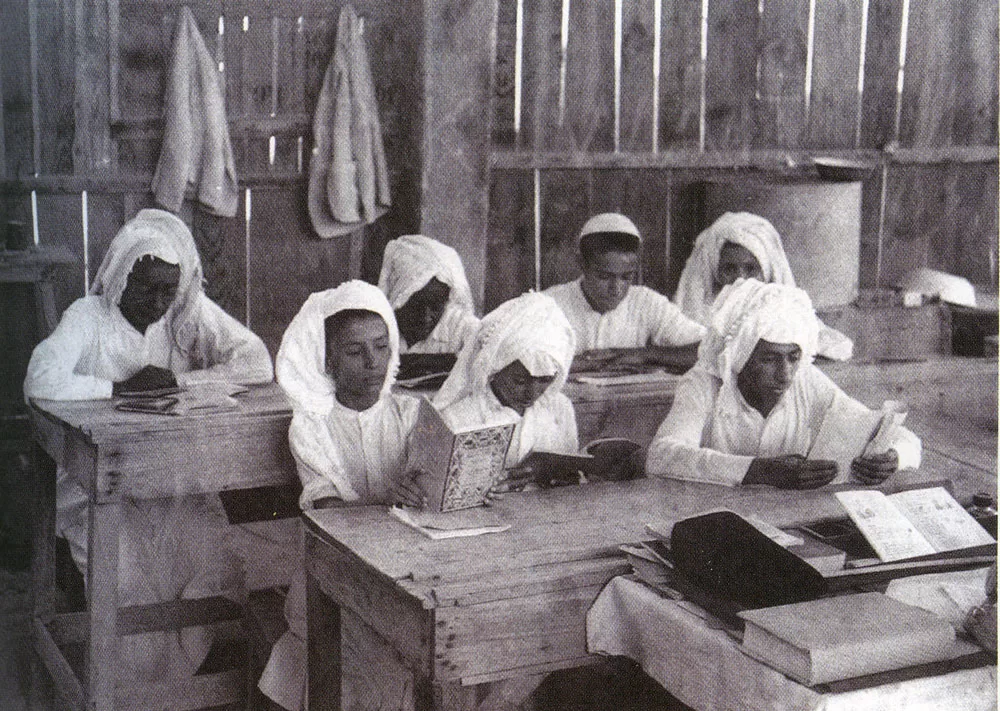
Before the Mubarakiya, children were taught in the kuttab: small rooms inside houses or mosques where the mutawwa taught the Quran and sometimes some writing and arithmetic. Pupils sat on matting and memorised verses from wooden tablets written with pen and ink. There were no curricula and no certificates; the aim was to learn the Quran and the basics a man needed to keep his accounts or write his correspondence.
Simple as the system was, the pace of change — growing trade and travel, and the arrival of foreign missions — pushed Kuwait’s elite to think about an institution that went beyond it.
Among the notable figures of that period was the teacher Sayyid Sulaiman bin Rabi bin Mohammed bin Ali Al-Musawi, born in 1812 (1227 AH) into a family known for learning, whose members passed the teaching profession down the generations.
Sayyid Sulaiman used his house in Freej Al-Shuyoukh — the site where the Grand Mosque stands today — as his school, receiving pupils from across Kuwait and teaching them Quranic studies, the principles of Arabic, arithmetic, and whatever general knowledge was available, which counted as advanced for the time.
Sheikh Yusuf bin Issa Al-Qinai said in a television interview that he had been one of Sayyid Sulaiman’s pupils, and that he studied alongside a group of prominent figures including Sheikh Mubarak Al-Sabah, Sheikh Salman Al-Sabah, Nasser Al-Badr, Abdulaziz Al-Dabbous, Qasim Hammada, Abdulbaqi bin Nasser and the sons of Al-Naqib.
The 1910 proposal
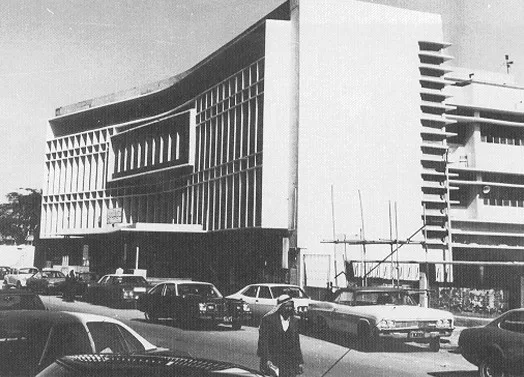
In 1910 a number of Kuwait’s notables and educated men met, among them Sheikh Yusuf bin Issa Al-Qinai, together with figures such as Abdulaziz Al-Rasheed, Hamad Al-Khaled and Abdulmohsen Al-Badr. They discussed founding a formal school that would teach, alongside religion, Arabic, arithmetic, geography and even English.
The idea met strong opposition from some religious figures and some residents who believed new subjects would come at the expense of religious teaching. But the group behind it did not retreat, and argued that modern education did not conflict with Islamic values.
The founding
The following year, in 1911, the Mubarakiya school opened. It was named after Sheikh Mubarak Al-Sabah, Mubarak the Great, who supported the project and agreed to the use of his name.
It was built at a strategic point inside the old town, near the great mosque, and Kuwait’s notables covered the construction and founding costs from their own donations. Sheikh Yusuf bin Issa supervised the teaching side, and the school was later run by Abdulaziz Al-Rasheed, who came from Bahrain and was among the first to bring modern educational thinking to Kuwait.
New subjects
Alongside the Quran, jurisprudence and Arabic, the school began teaching arithmetic, geography, history and some principles of science. English was later added, considered necessary for trade and politics as ties with Britain and India widened.
It was not easy at the start: teachers were few, books were scarce, and pupils were not used to a modern school system. But the intent was clear, and the number of pupils grew year on year.
A cultural role too
Alongside teaching, the Mubarakiya hosted lectures, organised intellectual discussions, and received guests and visitors from the Gulf states, which made it a centre of exchange in its own right. Those meetings were held in its courtyard or in a large room set up as a small cultural salon, where education, society and reform were discussed.
Who came out of it
Over the decades that followed, the school produced a large number of the figures who built modern Kuwait. Among them Sheikh Abdullah Al-Jaber Al-Sabah, later minister of education and among the officials most committed to spreading schooling; Sheikh Jaber Al-Ahmad Al-Sabah, later crown prince and then Amir; and figures such as Mohammed Al-Nisf, Abdulaziz Hussein and Abdullah Al-Khalaf Al-Dahyan.
From school to landmark
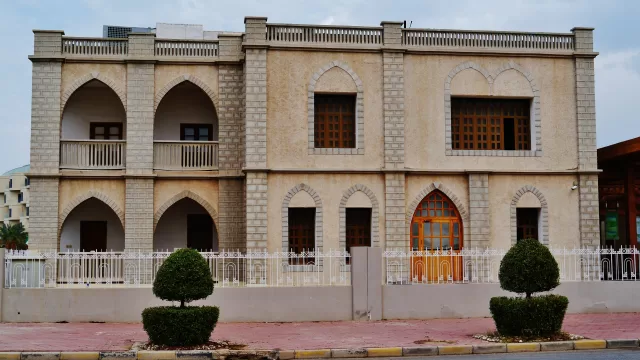
As Kuwait developed and new schools opened, the Mubarakiya went on working until it became a historical landmark marking the start of formal education in Kuwait and the Gulf. Its building still stands in the middle of the capital.
Further reading: the Center for Research and Studies on Kuwait · the Kuwait News Agency (KUNA)
Kuwait One, once a week.
The most useful stories we published this week, in your inbox.
No spam. Unsubscribe anytime.