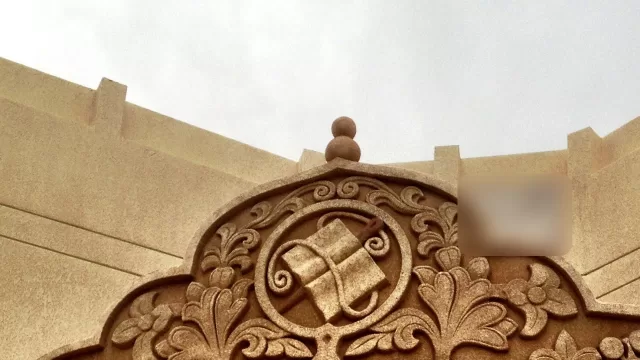
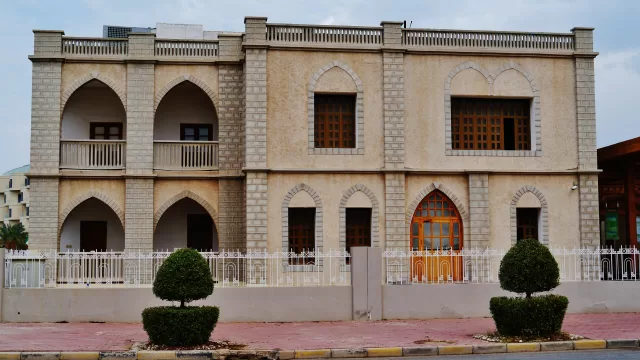
Shuwaikh Secondary, 1953: a boarding school with its own hospital, theatre and stadium
Planned for Bneid Al-Gar, built six kilometres out of town instead, it opened to about 421 students.
The idea dates to 1949. Kuwait was sending its students abroad to finish secondary school, and officials began to look at building one at home instead. According to a study by the Centre for Research and Studies on Kuwait, reported by the Kuwait News Agency, Abdulmohsen Nasser Al-Kharafi wrote to Sheikh Abdullah Al-Jaber Al-Sabah after visiting Kuwait House in Cairo, proposing a boarding school run on modern lines.
Out of town, on purpose
In 1950 it was announced that the school would go up in Bneid Al-Gar. The Council of Education, the forerunner of today’s ministry, then moved it to Shuwaikh, roughly six kilometres from the town.
Building finished in the summer of 1953 and the school opened for the 1953-54 year with about 421 students. The next year there were 541, and the first graduating class was 18 arts and 31 science students.
More campus than school
There were 23 classrooms, plus a mosque, courtyards, playing fields, laboratories, a theatre, a dining hall, a hospital, student housing, a teachers’ club, a scouts’ club and eight houses for staff. Mudhaffar Abdullah, who has written a book on the school, adds a library, a science museum, a stadium, a yacht club, a central kitchen, a squash court and Kuwait’s first Olympic-size pool, opened in the presence of Sheikh Abdullah Al-Salem Al-Sabah and King Saud bin Abdulaziz.
The stadium doubled as a venue for state occasions, and it was where Sheikh Abdullah Al-Salem gave his speeches. In 1958 the school hosted the Arab Writers’ Conference, after Beirut, Damascus and Cairo.
A mixed classroom
In the early years Kuwaitis made up 61 to 65 percent of the students; the rest were children of residents, and tuition was free for all. Teachers came from Egypt, Palestine, Iraq, Lebanon and Syria, alongside Kuwaitis who had graduated from Arab universities.
What became of it
It took secondary students until 1973, when Kuwait University took the site over for its law faculty; arts and allied health followed. In October 2025 the education minister put a file to the cabinet asking for the building to be entered on the national register of historic buildings.
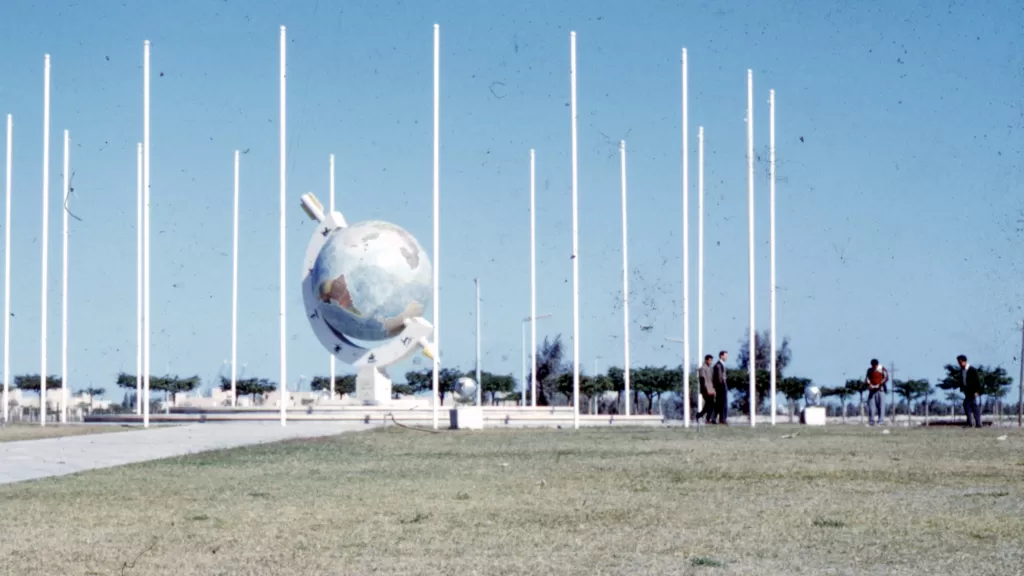
Photo: the globe monument among the flagpoles in the Shuwaikh Secondary forecourt, 1961, by Brett Jordan, CC BY 2.0 via Wikimedia Commons.
Source: Kuwait News Agency, 20 November 2005, citing the Centre for Research and Studies on Kuwait; Al-Anba, 9 October 2025; Al-Jarida, column by Mudhaffar Abdullah, 12 October 2025.
Kuwait One, once a week.
The most useful stories we published this week, in your inbox.
No spam. Unsubscribe anytime.