Films in the courtyard: how Kuwait watched movies before its first cinema
A rupee a head, collapsing palm-frond shades, then an open-air hall for 1,500 in 1955.
Before Kuwait had a cinema, it had courtyards. The historian Dr Yacoub Al-Ghunaim told KUNA that the first film projector reached the country in 1936, and that Kuwaitis who travelled to other Arab cities to study or trade came home used to going to the pictures.
The house as a picture hall
Well-off families screened films at home on projectors of their own. Shops rented out reels together with a projector, at 100 rupees a show. The host cleared the courtyard and left the door open, and neighbours and friends of every age came in.
Some began charging a rupee a head. Courtyards filled up, so the overflow climbed onto the palm-frond shades known as arish, which were rarely built to take the weight. They gave way, dropping the people on top onto the people below.
Most of the films were Egyptian romances; Ghazal Al-Banat, Risalat Gharam and Salama were among the favourites. Home screenings carried on even after cinemas opened, partly because women did not go to them, and partly because a projector at home was a mark of standing.
The Sharqiya cinema, 1955
Crowds and complaining neighbours pushed a group of merchants to set up a cinema company. On 18 November 1955 the country’s first cinema, the Sharqiya, opened on rented land in Sharq, near the Amiri Hospital. It was open to the sky in summer and roofed with heavy canvas in winter, and held about 1,500 people.
Tickets came in three classes: 400 first-class seats at five rupees, 700 second-class at three, and 400 third-class at two. The first Arabic film shown there was Aghla Min Einaya; the first Indian one was known locally as The Shoeshine Boy.
It did not last long. Audiences reacted loudly, throwing empty bottles at the screen when a film disappointed, and in May 1956 the seats, projection equipment and sound system were wrecked and the Sharqiya closed. The company went on to open one cinema after another.
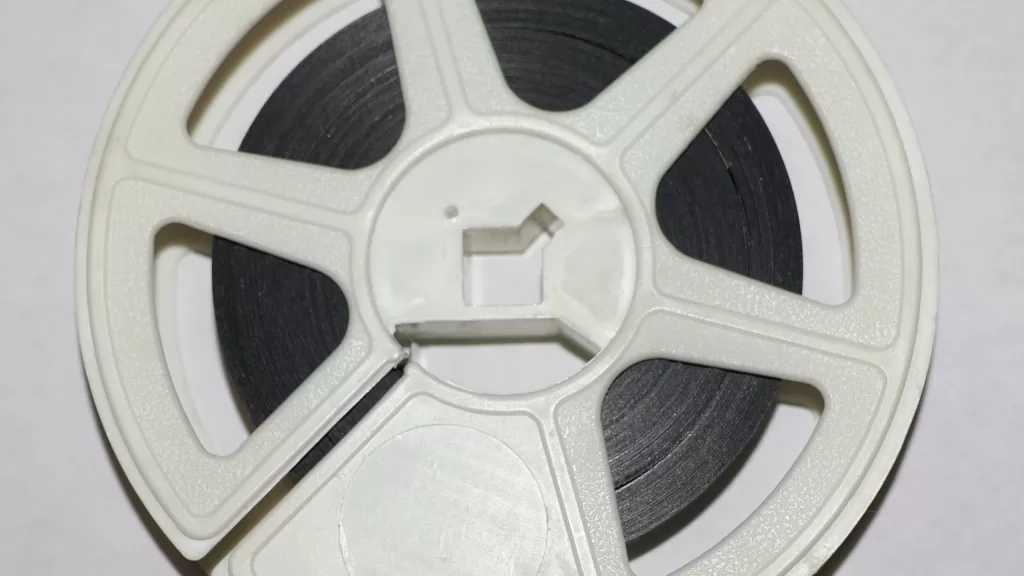
Photo: a 16 mm film reel, for illustration; not from a Kuwaiti screening. By DiscoA340, CC0, via Wikimedia Commons.
Source: Dr Yacoub Al-Ghunaim, interviewed by the Kuwait News Agency (KUNA), 15 July 2012.
Kuwait One, once a week.
The most useful stories we published this week, in your inbox.
No spam. Unsubscribe anytime.