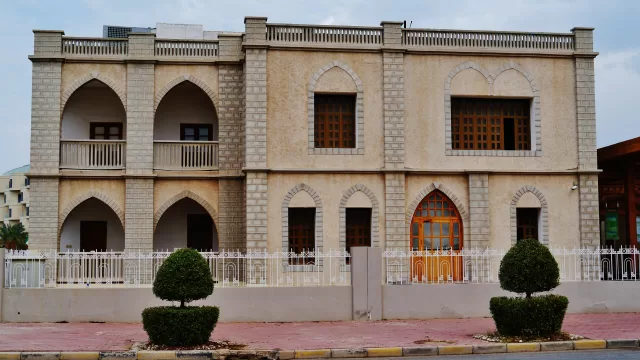
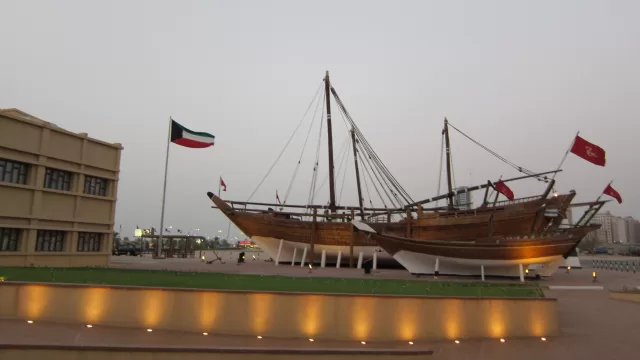
Al-Qibliya, 1950: a girls’ school built of mud, sea stone and Indian chandal timber
Thirteen years earlier, Al-Wusta opened beside Al-Mubarakiya and became the first place in Kuwait where young women studied a formal curriculum
In 1950, on the plot in the Qibla district where the house of Sayed Khalaf Al-Naqeeb had stood, Kuwait built a school for girls: the Qibliya School for Women’s Education. It was among the first to bring modern subjects and a new curriculum into girls’ schooling, and the building still stands.
Before Al-Qibliya
Girls once learned the Quran at home from a parent, or with a mutawwa’a, a woman who taught reading in her house. The Kuwait News Agency names several of them: Munira Al-Dukhan, Fatima Al-Misbah, Lulwa Al-Banai, Maryam Al-Yaqoub and Hessa Al-Hunaif.
Then in 1937 came Al-Wusta School, near the boys’ Al-Mubarakiya School — the first formal school for girls in Kuwait. Among its best-known teachers were Maryam Al-Saleh and Badriya Al-Ateeqi.
How it was built
According to engineer Waleed Al-Humaidi, head of restoration and historic buildings at the National Council for Culture, Arts and Letters, the school was built of mud and sea stone. Doors and windows were teak; the roof rested on beams of chandal timber shipped from India and East Africa, each about three metres long and 10 cm thick, laid across the walls.
Over the beams went a layer of split bamboo, then woven mats, then about 20 cm of mud mixed with straw, sprinkled with ash to keep the damp out. The courtyards used fired brick, which soaks up water, cools the air and stands up to the heat.
The building has three entrances, the main one on the north-east front, all leading into two courtyards with an upper floor above.
English for twelve girls
In the 1954–55 school year the Education Department began teaching English at Al-Qibliya: twelve students, two teachers, two lessons a week. The department also supplied the girls with clothes, sewing materials and school supplies.
Early teachers included Suad Sayed Rajab Al-Rifai, later an assistant undersecretary at the Ministry of Education, Munira Hamoud Al-Jarrah Al-Sabah, Ghanima Al-Ghurbali, Amal Jaafar, Lulwa Abdulmohsen Al-Saqer and Hayat Adnan Al-Naqeeb.
After the school
The building is now one of the historic sites under the National Council for Culture, Arts and Letters. It reopened after restoration in 2001, the year Kuwait was the Capital of Arab Culture, and became a cultural centre and the base of the council’s antiquities, museums and engineering sector.
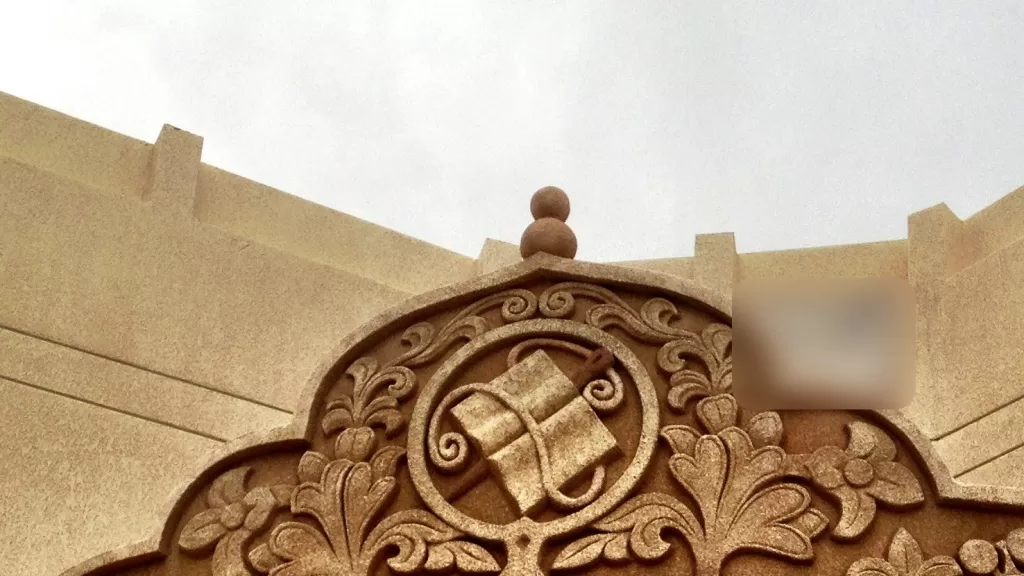
Photo: the open book carved above the entrance of Al-Qibliya School, cropped to leave out the carved name panel beneath it, with a small sign blurred. By Mohdalg, CC BY-SA 3.0, via Wikimedia Commons, adapted by Kuwait One.
Source: Kuwait News Agency (KUNA), “Al-Qibliya School: the first gateway to modern formal education for Kuwaiti girls”, 14 February 2016, and “Kuwait joins the world in marking Teachers’ Day”, 5 October 2024.
Kuwait One, once a week.
The most useful stories we published this week, in your inbox.
No spam. Unsubscribe anytime.