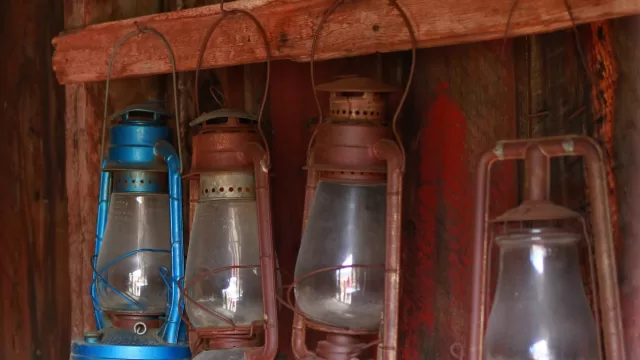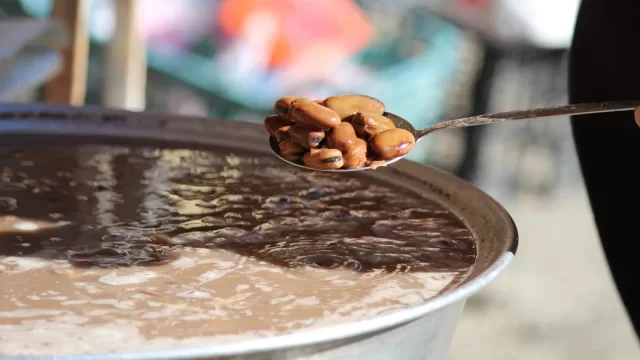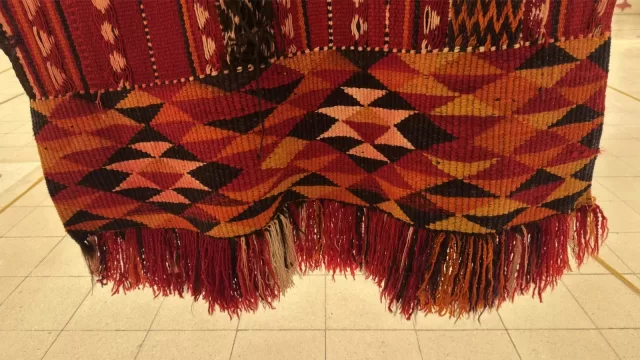
Before cooling came indoors, a Kuwaiti house cooled its water in fired clay: the hibb and the burma, with an iron tanaka beside them and the house well below. Clay seeps a little, what seeps evaporates, and what is left goes cold.
Then came ice, and it came first by ship from Basra.
The heritage researcher Hussein Al-Qattan says the first man to make it here was Haj Mohammad Al-Fawzan, on a small machine in his own house; he died in 1900. That is an account attributed to him, not a document. What can be leaned on is a pair of close dates: Haj Mohammad Hussein Maarafie bought an ice plant in Kuwait in 1912, and in 1916 an Indian judge named Kurstjee visited and described at Qasr Al-Deera a water-distilling machine, an ice plant, and a soda-water plant. Ice was being made here before the twenties.
How it was sold. By weight in uqiyya, a piece for one anna or two — an anna being about two fils. The block was wrapped in sacking to survive the walk, and sold cut from a mat in the open square and at the far corners of the districts, at hours everyone knew. The broken piece went into a brass bowl.
Kuwait had two words for it: bafar, from the Persian, and then falaj — the one that survives in “Falaj Bu Saleh” among the people of Dirbah Al-Zalag.
To make ice last at home, small pieces went into a flask called mtara umm nasr: glass inside, iron outside, in maroon and green.
In the forties the plants came one after another: Al-Ghanim in Sharq, Al-Hamad in Murgab, Al-Ghanim again in Shuwaikh, then Al-Salem, Al-Fawzan and Sheikh Khazal, and last Al-Jassar.
After the plants came the hand-cranked dandarma machine — the word is Turkish — on a two-cylinder cart selling orange and lemon ices round the districts.
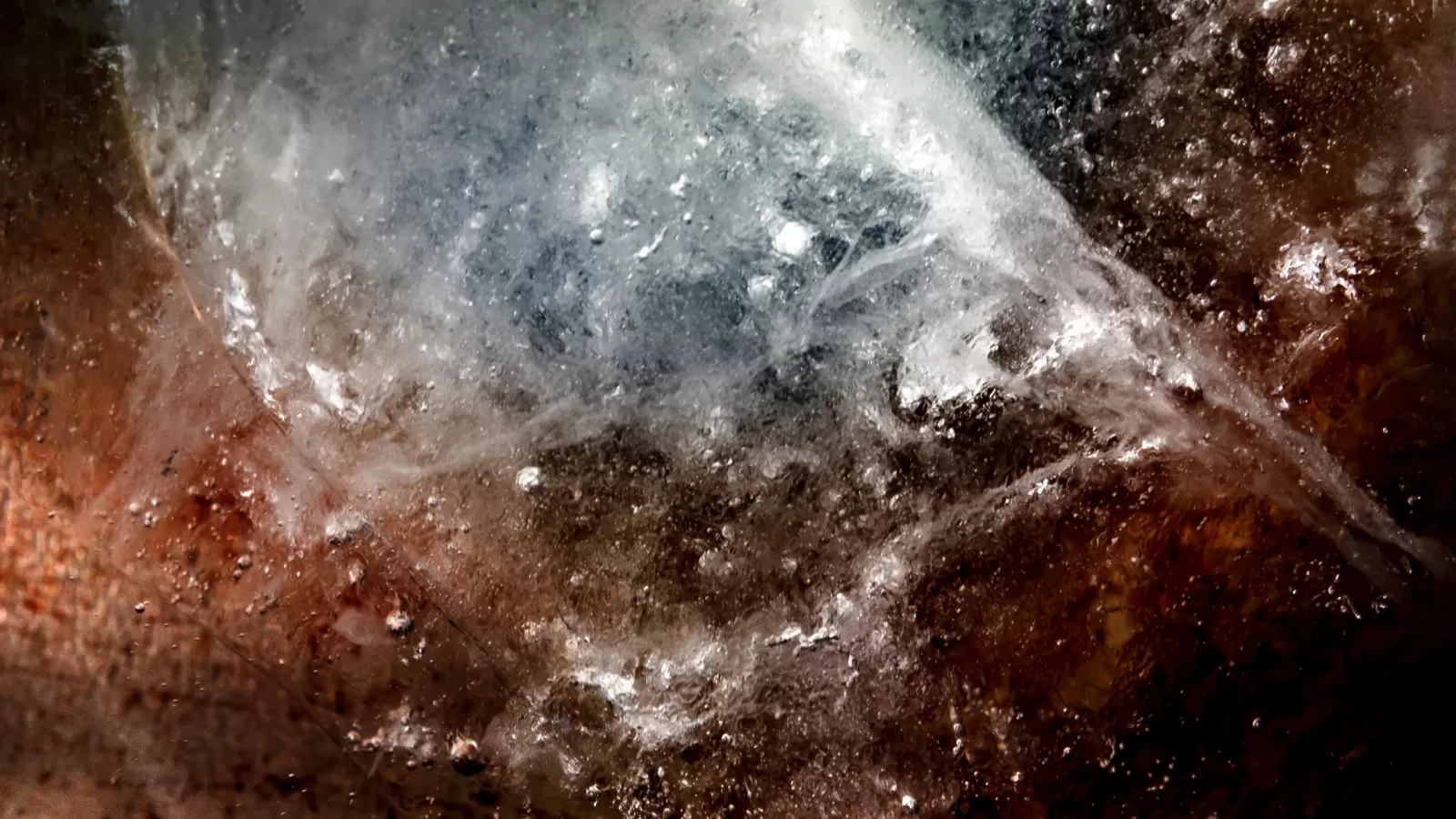
Photograph: melting ice in a metal pan; a generic image, not from Kuwait. By W.carter, CC BY-SA 4.0 via Wikimedia Commons.
Source: Al-Jarida, carrying KUNA, an interview with the heritage researcher Hussein Al-Qattan, 10 August 2017 · Al-Qabas, “The Story of Electricity in Kuwait” by Yaqoub Yousef Al-Ibrahim.
Kuwait One, once a week.
The most useful stories we published this week, in your inbox.
No spam. Unsubscribe anytime.