
Jareesh that comes out as separate grains under the teeth is not jareesh that failed in the cooking. It is jareesh that failed before it went into the pot.
The problem is almost always the soak.
The soak is half the dish
Wash the jareesh well first, then soak it in boiling water. The usual time is two to four hours if you are using a pressure cooker, and four to six hours if you are cooking it in an ordinary pot.
Anyone who soaks it for half an hour and assumes the flame will make up the rest gets a grain hard inside and soft outside, however long the cooking runs.
Salt at the end, not the start
All the spices go in early: cumin, cinnamon, coriander, turmeric, black pepper and dried lime. Except the salt.
Salt is added after the grain has softened and started to break down, because adding it early keeps the grain intact and slows how it takes up water. This is a well-known rule with grains and pulses generally, and jareesh is one of them.
The mashing is not a detail
Once it is cooked the real work starts: beating the mixture with a wooden spoon until the grain breaks down and the meat or chicken shreds into it. Leave the pot unbeaten and you get wheat soup rather than jareesh.
Then it is left on a very low flame for an hour or two with occasional stirring, and this is where the texture pulls together and turns creamy.
Anyone who likes a coarser grain mashes by hand and stops early. Anyone who likes it completely smooth uses a stick blender. Both are correct.
The topping is what sets it apart
The upper layer of caramelised onion is what makes the dish a dish. The usual method:
- Chopped onion in a hot pan with no oil.
- Every time the onion catches on the base, add a splash of water and keep turning.
- Repeat until it caramelises and darkens.
- Then add the ghee or oil, along with cinnamon, cardamom, coriander, ground dried lime and tamarind syrup.
Starting with no oil is the whole trick. Oil from the start fries the onion; water caramelises it. The difference between the two is the difference between a sharp topping and a dark sweet one.
How it differs from harees
Harees is whole wheat pounded until it dissolves completely, usually served with meat. Jareesh is cracked wheat, its grain more visible, usually cooked with chicken along with tomato, tomato paste and dried lime. The first is white and smooth, the second darker and more heavily spiced.
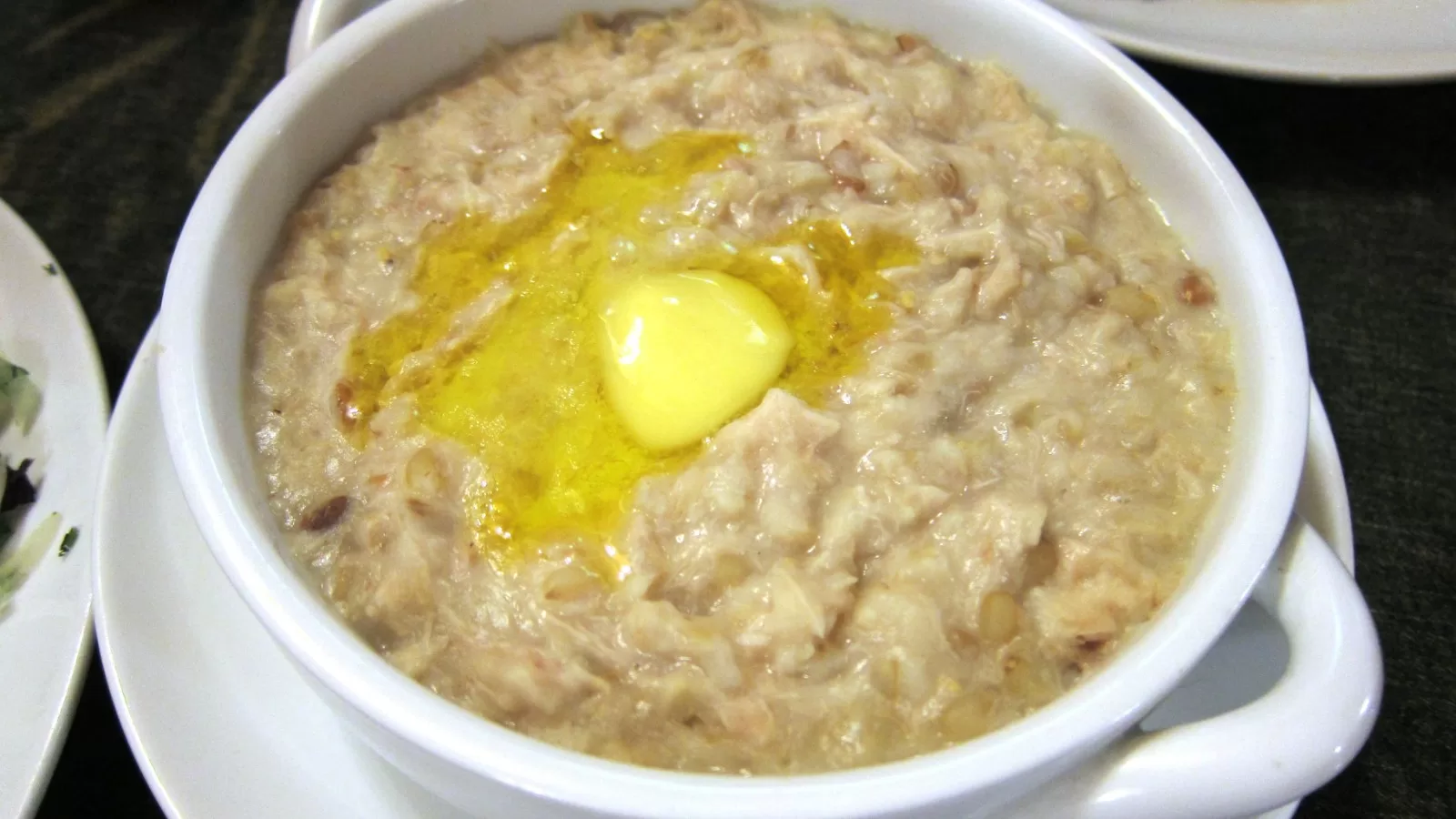
Photo: by Ketone16 via Wikimedia Commons, CC BY-SA 4.0. The photo is of a dish from the same pounded-wheat family and resembles jareesh in texture.
Further reading: how to make Kuwaiti jareesh · Atyab Tabkha: Kuwaiti jareesh
Kuwait One, once a week.
The most useful stories we published this week, in your inbox.
No spam. Unsubscribe anytime.