
In the corners of the old markets, among the sellers’ calls and the smell of coffee from the shops, the sound of a small hammer on leather told you that you were near the kharraz — the shoemaker.
The trade
The kharraz made leather footwear by hand, an old trade Kuwaitis knew from the beginnings of the traditional markets such as Mubarakiya and the inner souk. The need for strong, practical footwear capable of standing up to sandy ground and severe heat kept the trade busy for decades.
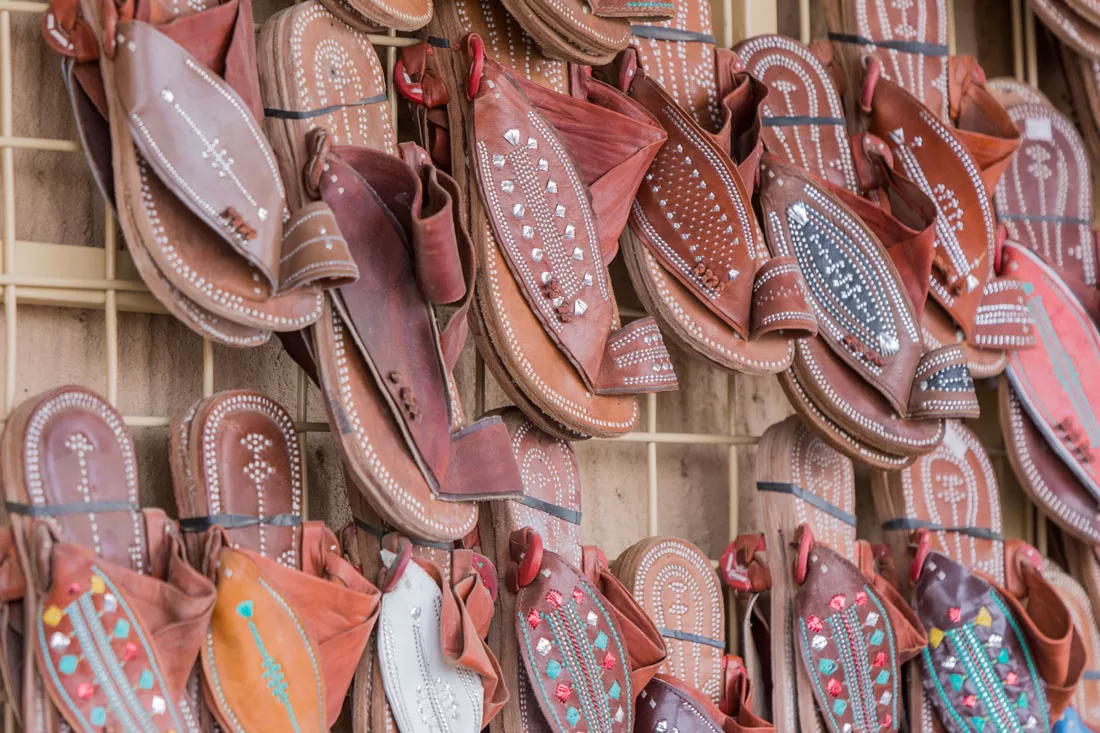
Shoemakers used natural hides — goat or cow — cutting them precisely, working them with hand tools, then stitching them with heavy thread that survived daily use. They made several kinds of sandal, among them the najdi and the kandari.
The tools
In a small shop you would find a wooden bench covered in pieces of leather in their natural colours, and a set of tools:
- The awl, for punching the leather.
- Leather shears, sharper than ordinary scissors.
- A large needle and heavy thread, for stitching the layers.
- A light hammer, for flattening the leather after stitching.
Every kharraz was known for his own mark on a sandal, whether in the way he stitched or in the tooling of the leather.
Where he sat
The shoemaker’s shop usually stood in the middle of the markets, next to the tailors and the perfumers. He showed customers newly made shoes, or looked over the old ones people had brought in to be repaired rather than replaced.
Notably, some shoemakers were not only makers but decorators, ornamenting sandals with simple hand-drawn patterns and taking special orders to a customer’s taste.
The decline, and what is left
With imported footwear reaching the markets the trade contracted, and most of the shops closed one by one. People preferred ready-made imports for the price and the range of designs. A few craftsmen held on, and the trade shifted from a necessity to something closer to a craft: they are now asked for a “heritage sandal” to display in a diwaniya or to wear at traditional occasions.
In the Kuwaiti memory the kharraz stands for plainness and competence. Plenty of Kuwaiti children in the 1950s and 1960s went with their fathers to buy a new pair, and plenty of that generation still recall the smell of the leather and the sound of the small hammer.
Further reading: the National Council for Culture, Arts and Letters · the Center for Research and Studies on Kuwait
Kuwait One, once a week.
The most useful stories we published this week, in your inbox.
No spam. Unsubscribe anytime.