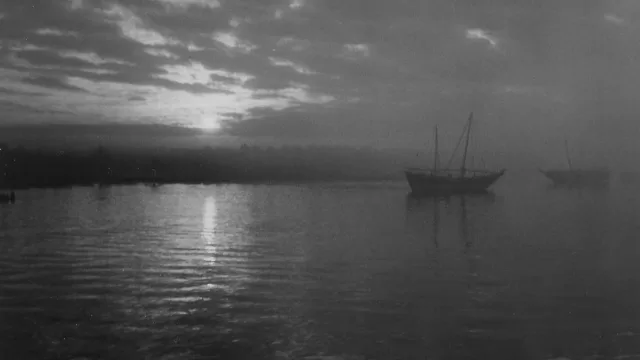
Early in November 1961, Mohammed Al-Sanousi drove towards Bneid Al-Gar. At Dasman Street he turned into a narrow lane between the mud wall of Dasman Palace and the beach sand, and stopped at an iron gate in a wire fence. Behind it stood the “building” of Kuwait Television: a shed of no more than 250 square metres, with concrete walls and a corrugated-iron roof, on land belonging to the palace.
The only sign that the place had anything to do with broadcasting was a tall aerial above the roof.
Inside the studio
A small room was called the studio. Behind its curtain stood lights, two large cameras on pedestals and microphones, along with 16mm film projectors, a stock of cartoons and a control room for the director. There was no recording equipment and nothing to adjust the picture. Cables covered the floor, lamps hung from the ceiling wherever they fitted, and there was no soundproofing.
That is how Al-Sanousi describes it in his book, Kuwait Television: History and Stories 1961-1985. He was a student in Cairo when a Kuwaiti delegation arrived in 1961 and picked him for the new station. He accepted without knowing how television worked, and calls the decision an adventure.
From four hours a day to colour
Official broadcasting began on 15 November 1961 from the Sharq district of Kuwait City, according to the Kuwait News Agency, and stayed experimental for about two years until the equipment was complete. In 1963 the station was on air four hours a day, 28 hours a week, rising to 36. By early 1966 it broadcast 52 hours a week, and 58 by that October.
The picture stayed black and white until 15 March 1974, when colour arrived on the European PAL system during the Gulf Cup football tournament in Bahrain. On 17 February 1979 the station moved into a new building in the Ministry of Information complex, with large studios and modern equipment.
Television reached Kuwait before the state channel through a private merchant; that story is in our piece on Murad Behbehani.
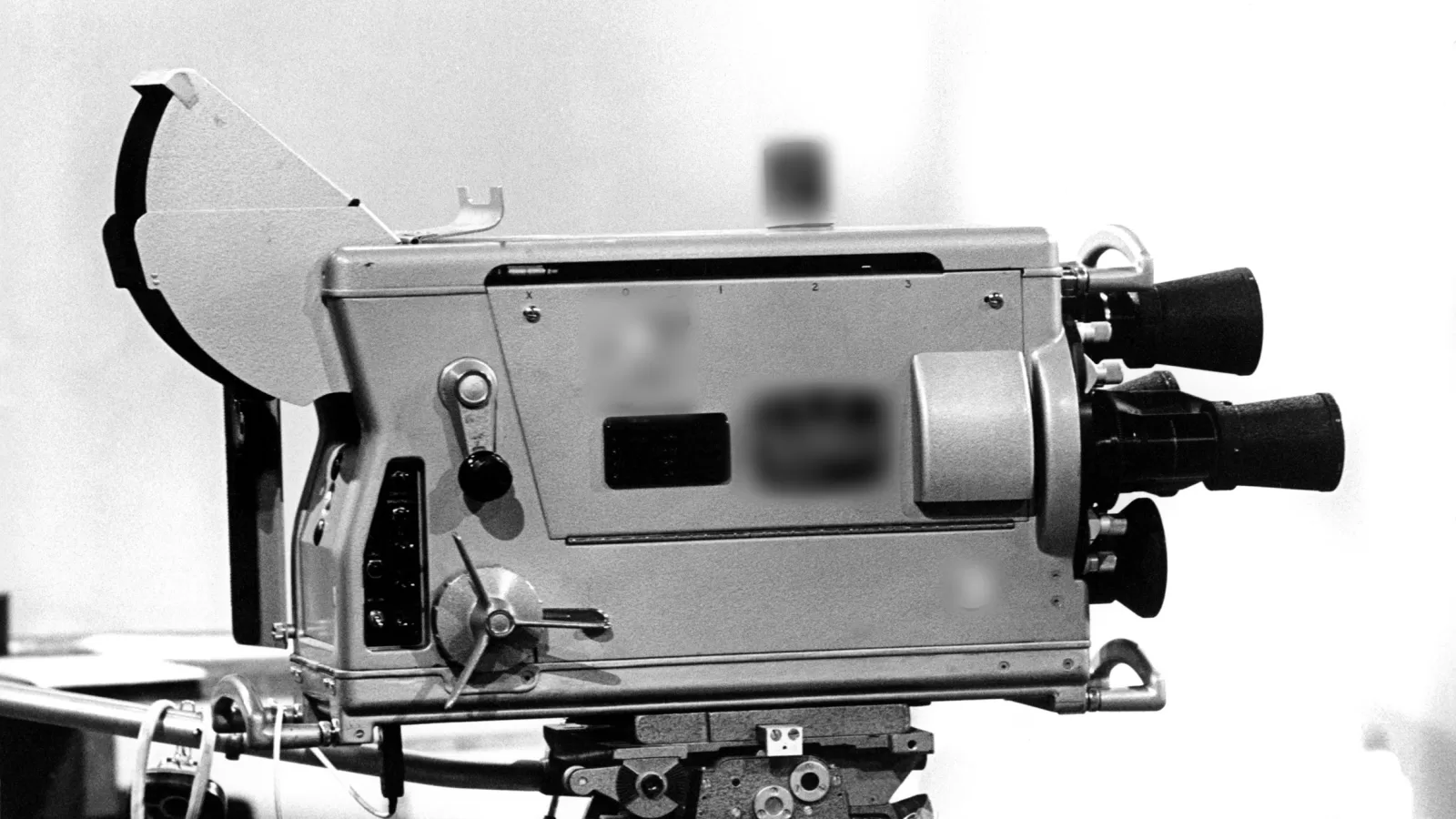
Photo: An early-1960s television camera from the archives of Finland’s public broadcaster Yle, not from Kuwait Television; its logo is blurred. Public domain via Wikimedia Commons.
Sources: Mohammed Al-Sanousi, Kuwait Television: History and Stories 1961-1985 (p. 89), as reviewed by Khalil Ali Haider in Al-Jarida (11 July 2016); Kuwait News Agency report “40 years since Kuwait Television began colour broadcasting”, published in Al-Jarida (14 March 2014).
Kuwait One, once a week.
The most useful stories we published this week, in your inbox.
No spam. Unsubscribe anytime.