
In 1910 around ten of Kuwait’s leading pearl merchants left for Bahrain. They were not fleeing a debt or a personal quarrel; they left in protest at the ruler’s policies. About a year later Sheikh Mubarak Al-Sabah travelled to them himself and brought them back.
These were the tawawish. And without understanding who they were, you cannot understand how Kuwait was run before oil.
What a tawwash is
A tawwash is neither a diver nor a captain. He is the pearl merchant: he finances the diving voyage, buys the catch, then sells it in foreign markets.
And that last point is the one many people miss: these merchants did not sell only in the local market. Saif Marzouq Al-Shamlan records in The History of Pearl Diving that some of them travelled as far as India and Paris to sell pearls.
Meaning a Kuwaiti merchant was carrying his goods from the Gulf to the middle of Europe in the age of sail.
Sharq and Jibla: why where they lived matters
Old Kuwait City was divided into two main quarters: Sharq, the eastern quarter, and Qibla, known as Jibla.
The larger share of the diving income went to the people of Sharq, because most of the tawawish and captains lived there. The people of Jibla worked in trade, voyaging and business alongside diving.
And here the effect of that distribution shows: when the pearl market collapsed, the people of Sharq were hit harder than the people of Jibla, because their trade rested on diving alone while Jibla had spread its sources of income.
A century-old economic lesson, and still true: whoever depends on a single resource falls with it.
The richest tawwash in the Gulf
The most prominent was Hilal Fajhan Al-Mutairi (1855–1938), described as the wealthiest pearl merchant in the Gulf, with a fortune estimated at around eight million rupees.
The figures around him show the scale of the operation: by 1914 he owned twenty-eight ships, and in a single year paid 10,173 rupees in tax on the diving take.
With him in that class are names that recur in the diving literature: Shamlan bin Ali bin Saif Al-Roumi, Ibrahim bin Mudhaf, Rashed Boursli, Ahmad Al-Manaie, and Saad Al-Nahd Al-Sahlawi.
The departure
The dispute was over taxes and over the ruler’s decisions, among them a ban on diving in one season.
From September 1910 the merchants emigrated to the Gudaibiya district of Bahrain, led by Hilal Al-Mutairi. This was not individuals leaving; it was the withdrawal of the capital the city stood on.
Sheikh Mubarak tried to bring them back by sending his son, and they refused. So he travelled to Bahrain himself in July 1911, and they returned in September of the same year.
A note on the dates: other sources put Hilal Al-Mutairi’s departure in 1912. The two accounts agree on the event, the causes and the ending, and differ on the year.
What came out of this story
In December 1911 the Mubarakiya school was founded, the first formal school in Kuwait, with the returning merchants among its founders. The sources record Hilal Al-Mutairi donating five thousand rupees to it.
He was then elected in 1921 to the Shura council.
And that is the line running through the whole story: merchants withdrew in protest, the ruler negotiated with them, they returned, then built the first school, then entered the first council. The tawawish emigration was not a passing quarrel but the first time Kuwaiti money put its weight against authority, and the matter ended in a settlement rather than in suppression.
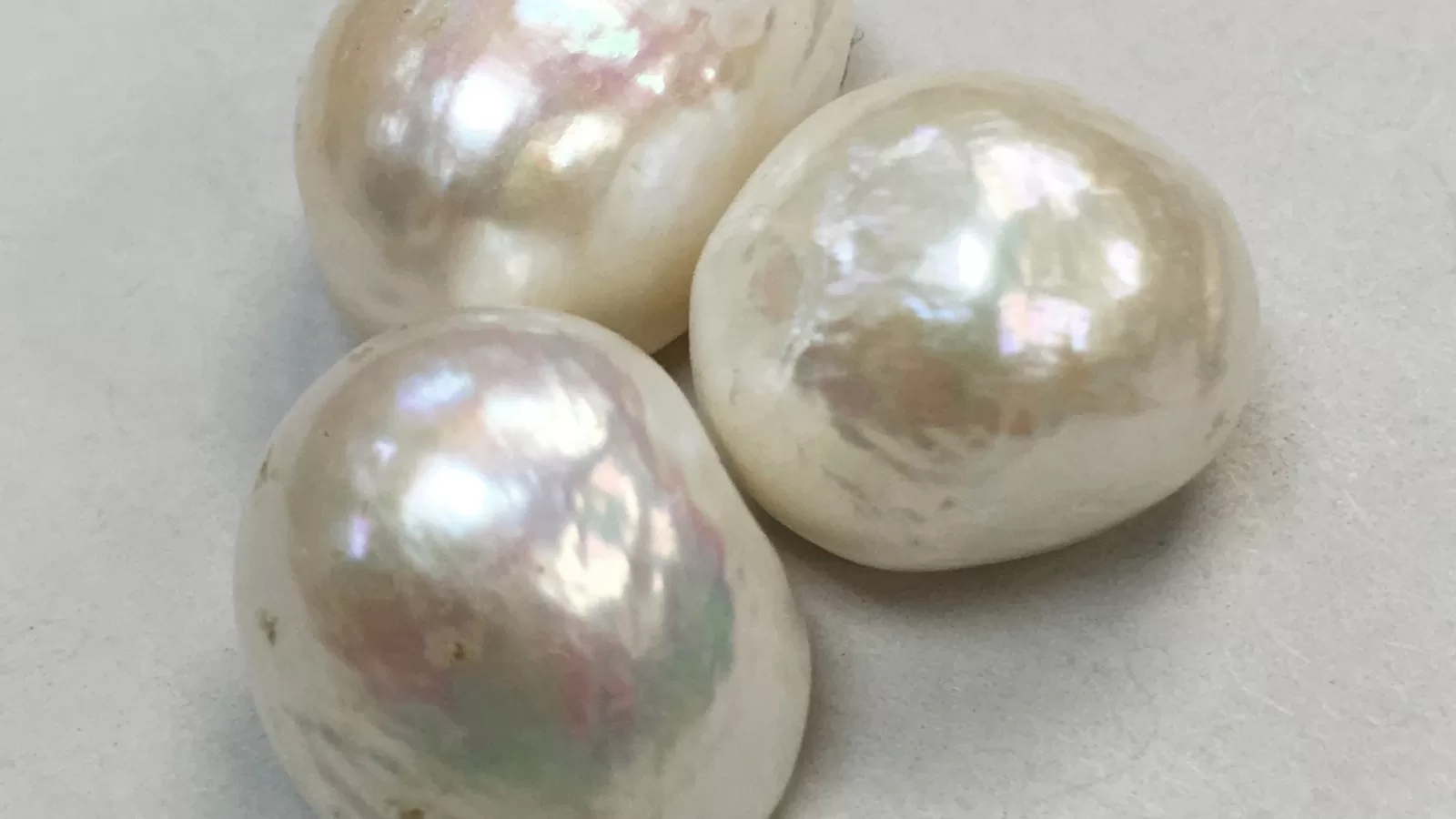
Photo: natural pearls — by James St. John via Wikimedia Commons, CC BY 2.0
Further reading: Saif Marzouq Al-Shamlan, The History of Pearl Diving, volume two, relayed via the Kuwait History Forum · Badr Nasser Al-Hutaita Al-Mutairi, “The Tawawish Emigration”, Al-Jarida
Kuwait One, once a week.
The most useful stories we published this week, in your inbox.
No spam. Unsubscribe anytime.