
In a country like Kuwait, where no rivers run and rain is rare, every drop of water is a long story that starts in the sea and ends at a kitchen tap. Between the two lie plants, techniques, and a history of problems solved.
From scarcity to engineering
Kuwait, like its Gulf neighbours, has always been short of natural water. Rainfall is limited and there is no sufficient or sustainable groundwater, let alone rivers or lakes.
In the past people relied on wells and on jandal cisterns filled by rain, or on water carried from the Shatt al-Arab in Iraq on ships — the baghla or the shu’ai — in containers known as girab. With the oil era, the picture changed entirely.
Desalination
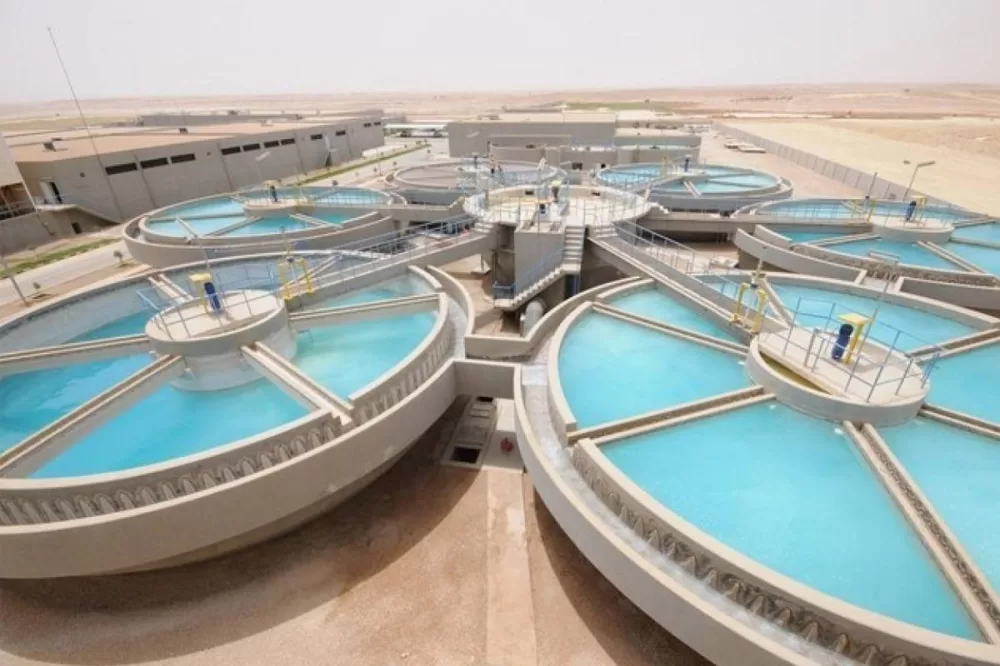
The sea became the main source of fresh water, not in its natural state but through desalination plants. Kuwait was among the first countries in the world to adopt the technology: the first plant was built in 1953 at Shuwaikh, with a modest output, and it was a revolution at the time.
Today the country depends almost entirely on desalinating Gulf water, through several main plants:
- Shuaiba
- Doha East and Doha West
- The new Az-Zour plant
What the method costs
Desalination solved the central problem, and it carries its own effects:
- High production cost.
- Discharge of the remaining brine into the sea, which can affect marine life.
- High energy consumption.
Which is why Kuwait has begun looking at alternatives:
- Recycling greywater for uses that do not require drinking water.
- Desalination using solar energy.
- Awareness campaigns to cut waste in household use.
Water and national identity
Water was a preoccupation long before oil, inside the town walls and outside them, and on the boats the ports sent to the Shatt al-Arab. A well, a water ship, and a distillation plant.
For all the progress, water in Kuwait remains a national question that touches every household. And a culture of respecting it has been instilled in newer generations — not only because it is scarce but because it is the product of an entire state’s effort.
Further reading: the Center for Research and Studies on Kuwait · the Kuwait News Agency (KUNA)
Kuwait One, once a week.
The most useful stories we published this week, in your inbox.
No spam. Unsubscribe anytime.