The Al Othman Family: From Sail to Nine Mosques
They came from Najd and learned the sea until they owned their ships, and one captain among them lived a hundred and six years and built two houses of God abroad.
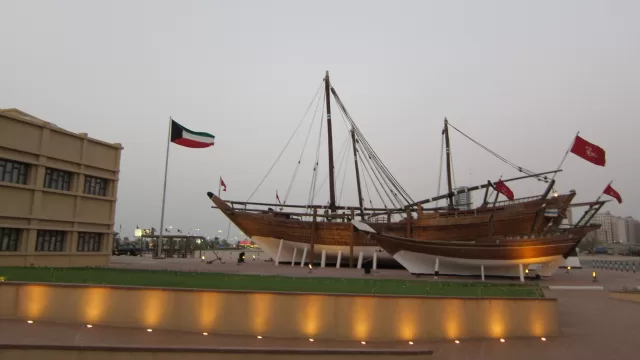
The Al Othman family came to Kuwait from Najd, a place with no sea in it, and learned the sea until they became one of the known captain families. The difference worth pausing on is that they did not stay sailors on other people’s ships: they owned their own, until every head of household among them had his own vessel, and the trade passed down as they taught one another.
Then they did something with what the sea brought them that set them apart, which is where this story ends.
Abdullatif: thirty-three years a captain
Abdullatif Sulaiman Al Othman was born in 1284 AH, corresponding to 1867, in Freej Saud. He studied at the school of Mulla Sayed Hashim Al Hunayan near the market: Quran, reading, writing and some arithmetic.
He learned the sea from his maternal uncle, the captain Abdulaziz bin Othman. He worked as a nakhoda for thirty-three years, his ships reaching Shatt Al Arab, the Gulf, India, Zanzibar and the coasts of East Africa.
The tarred dish
Long before any of that, when he was four months old, heavy rain turned the crumbling houses into something like rivers. His mother put him in a dish coated with tar so he would float on the water that had reached the floor of the room, then left him to help the rest of the household.
The water rose and the dish began drifting towards the courtyard and out of it, until it jammed in the doorway and stopped. His mother came back and found him.
The daggaga
In a television interview on the programme “Pages from Kuwait’s History” he told what happened to him on Shatt Al Arab himself: pirates known there as the daggaga attacked them while he was on a voyage with his uncle, and they exchanged fire until they got away and returned to their families.
That is one of the details you will not find in general books about the sea: piracy on Shatt Al Arab was part of a captain’s reckoning, like the wind and the tide, not a rare incident.
Nine mosques in Kuwait and four outside it
Here the story becomes a family’s rather than a man’s. According to records gathered from the Ministry of Awqaf and Islamic Affairs, mosques sector, engineering affairs department, the men and women of the Al Othman family built nine mosques inside Kuwait — the largest number built by any single family in the country. They have four more abroad, two of them built by Abdullatif alone.
Among the nine is the Abdullatif Sulaiman Al Othman mosque in Abdullah Al Salem, still standing today. In the same district, in block three, a street carries his name.
The end, in London
He travelled to London for treatment and died there. His family brought him back to be buried in Kuwait on the last day of August 1973, corresponding to 3 Shaaban 1393 AH. He was then about a hundred and six: he lived through the century in which Kuwait turned from a town living off sail into an oil state.
Where this comes from
Abdullatif Al Othman’s life was documented by his grandson Hamed Saleh Abdullatif Al Othman. The fullest reference on the subject is Dr Abdulmohsen Abdullah Al Kharafi‘s book “The Al Othman Family: a school of sail in Kuwait”, published in 2003, and he has a second book on the same family about the captain Abdulwahhab Abdulaziz Al Othman. On sail more broadly there are two books by Dr Yacoub Yousef Al Hijji: “Captains of Sail in Kuwait” and “Building Sailing Ships in Kuwait”. The date of death was checked against the century calendar of Saleh Mohammad Al Ojairi.
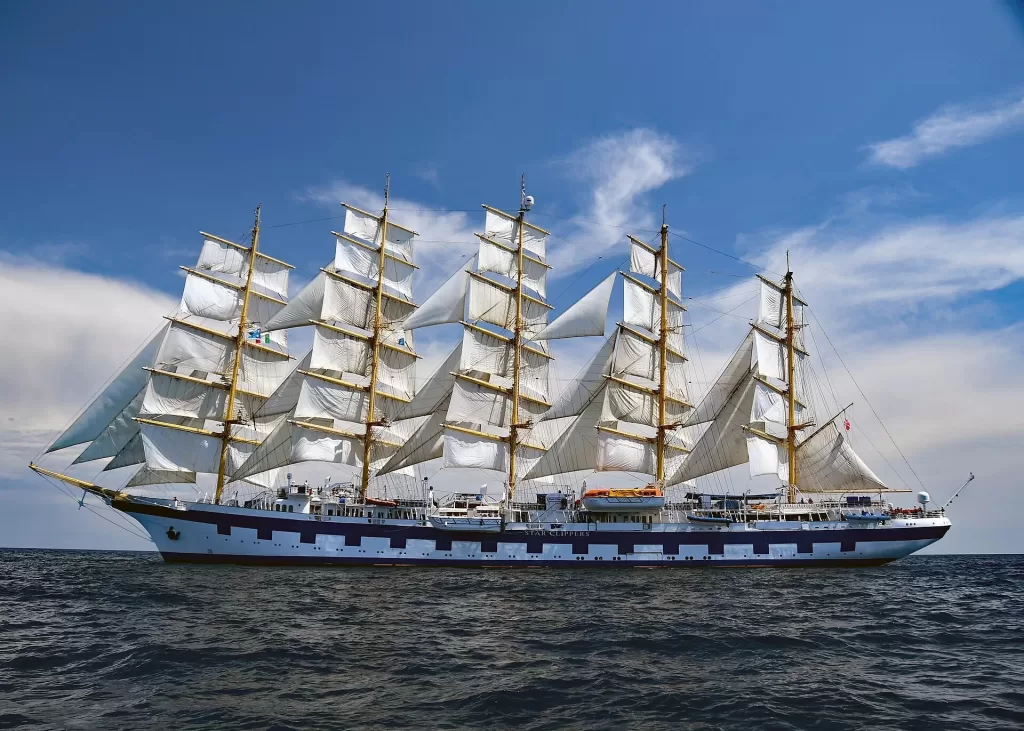
Photo: a sailing ship at sea. By Corvair Owner, CC BY-SA 2.0 via Wikimedia Commons.
Kuwait One, once a week.
The most useful stories we published this week, in your inbox.
No spam. Unsubscribe anytime.