When the Sun Went Out So Did the Screens: Internet Traffic Fell Thirty Per Cent
The drop followed the path of totality precisely, and people were back on their devices within minutes of maximum coverage.
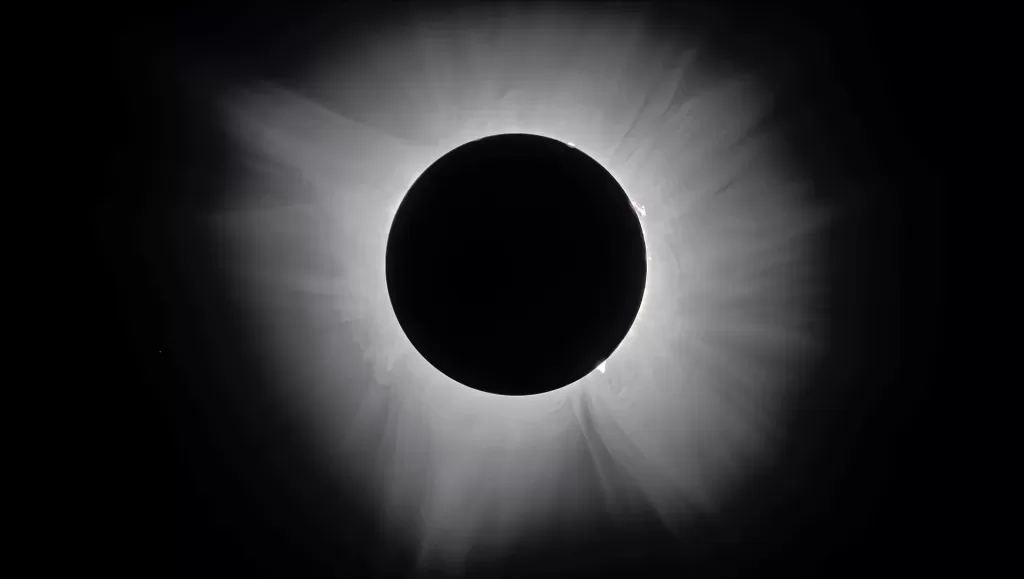
On 12 August a total eclipse passed over Iceland, northern Spain and Portugal, with a partial eclipse over the rest of western Europe. A day later Cloudflare published a measurement of internet traffic during those hours, and something showed up that usually doesn’t: people put their screens down.
What was measured
The number of web requests in each country and region, compared against the usual figure for the same day of the week.
The result
- Areas on the path of totality: a fall of roughly fifteen to thirty per cent.
- Areas with only a shallow partial eclipse: a slight fall, or none at all.
- Iceland, Spain and Portugal led, then Ireland, Britain and France with a weaker effect.
- Sweden, Denmark, Poland and Switzerland: no measurable effect.
- And a small oddity: Norway and Sweden recorded a slight rise above the average.
The nicest detail
The fall was not spread across hours. It concentrated at the moment of greatest obscuration at each location separately. Then the curve returned to where it had been within minutes of the peak passing. People looked up from their devices for the moment itself, and went straight back.
Why this matters beyond astronomy
Internet traffic has become a measure of collective behaviour that can be plotted by the hour: a match, a speech, a power cut, or something in the sky. An eclipse is a rare clean case, because its timing is known in advance to the second and its path to the kilometre — which turns the curve into a controlled experiment on the behaviour of millions of people.
Photo: the sun’s corona during a total eclipse. By Brucewaters, CC BY 4.0 via Wikimedia Commons.
Source: the Cloudflare blog, post of 13 August 2026 on the eclipse’s effect on internet traffic.
Kuwait One, once a week.
The most useful stories we published this week, in your inbox.
No spam. Unsubscribe anytime.